Skip to content
Search
Menu

Bookings here go through Viator, who pay us a commission. You are charged the same either way, and the commission had no say in this list.

Seasonal

The Whale-Boat Season, and the One Rule That Governs Every Trip

Boats run from about April to late October out of Provincetown and Barnstable. One federal regulation shapes what the captain is allowed to do with them.

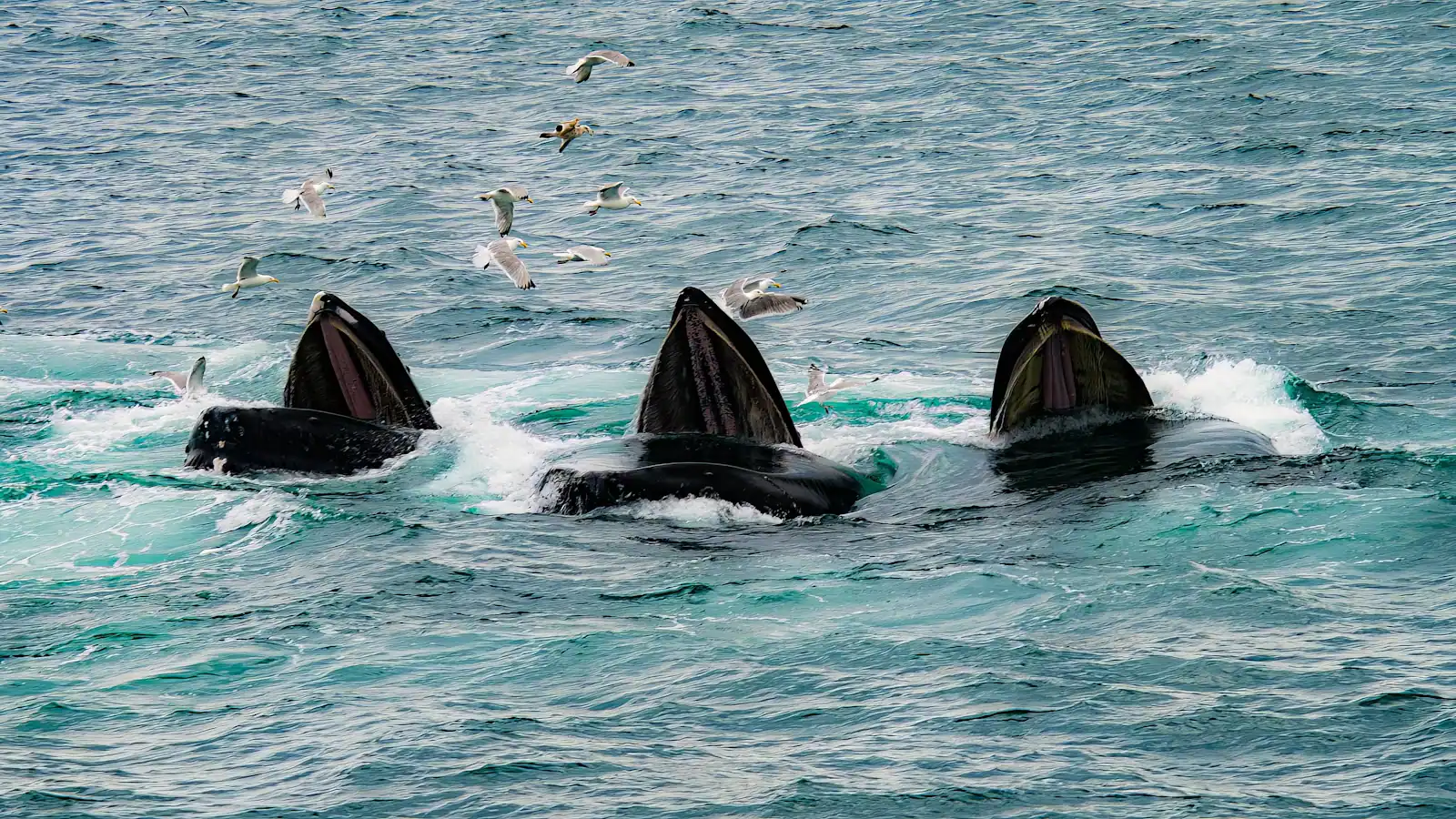
Whales surfacing together in open grey water off the Massachusetts coastUnsplash

Whale-watch boats on Cape Cod work a season that runs from roughly April to late October, with most operators concentrated between early May and the end of October and a handful starting earlier or finishing later. They are running to Stellwagen Bank, a 842-square-mile national marine sanctuary designated in 1992 and the only one in New England, whose southern corner sits a short distance off Race Point.

Departures come chiefly from MacMillan Pier in Provincetown, which has the shortest run to the grounds anywhere on the Cape, and from Barnstable Harbor on the Mid Cape, which means a longer steam but far less driving for anyone based around Hyannis. Trips are typically three to four hours.

The single most important thing to understand before boarding is the rule the captain is working under.

North Atlantic right whales are protected by a mandatory federal approach distance of 500 yards, which is 1,500 feet. The rule applies to vessels, to aircraft including drones, and to kayaks, paddleboards and personal watercraft. Any vessel that finds itself inside that distance must leave immediately at a safe, slow speed. There is no discretion in it. NOAA Fisheries estimated roughly 384 of these animals alive at the start of 2024, which is the entire species.

Right whales are most likely around Cape Cod Bay in late winter and spring, which is why an April or May trip can involve a good deal of respectful waiting at a distance.

For humpbacks, fin whales and minkes, the Northeast operates viewing guidelines rather than a single legal distance: approach slowly and from the side, never cut across a whale's path, throttle down in the vicinity and let the animals set the terms. Operators that commit to those practices can be recognised under the Whale SENSE programme run by NOAA Fisheries with conservation partners, which is a useful shorthand when choosing between boats.

Underneath all of it sits the Marine Mammal Protection Act, which makes harassment of a marine mammal an offence. If you are out in your own boat or a kayak this season, those rules are yours as much as the captain's.

Season dates and sailing schedules are set by individual operators and change each year. Check directly before booking.

SourcingSanctuary designation and size from NOAA's Stellwagen Bank National Marine Sanctuary; approach distance and population estimate from NOAA Fisheries. Operator seasons vary.

Plan around it

What this means for visitors

The pages that carry the practical detail behind this story — hours, costs, access and where it sits on the Cape.

  • Things to do

    Whale Watching

    Whale watching from Cape Cod: humpbacks, fins and minkes on Stellwagen Bank from April to October, why Provincetown sails closest, and the…

  • Things to do

    Tours

    An honest guide to Cape Cod tours. Whale watching over Stellwagen Bank has real depth; seals, dunes and paddling are thinner. What to…

  • Things to do

    Boat Tours & Cruises

    Boat tours on Cape Cod: harbour cruises and sunset sails out of Provincetown and Hyannis, the Long Point shuttle, and the canal seen from…

  • Guide

    The Best Time to Visit Cape Cod: An Opening and Closing Calendar

    The Cape's weather is ordinary New England weather. What is not ordinary is how completely the place shuts, and how much of the year sits…

Related

Explore Whale Watching

This story touches something you can book. These are live listings from our booking partner, not a recommendation attached to the report above.

Bookings here go through Viator, who pay us a commission. You are charged the same either way, and the commission had no say in this list.

Who reported this

Outdoors & Ocean Editor

Silas crewed whale-watch boats out of Provincetown before he wrote about them, and still reads Massachusetts Bay by the wind rather than the calendar. He covers the National Seashore, the three coasts, the surf and the cold, and he treats the shark guidance and the federal approach distances as the law they are rather than as etiquette.

Our newsroom is machine-assisted and human-edited: stories are drafted from verified public sources and checked before they publish. How that works is set out in our editorial standards.

More from Silas Crowell