Skip to content
Search
Menu

Bookings here go through Viator, who pay us a commission. You are charged the same either way, and the commission had no say in this list.

Things to Do

Free Things to Do on Cape Cod

Last updated

Free things to do on Cape Cod. The trails, viewpoints and waterfront that cost nothing, plus how to get to the beaches without paying to park the car.

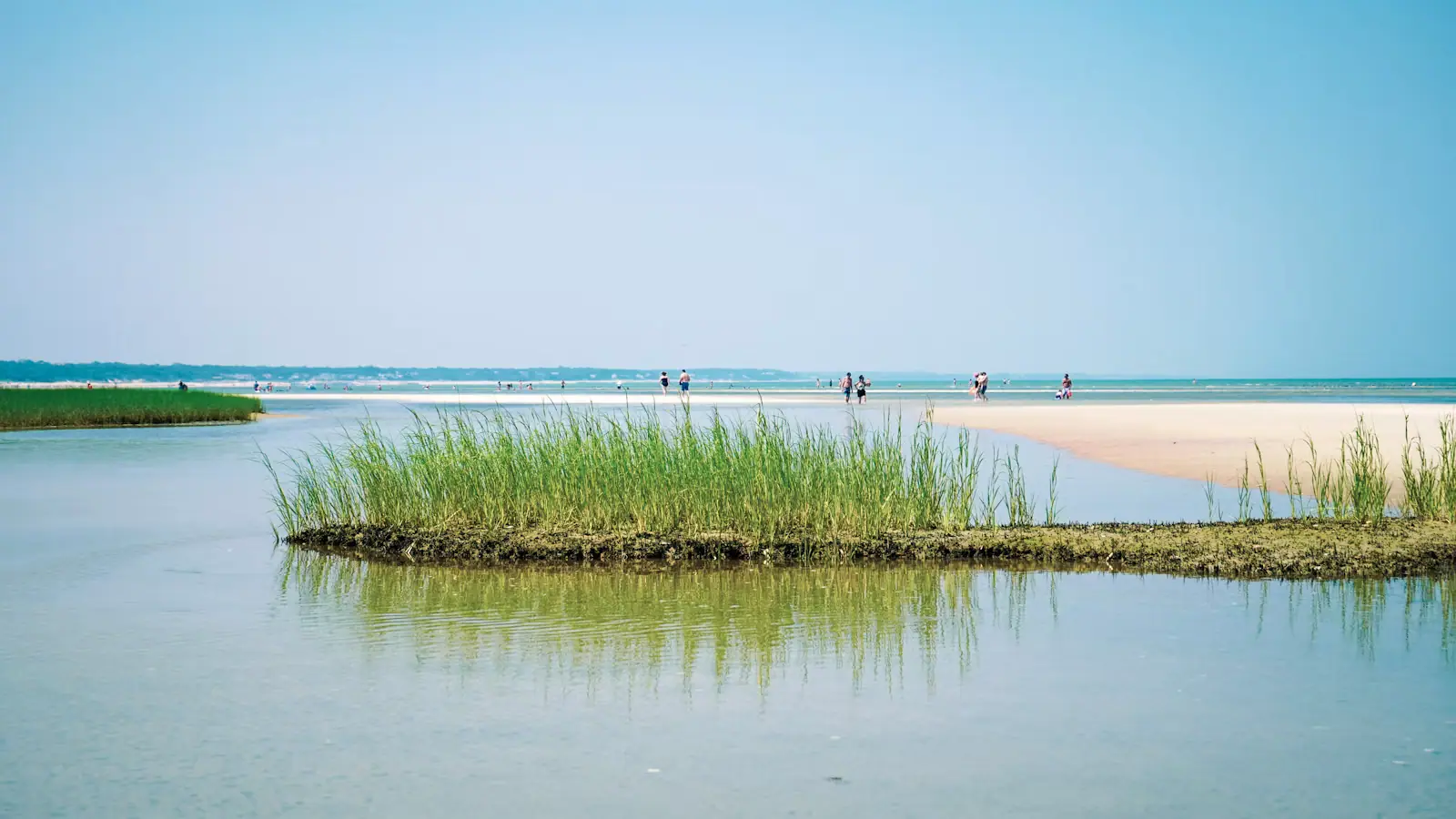
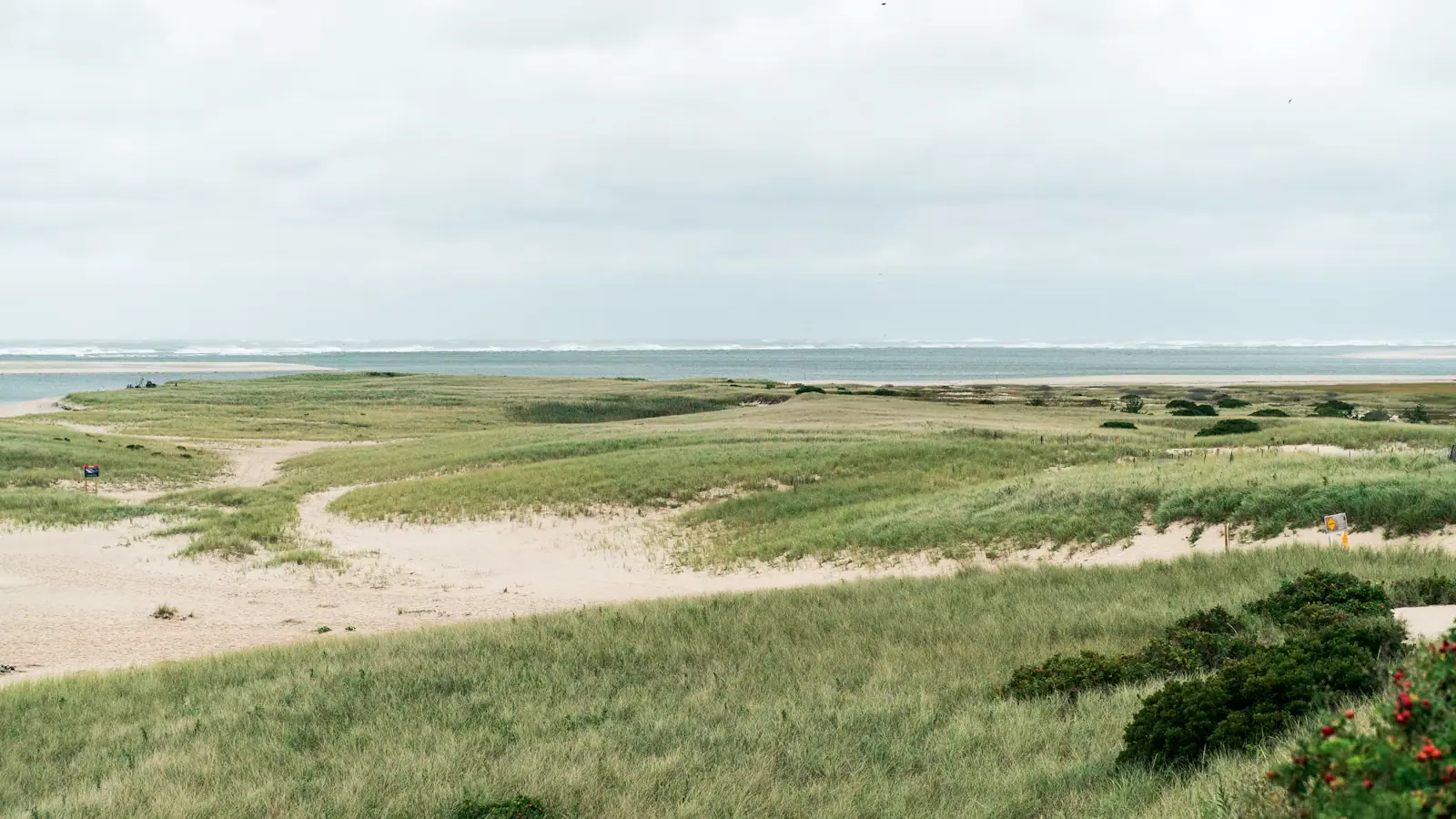
Salt marsh grass and a winding tidal channel under a wide overcast sky on Cape CodUnsplash

Here is the thing about Cape Cod that nobody says plainly: almost nothing on this peninsula charges admission. The national park does not have a gate you pay to walk through. The lighthouses stand in public ground. The fish pier has an observation deck bolted to it and no ticket booth. The best walk on the Cape, out across Great Island in Wellfleet, costs nothing at all.

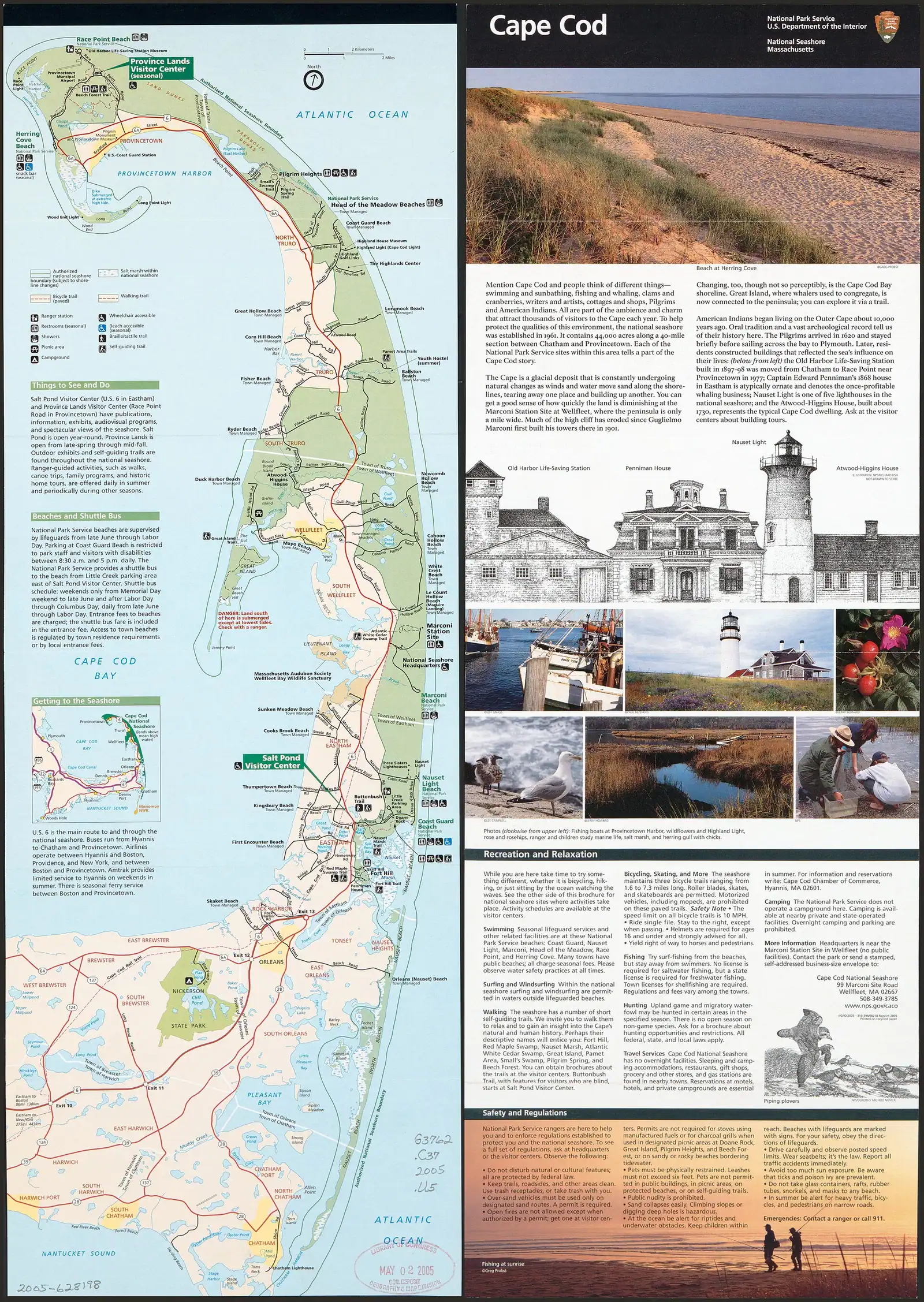
What costs money is parking. The National Seashore's fee is a vehicle entrance fee, collected seasonally at six ocean beaches — currently $25 a car for the day, $15 per person arriving on foot or by bicycle aged sixteen and over, $60 for an annual pass — and it buys you a place to leave the car, not the beach itself. Town beaches run on stickers sold by fifteen separate towns, several of which will not sell you a daily rate at all in July and August. Provincetown's lots are the priciest thing at the tip.

Which means the useful budget strategy here is not a list of cheap attractions. It is arriving. Ride a bike to the beach and you pay $15 rather than $25, or nothing at all at a town landing with no gate. Come outside the fee season and the same car park is free. Walk in from a trailhead that has no booth. Visit the National Seashore's trails, which are free every day of the year, rather than only its beaches.

Do that, and a Cape holiday costs remarkably little. You can fill a week with the two visitor centres and their films, twenty miles of walking trails through swamp, marsh and dune, a 25-mile paved rail trail, seven car-free miles along each bank of a working ship canal, three retired lighthouses standing in a clearing in the woods, the site where the Atlantic was first spoken across by wireless in 1903, a summer baseball league that charges nothing to watch, band concerts on a village green and more sunsets over open water than an east-coast peninsula has any right to.

The one genuine expense left is food, and the Cape does not have a cheap food scene. Self-catering makes an enormous difference to a week here.

What follows is what actually costs nothing, sorted by what kind of day you want.

Everything is free except the car park. Here is how to beat it

What it costs

Six ways round the Cape's only real entrance cost, in rough order of usefulness.

Arrive by bicycle. National Seashore beaches charge $15 for a cyclist rather than $25 for a car, and several beaches are directly reachable from the Rail Trail or the Province Lands loops. It is the single biggest saving available to a family.

Come outside the fee season. Fees are collected seasonally at the six ocean beaches. Turn up on a clear November Saturday and the beach, the car park and the whole forty miles of shoreline cost nothing.

Use the trails rather than the beaches. Every walking trail in the National Seashore is free year-round, including the ones that reach the sand. Fort Hill in Eastham, the Atlantic White Cedar Swamp at Marconi, Doane Rock, Beech Forest and Great Island all have free car parks.

Buy the annual pass if you are staying a week. At $60 against $25 a day, it pays for itself on the third beach day, and it works at other federal sites too. America the Beautiful passes are also accepted.

Ask your rental about a town sticker. Many rentals in a town come with a beach sticker for that town, which is worth real money over a week. Ask before you arrive, and note that a sticker is good for one town only.

Walk in from a town landing. Most towns have small public landings and ways down to the water with no gate and no attendant. They have no facilities either, which is the trade-off.

Two things that are genuinely free everywhere: the two visitor centres, and the Province Lands observation deck above Race Point, which is a 360-degree view over the tip of the Cape and costs nothing at any time of year.

The walks, which are the best free thing here

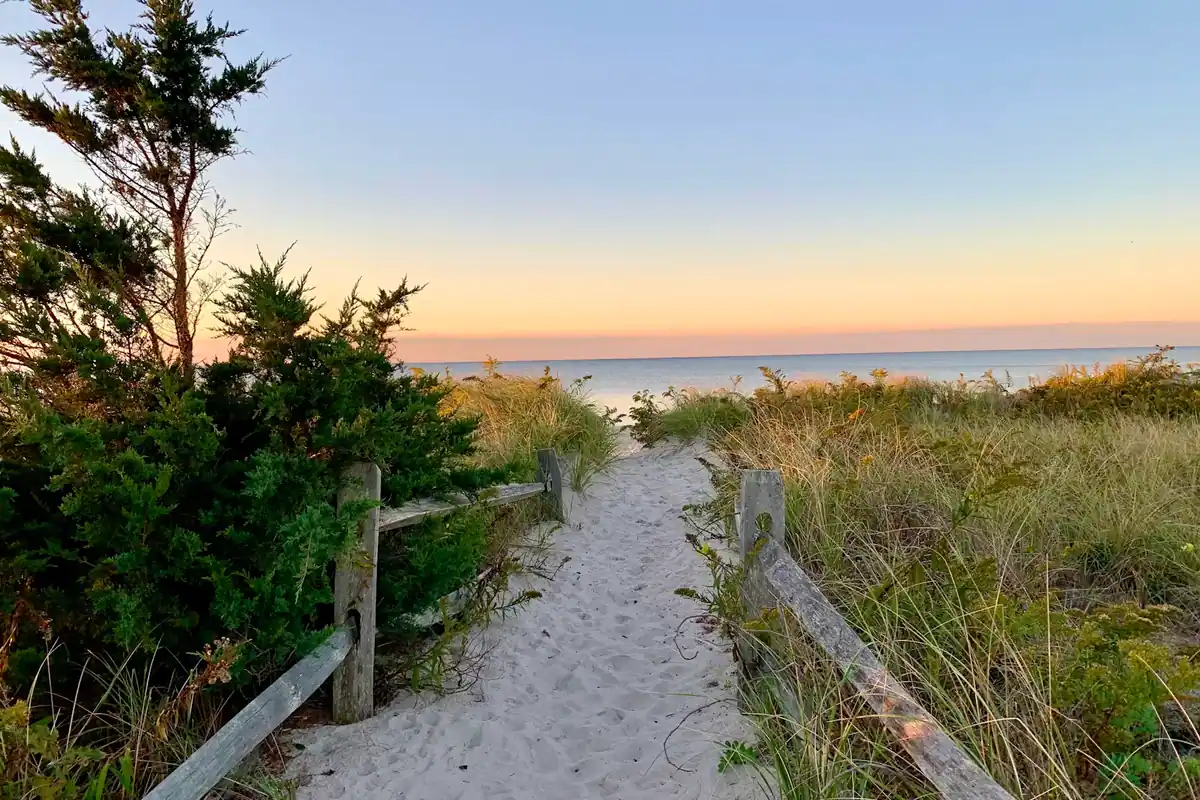
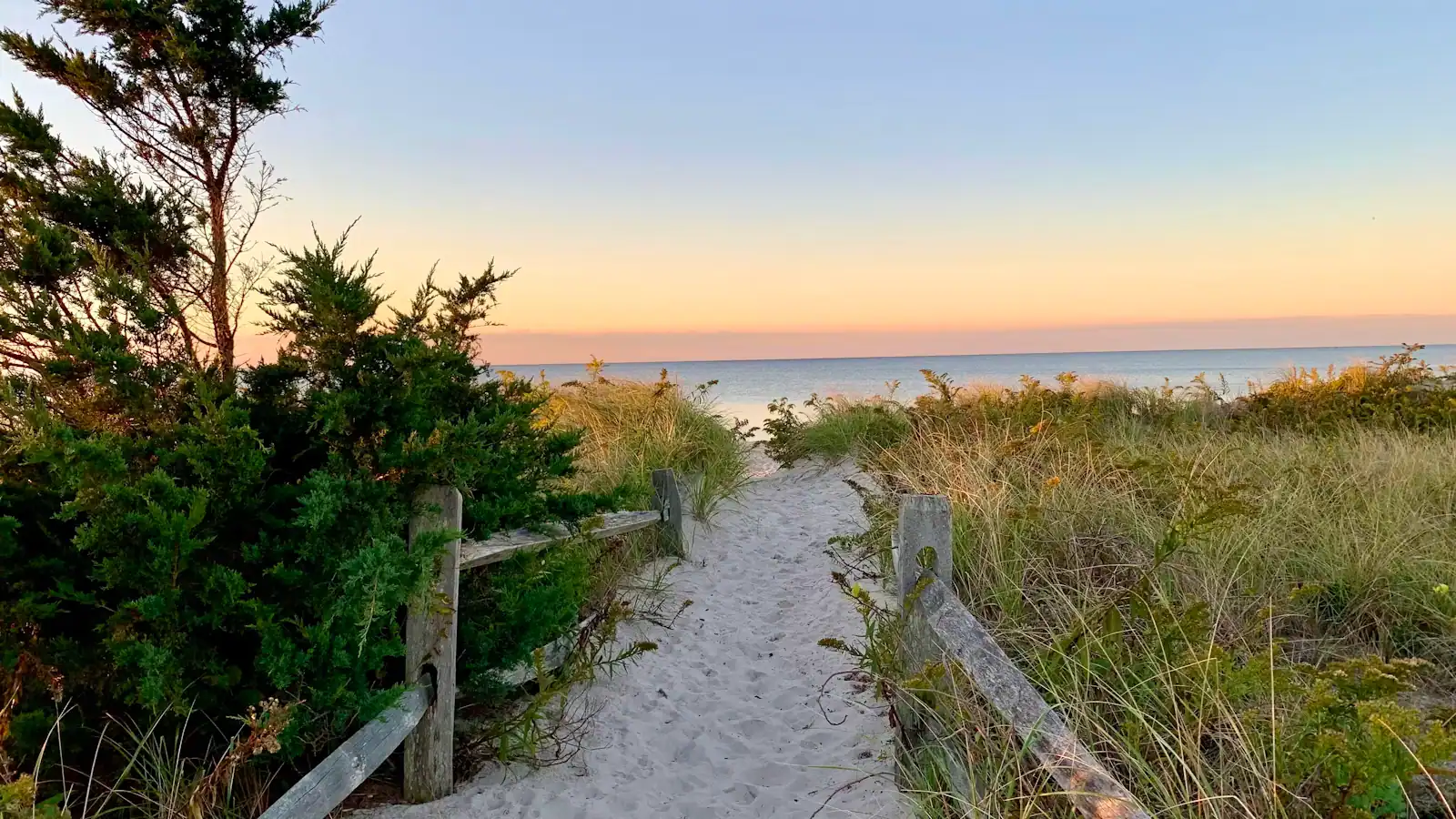
A sand path cut through beach grass opening onto the open Atlantic on Cape Cod's outer shoreUnsplash
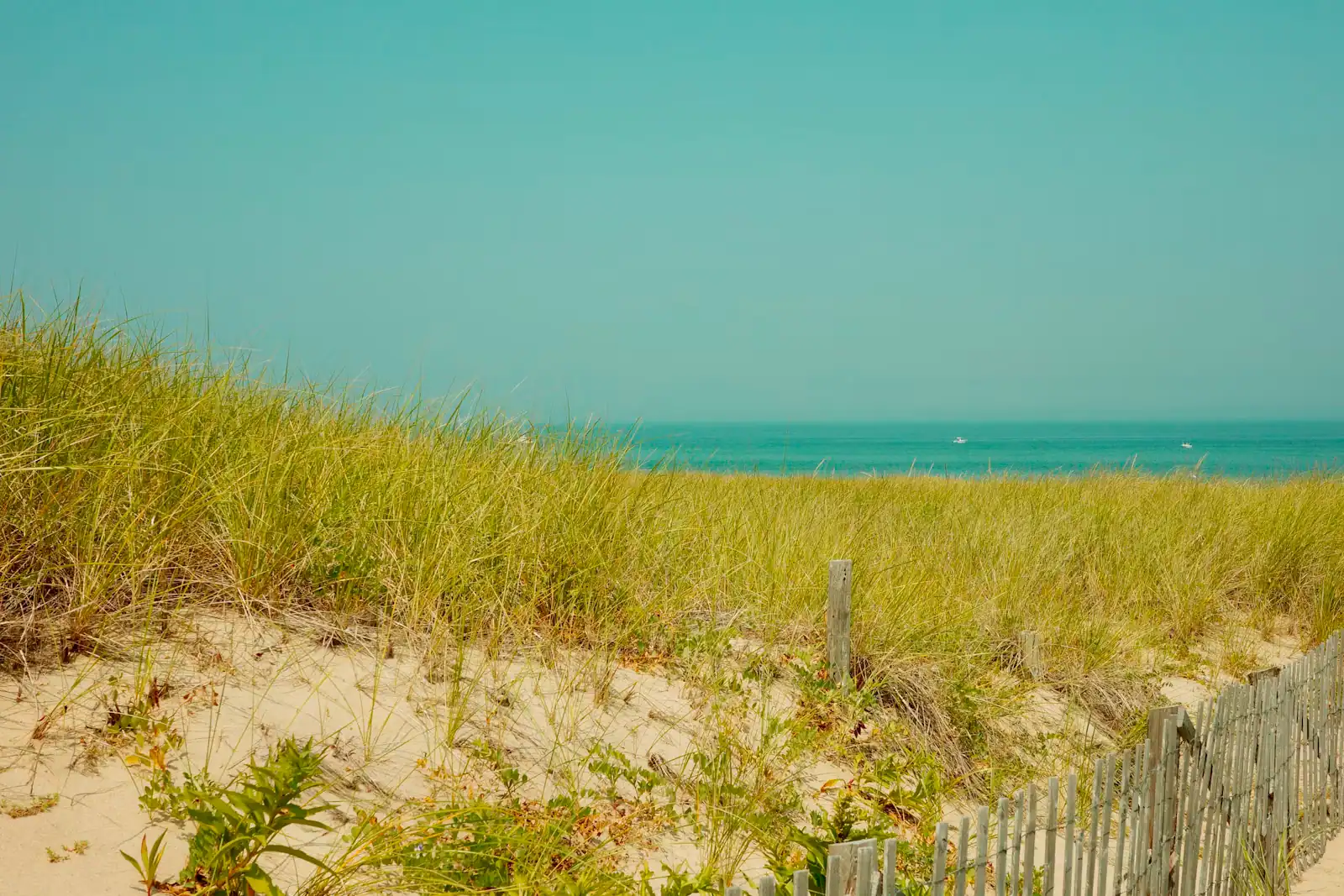
A sand path cut through beach grass opening onto the open Atlantic on Cape Cod's outer shore

The National Seashore's trail network is underused because visitors come for beaches and never look behind them.

Fort Hill, Eastham. A short rise above Nauset Marsh with one of the finest views on the Cape, a nineteenth-century whaling captain's house on the slope and a boardwalk that drops into a red maple swamp. Half an hour, or two if you take the whole loop.

Atlantic White Cedar Swamp, Wellfleet. From the Marconi car park, a mile-and-a-quarter loop that leaves the open heath and descends a boardwalk into a sunken cedar swamp that feels like a different climate. The most surprising short walk in the park.

Great Island, Wellfleet. The big one: a loop of several miles out onto a former island now joined by a sand spit, past the excavated site of an eighteenth-century tavern. No shade, no water, no shortcut, and parts flood at high tide. Take the tide table seriously and allow a morning.

Nauset Marsh Trail, Eastham. From Salt Pond visitor centre, an easy loop along the edge of the marsh, with a connecting path to Coast Guard Beach.

Beech Forest, Provincetown. A pocket of woodland and freshwater ponds entirely surrounded by moving sand, which is a strange thing to stand in.

The Knob, Woods Hole. A small headland walk at Quissett Harbour on the Upper Cape with water on three sides.

Stony Brook, Brewster. A mill site with a herring ladder beside it, where alewives run upstream in spring in numbers worth going out of your way for.

All of these are free, all have free parking, and most are open every day of the year.
Free waterfront, viewpoints and lighthouses

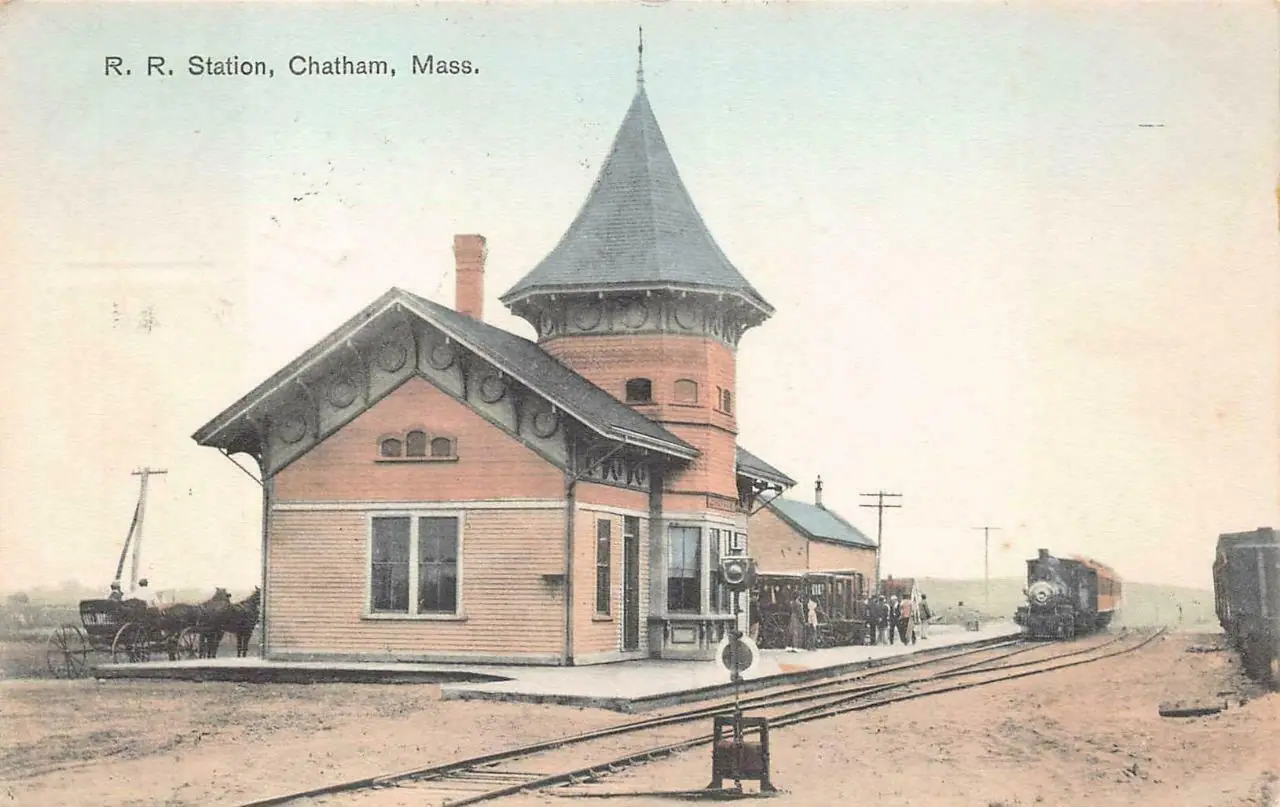
Chatham Fish Pier is the best free hour on the Cape. Day boats come through the cut in the afternoon, the catch goes up a conveyor into the packing house, and a purpose-built observation deck lets you watch the whole operation from above. Grey seals lie in the water below waiting for scraps. Timings follow the boats and the weather, so drop in rather than making an appointment.

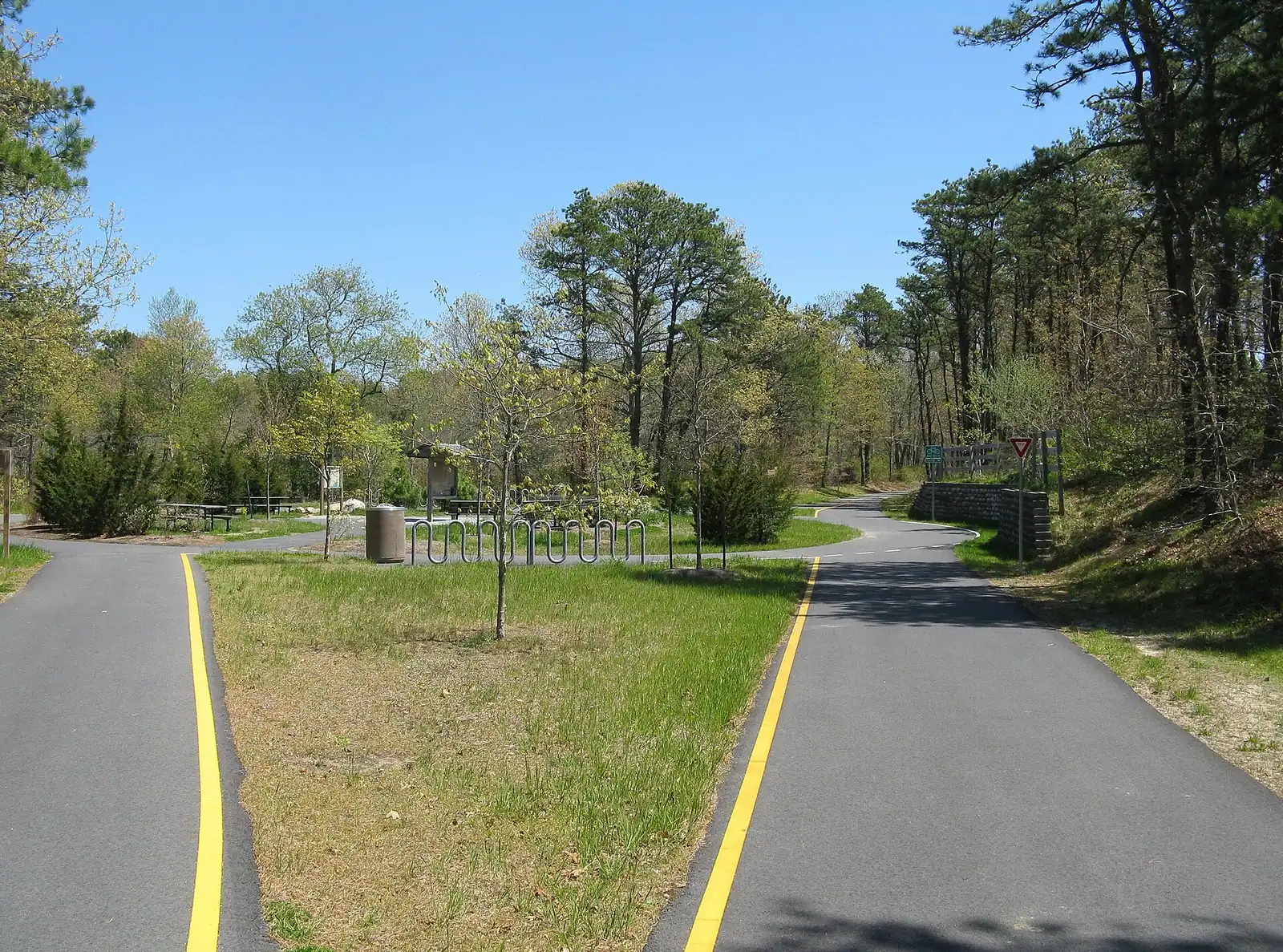
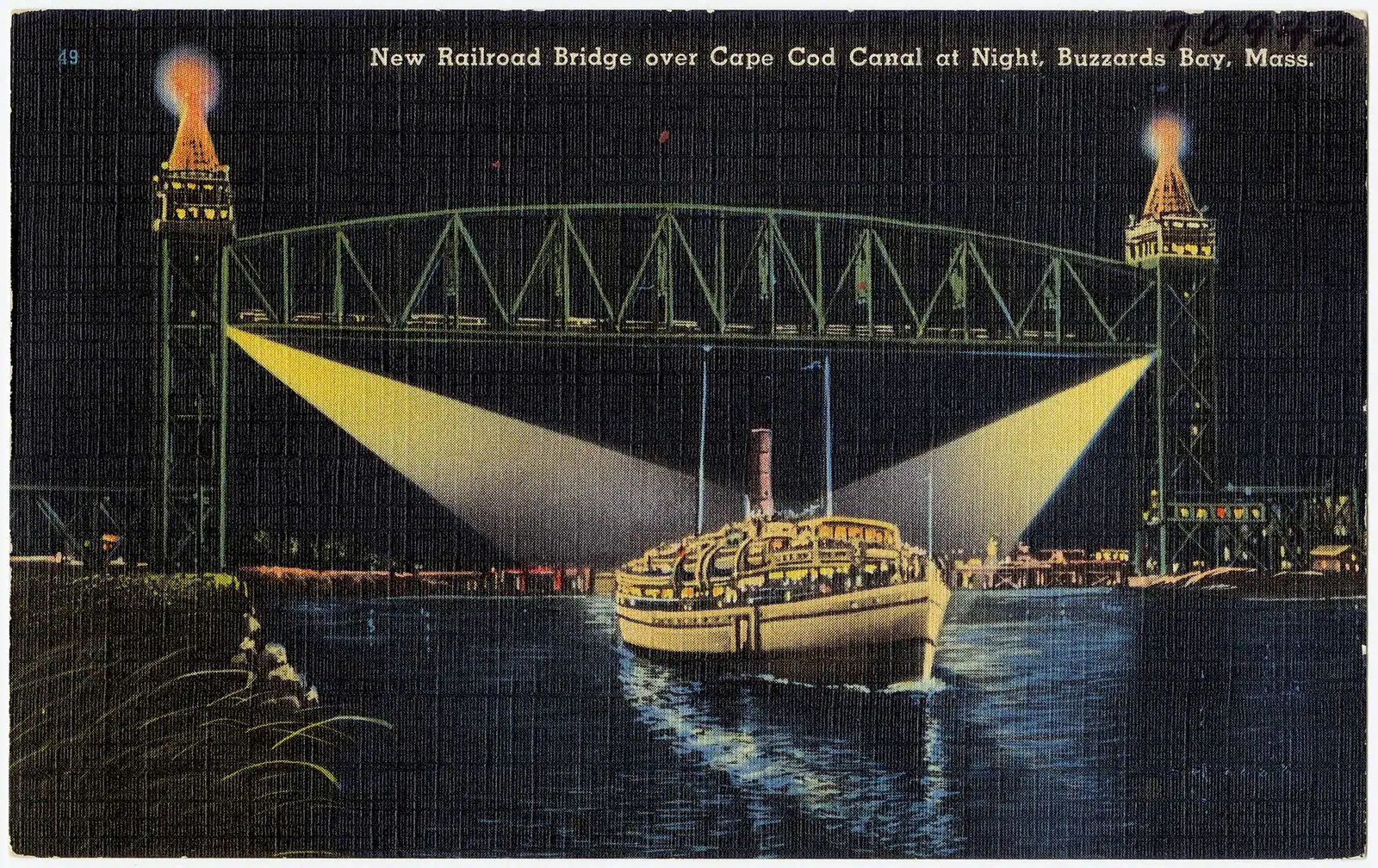
The Cape Cod Canal has service roads running roughly seven miles along each bank, flat, paved, car-free and open all year, with free Army Corps recreation areas and a visitor centre at the Sandwich end. Container ships, tankers and tugs pass within yards. For anyone who likes big machinery this beats every museum on the peninsula.

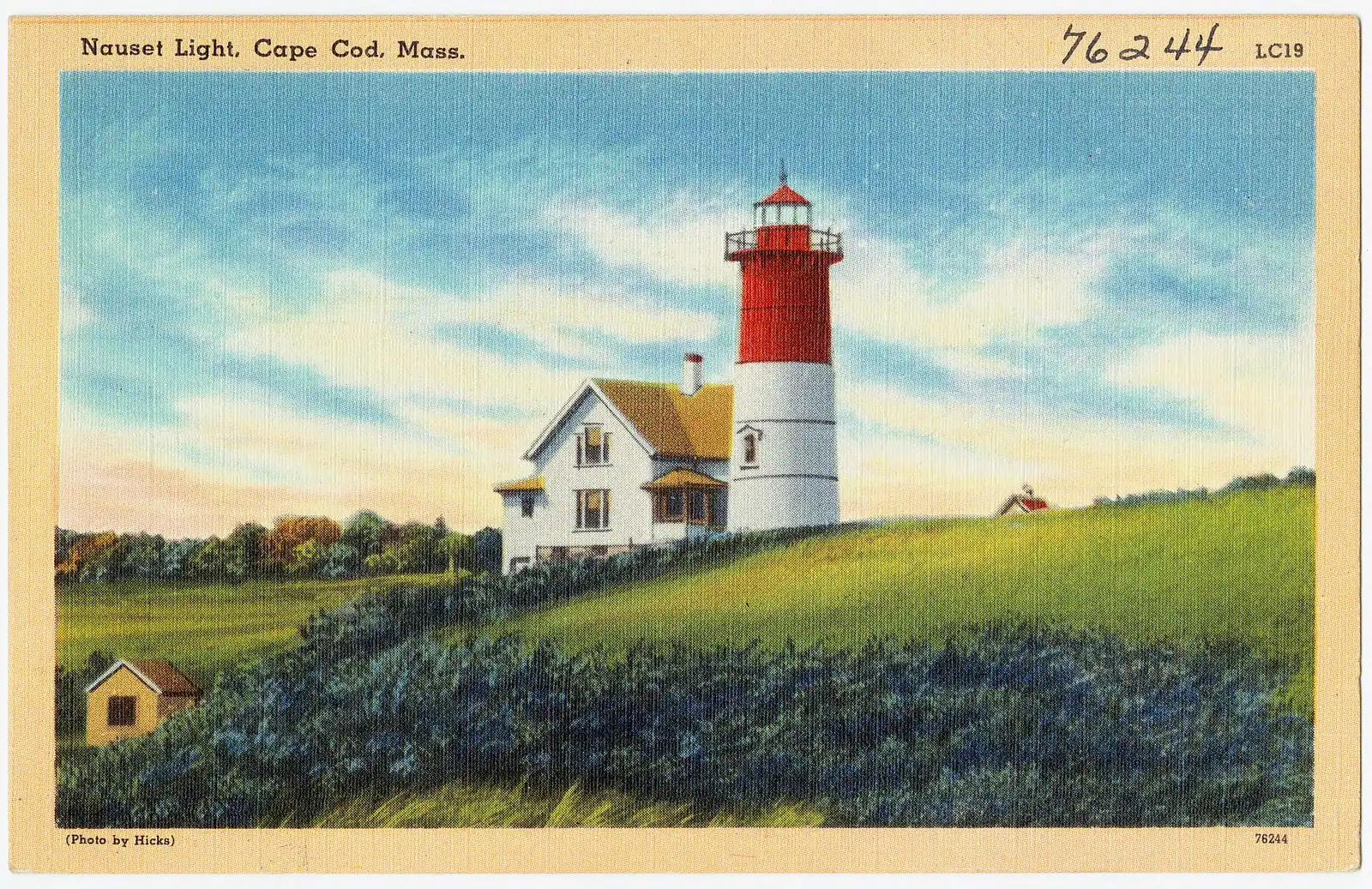
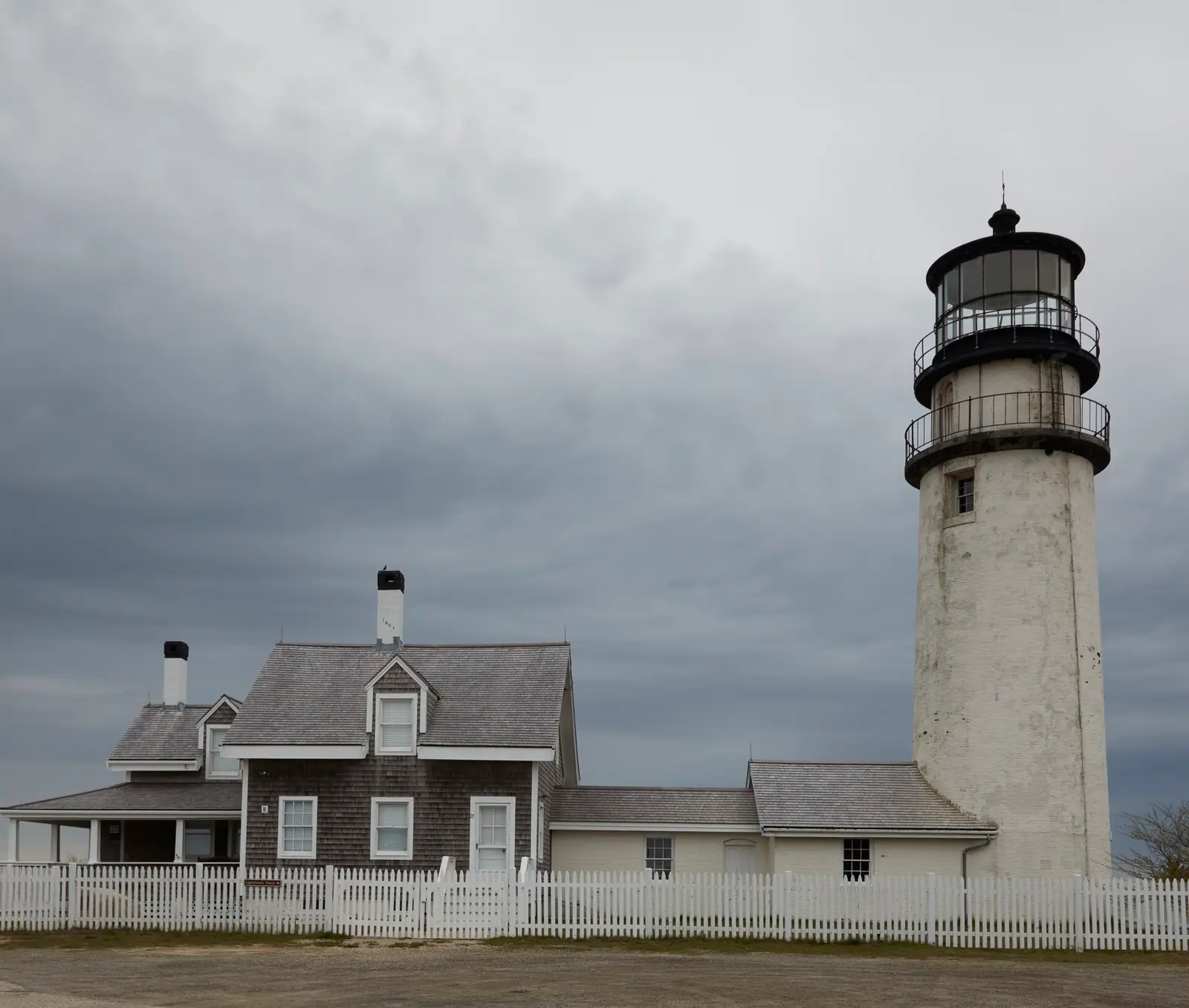
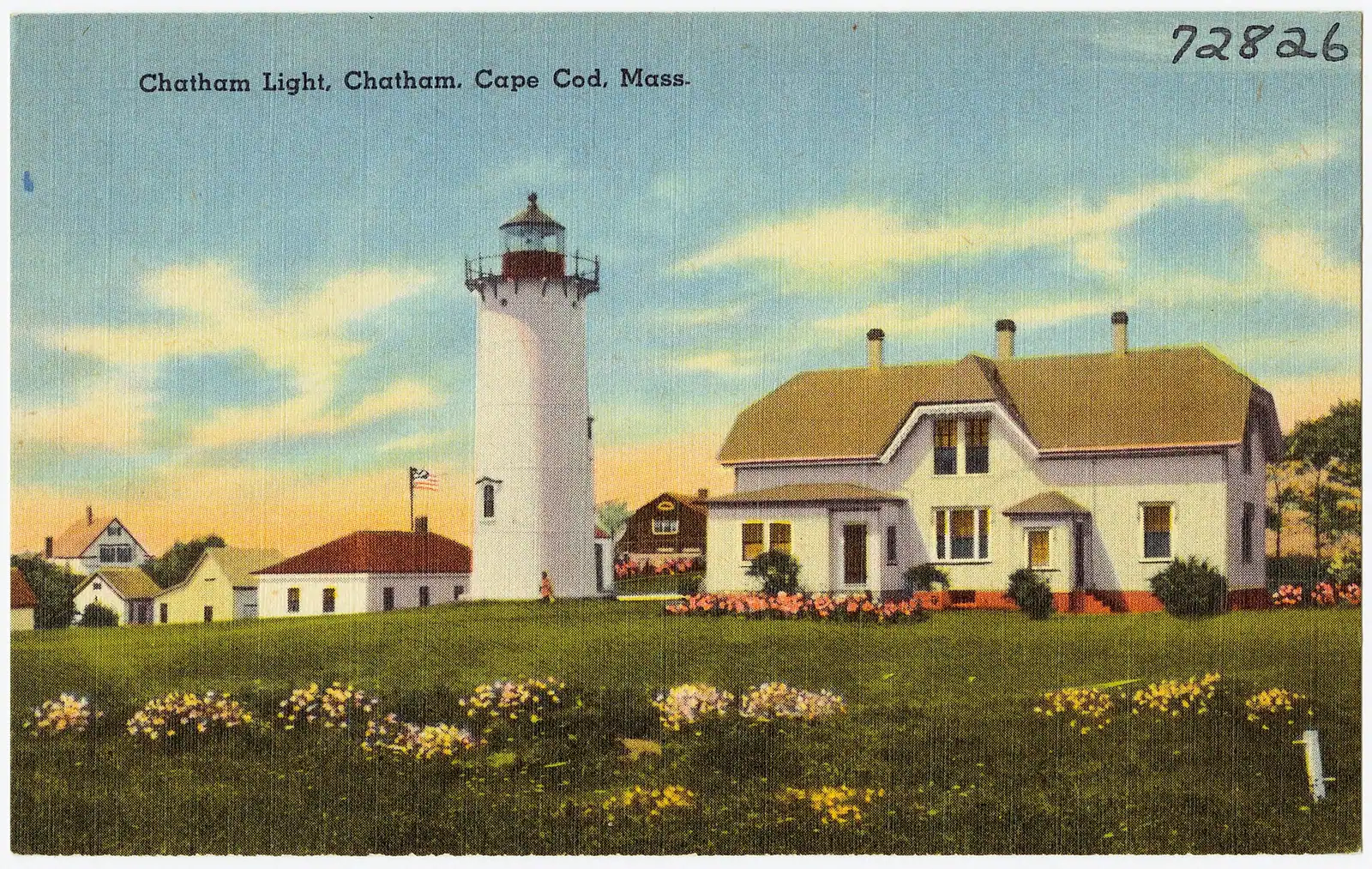
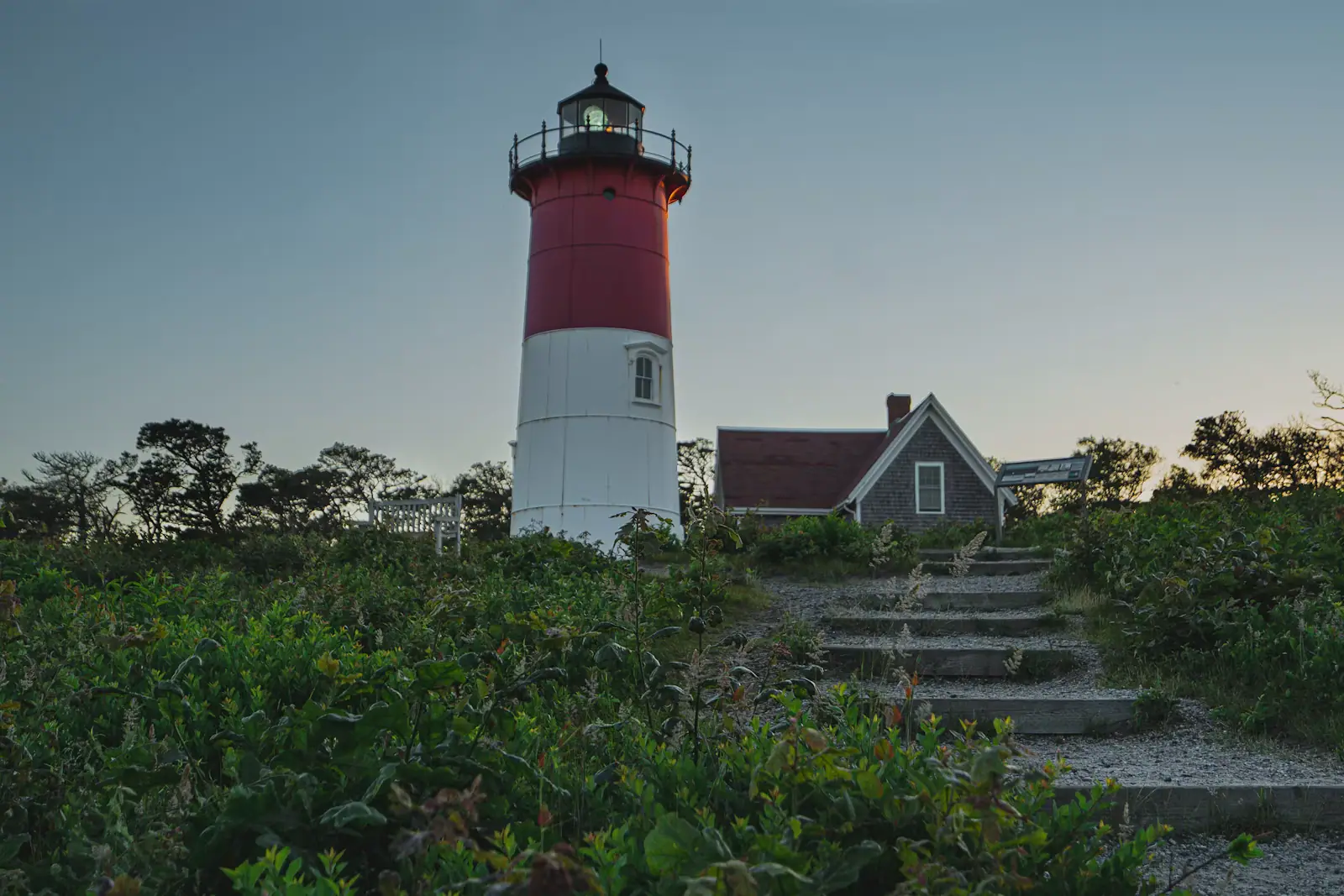
The lighthouses are free to look at even when the towers are closed. Nauset Light in Eastham sits on National Seashore land with a car park; the Three Sisters, three retired towers moved inland and standing together in a clearing in the woods, are a short walk away. Highland Light in Truro occupies the highest ground on the outer shore. The Chatham Light overlook opposite the tower is the best free view at the elbow. Nobska at Woods Hole looks out toward the islands.

The Marconi site in Wellfleet has interpretive panels on the bluff where the first transatlantic wireless message from the United States was sent in January 1903, between President Roosevelt and King Edward VII. The station itself has largely eroded into the sea, which is the point.

Commercial Street, Provincetown costs nothing to walk and is the best evening in New England, provided you have not paid to park.

The Sandwich boardwalk runs out over the marsh to Town Neck Beach on planks bought by townspeople after a storm destroyed the previous one, many of them inscribed.

Things that happen, and charge nothing

Cape Cod Baseball League. Ten teams across the Cape play a collegiate summer season through June, July and August. The standard is high — these are top college players, many of whom go on to professional careers — and admission is free, with a hat passed round between innings. Spectators sit on the grass or bring a folding chair. It is the single best-value evening on the peninsula and a genuine local institution rather than a tourist event.

Band concerts. Several towns run open-air concerts on summer evenings, the best known in Chatham, where a crowd fills the park and children dance at the front. Free, weekly in season, and worth checking the current schedule locally.

The herring run. In spring, alewives push up the Cape's creeks from the sea to spawn in the ponds, and at sites like Stony Brook in Brewster and Bournedale beside the canal you can watch thousands of fish climbing a ladder a few feet from you. It lasts a few weeks and costs nothing.

The cranberry harvest. Through October, bogs across the Upper and Mid Cape are flooded and the fruit floated off, turning whole fields scarlet. These are working farms, so view from public roads rather than walking in.

Horseshoe crab spawning. On the big moon tides in late spring, horseshoe crabs come ashore in the shallow bays to spawn. They are harmless, prehistoric and very strange.

Cold-stunned turtle season. In late autumn, sea turtles that failed to migrate south get trapped inside the hook of Cape Cod Bay and strand on the bay beaches, where volunteers patrol after dark to recover them. If you find one, report it rather than moving it.

Gallery openings in Wellfleet and Provincetown are free to walk into, and in season there are several most weeks.

The off-season Cape, which is nearly all free

Between Columbus Day and Memorial Day the Cape's expensive half simply stops trading, and what is left is mostly free.

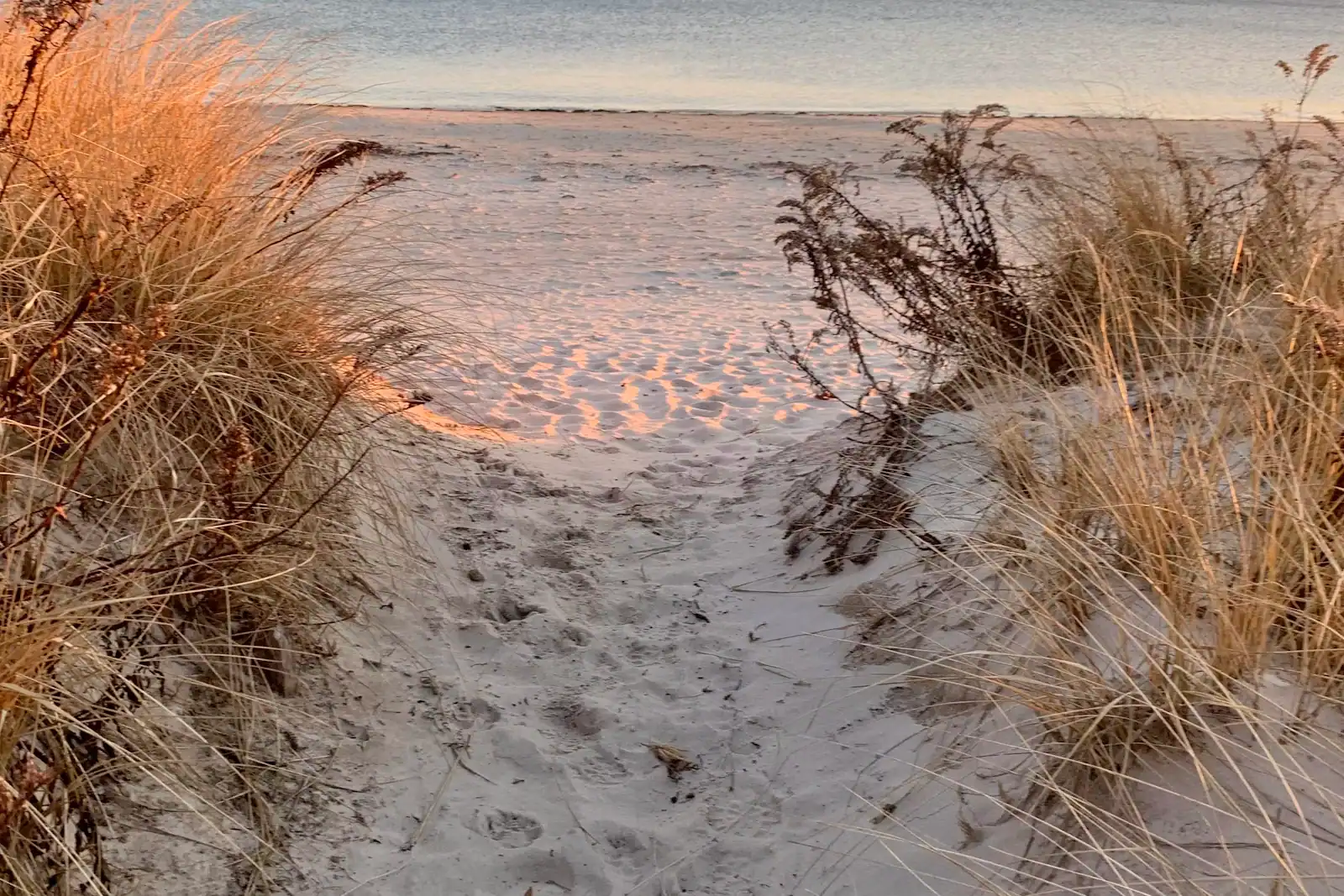
Seashore entrance fees are collected seasonally, so a winter beach day costs nothing at all — not the parking, not the access, nothing. The lots that close when full in July stand empty. Forty miles of Atlantic shoreline, and on a January weekday you will meet a dog walker and a birder.

Grey seals are at their thickest in winter around Monomoy and the Outer Cape beaches, and hauled-out groups are visible from shore at Chatham and Nauset without a boat.

Nor'easters are the winter event. These are ocean storms that drive water and sand at the outer shore for a day or more, and they are what carves the scarps at Marconi. Watching one from a safe distance, wrapped up, at a beach car park, is a reason to come in February. Stay well back from cliff edges, which collapse without warning.

The trails and canal paths are open all year, and the Rail Trail in March is dry, empty and yours.

Town holiday strolls in December — Sandwich, Chatham, Falmouth and others — are free evening events with lights, carols and open shops, and they are for residents rather than visitors, which is why they are worth going to.

The honest caveat is that food and warmth cost more effort in winter. A lot of restaurants are closed, so check before you drive, and base yourself in Provincetown or Hyannis if you want dinner without a plan.

What still costs money, so you can budget for it

Local tips

  • Beach parking in season. $25 a vehicle at the six National Seashore beaches, or a town sticker, or nothing if you cycle in or come out of season.
  • Food. The Cape has no cheap dining scene and prices rise in July and August. Self-catering is the single biggest saving available on a week here, and the farm stands along Route 6A are genuinely good.
  • Bike hire. The trails are free; the bicycle is not. If you are staying a week, hiring by the week rather than the day usually saves a lot.
  • Boat trips. Whale watching and seal cruises generally sit in the $50 to $150 band a head, and there is no free substitute for the whales. There is a partly free substitute for the seals: Chatham Fish Pier.
  • Ferries. Passenger fares to the islands are moderate; taking a car is several times more and books months ahead. Walk on.
  • Museums. Most Cape museums charge, modestly. Several have reduced or free days, and the two National Seashore visitor centres are free.
  • Accommodation. The real cost of a Cape holiday, and the one that moves most between February and August. Shoulder season cuts it sharply while barely touching the weather.

One last free thing that nobody puts on a list. Beachcombing on the bay side at low tide, particularly after a winter storm, turns up sea glass, scallop shells, moon snail collars and the occasional whelk egg case. It is the cheapest and most durable souvenir on the Cape.

On the ground

Where to go

Every place below has its own page — hours, parking, what it costs and what to expect when you get there.

  • A sand path cut through beach grass opening onto the open Atlantic on Cape Cod's outer shore

    Park

    Cape Cod National Seashore

    Forty miles of protected Atlantic shore, six guarded ocean beaches, and one $25 vehicle fee that covers every one of them for the same day.

    3–8 hours$25 per private vehicle per day, valid at all six park beaches. $60 annual park pass.

  • The granite tower of the Pilgrim Monument rising above Provincetown's rooftops beside the harbour

    Neighbourhood

    Free

    Provincetown

    Three thousand people in winter and sixty thousand in August: a fishing port, an art colony since the 1890s, and unlike anywhere else.

    4–12 hoursFree to visit. Parking, ferries, the monument and tours are charged separately.

  • The red and white tower of Nauset Light standing above low trees in Eastham, Massachusetts

    Landmark

    Free

    Nauset Light

    The red-and-white tower on the potato chip bag — built in Chatham, moved to Eastham in 1923, and hauled back from the cliff edge in 1996.

    0.5–1.5 hoursFree to visit the grounds and the Three Sisters. Tower tours are volunteer-run, often by donation.

  • A paved pathway running between green grass under an overcast sky

    Trail

    Free

    Cape Cod Rail Trail

    Twenty-five and a half paved miles on an old railbed through seven towns, and the way to reach a beach in August without parking.

    1.5–6 hoursFree to use. Some trailhead car parks charge or require a town sticker.

  • A lighthouse rising above a low building at the water's edge

    Landmark

    Free

    Highland Light

    The Cape's first lighthouse, established 1797 on Truro's highest bluff and hauled 450 feet inland over eighteen days in July 1996.

    1–2.5 hoursGrounds and car park free. A small charge applies to climb the tower when it is open.

  • A weathered slat fence running along the edge of a grassy dune above a Cape Cod beach

    Beach

    Marconi Beach

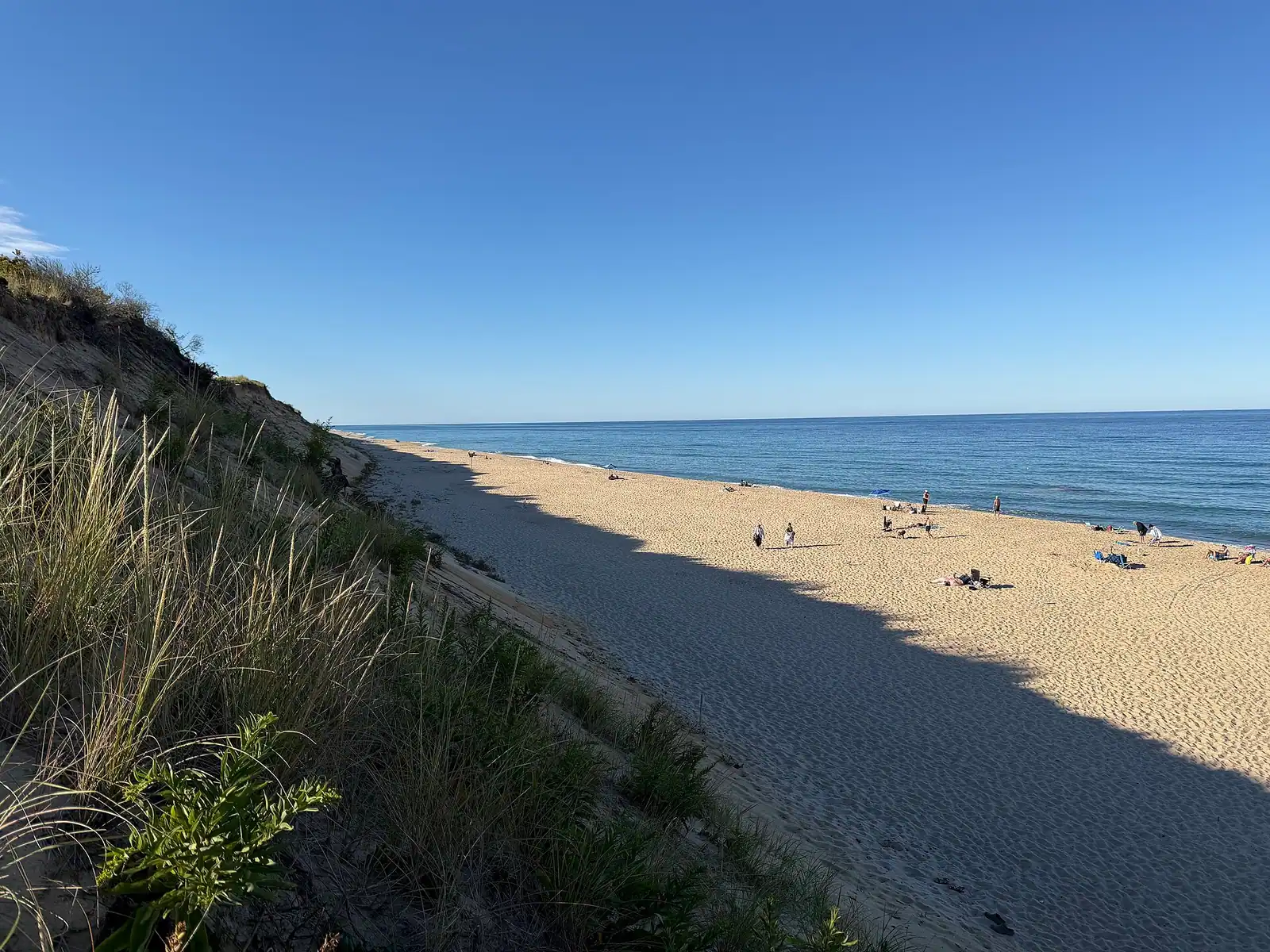
    A high sand scarp, a long staircase, and the bluff the first transatlantic wireless message left the United States from in January 1903.

    2.5–5.5 hoursNational Seashore fee: $25 per vehicle per day. The Marconi Station overlook is free.

  • Boats tied up in a harbour basin below a lighthouse

    Landmark

    Free

    Chatham Light

    An active Coast Guard station at the Cape's elbow, above a barrier beach that has broken open and resealed several times in living memory.

    0.5–1.5 hoursFree. The overlook, the view and the beach stairs cost nothing.

  • People walking out across wet sand flats at low tide on the bay side of Cape Cod

    Beach

    Free

    First Encounter Beach

    Bay-side Eastham, where the tide goes out for most of a mile and the name marks a skirmish fought on this sand in December 1620.

    1.5–4 hoursFree to enter. Town parking is charged in season by daily rate or Eastham beach sticker.

  • Salt marsh grass and a winding tidal channel under a wide overcast sky on Cape Cod

    Nature preserve

    Free

    Monomoy National Wildlife Refuge

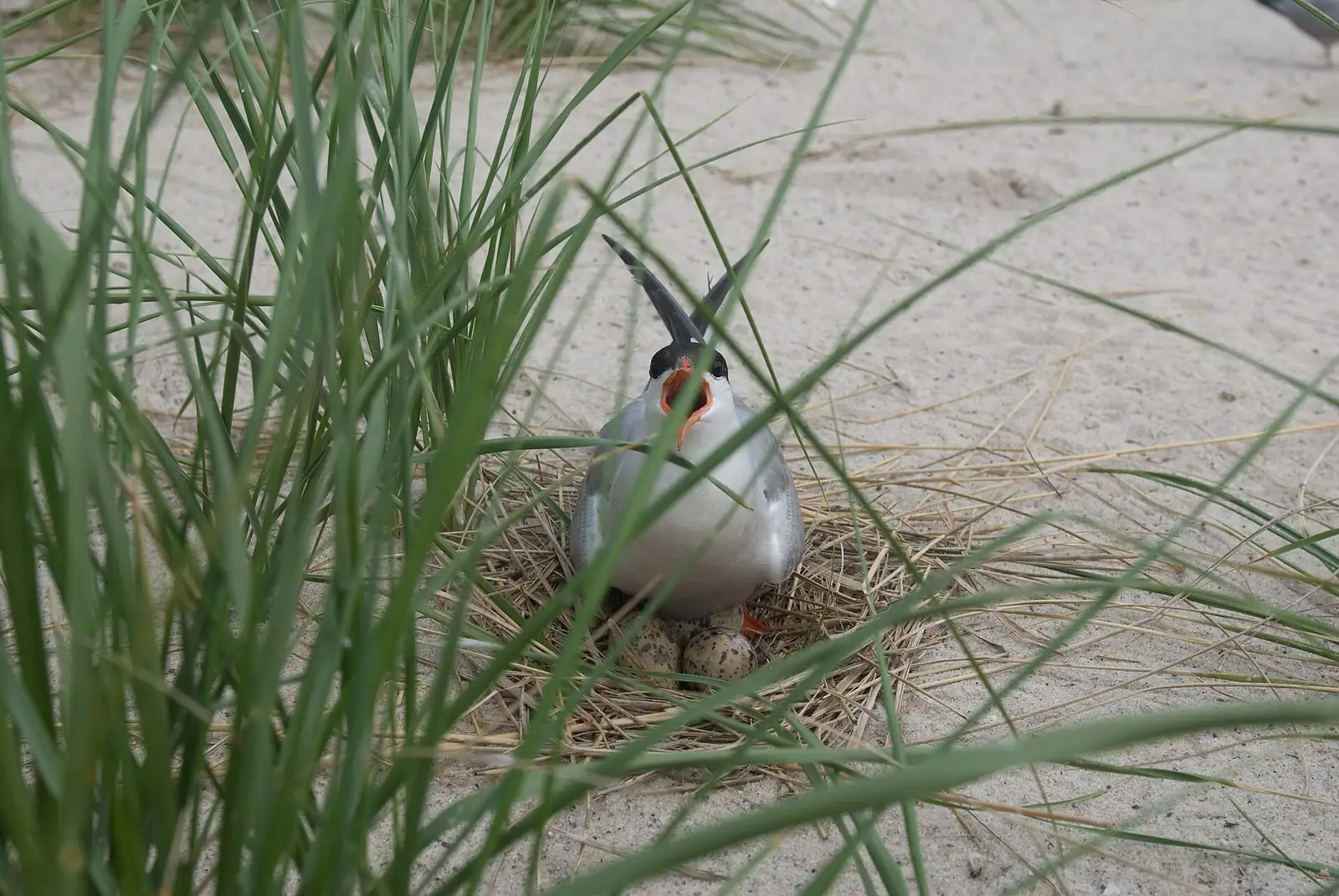
    Two wilderness barrier islands off Chatham holding thousands of grey seals and the Atlantic coast's largest common tern colony.

    1–4 hoursFree. Refuge lands carry no entrance charge; boat trips with private operators are separately priced.

  • Low sun over a thin sheet of water lying on an exposed sand flat at low tide

    Beach

    Free

    Skaket Beach

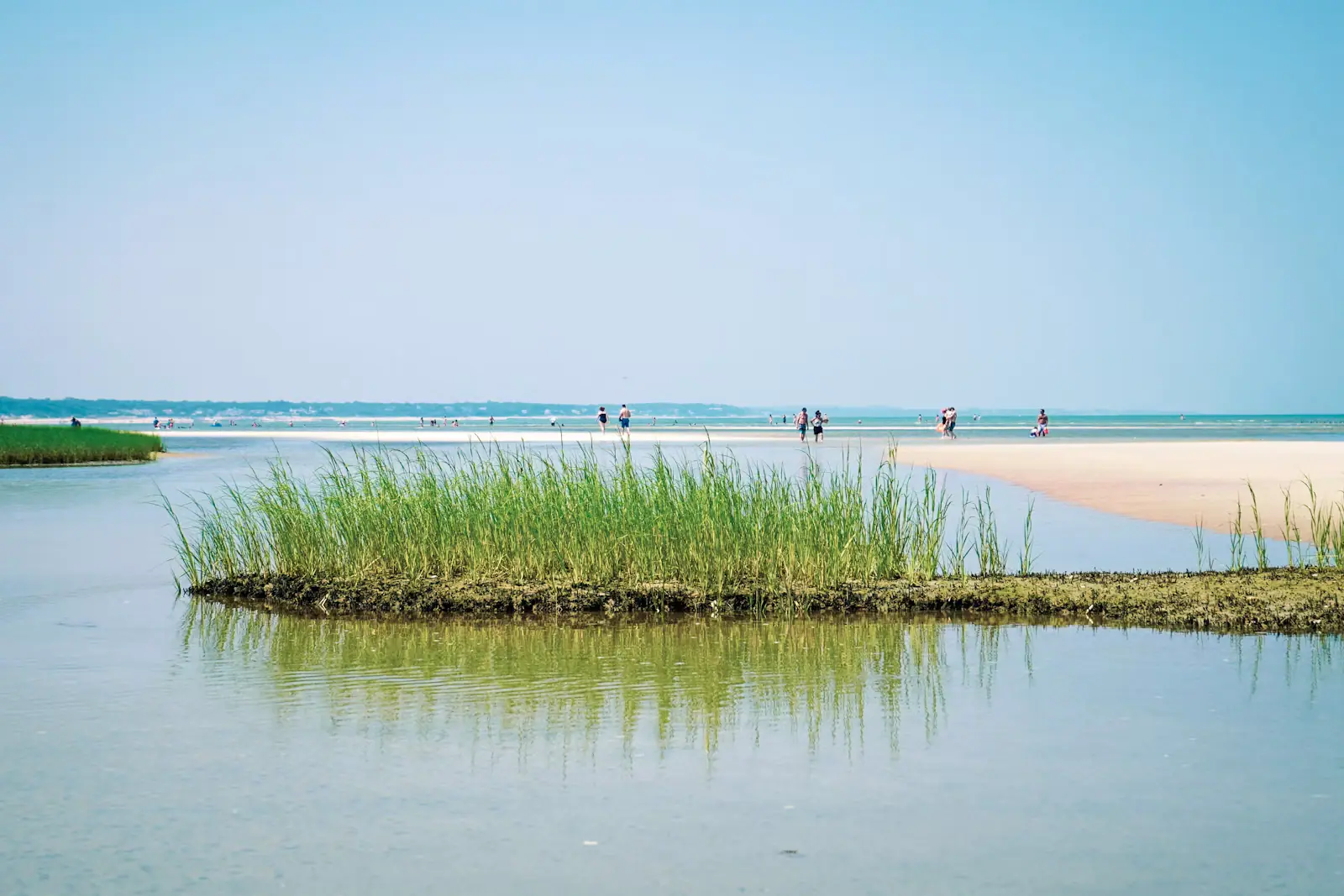
    Warm, shallow bay water over a flat that empties for most of a mile — and a car park small enough that it shuts by mid-morning in July.

    2–5 hoursFree to enter. Town parking is charged in season by daily rate or Orleans beach sticker.

  • People walking out across wet sand flats at low tide on the bay side of Cape Cod

    Neighbourhood

    Free

    Brewster

    The bay town where low tide opens a walking surface that was open sea an hour earlier, and fills again faster than people expect.

    3–8 hoursFree to visit. Town beach lots need a Brewster sticker in season; Nickerson charges day-use parking.

  • Working fishing and excursion boats tied along a pier with a Cape Cod town behind them

    Marina

    Free

    Chatham Fish Pier

    A free viewing gallery built over a working unloading floor, where Chatham's day boats land what they caught that morning.

    0.5–1.5 hoursFree. The observation gallery above the unloading floor has no admission at any time of year.

  • A paved pathway running between green grass under an overcast sky

    Water feature

    Free

    Cape Cod Canal

    A 7.4-mile federal waterway with a car-free paved service road down each bank: the flattest, most reliable cycling on Cape Cod.

    1–4 hoursFree. The service roads on both banks are open to walkers and cyclists at no charge.

Straight answers

Questions people actually ask

What can you do on Cape Cod for free?

A great deal, because almost nothing here charges admission. Every walking trail in the National Seashore, the two visitor centres and the Province Lands observation deck, the Cape Cod Rail Trail, seven car-free miles along each bank of the canal, Chatham Fish Pier's observation deck, the lighthouse grounds at Nauset, Truro and Chatham, the Marconi wireless site, and Cape Cod Baseball League games, which charge nothing to watch. What costs money is parking.

Are Cape Cod beaches free?

The sand is; the car park generally is not, in season. National Seashore beaches charge a vehicle entrance fee — currently $25 a day, or $15 if you arrive on foot or by bicycle aged sixteen and over, or $60 for an annual pass — collected seasonally at six beaches. Town beaches mostly require a town sticker, and several will not sell a daily rate in July and August. Outside the fee season, Seashore beaches cost nothing.

How can I avoid paying for beach parking on Cape Cod?

Cycle in, which cuts the National Seashore charge from $25 to $15 and is free at many town landings. Visit outside the fee season, when the same car parks cost nothing. Use the free trailhead car parks at Fort Hill, Marconi's cedar swamp, Doane Rock, Beech Forest and Great Island. Buy the $60 annual pass if you are here a week. And ask your rental manager whether the property comes with a town beach sticker.

Is Cape Cod Baseball League free to watch?

Yes. The league is a collegiate summer competition played across ten Cape towns through June, July and August, and admission is free, with a hat passed round for donations between innings. The standard is high and a good number of players go on to professional careers. Spectators sit on the grass or bring folding chairs. It is comfortably the best-value evening on the peninsula and a genuine local institution.

What is the best free walk on Cape Cod?

Great Island in Wellfleet, a loop of several miles out onto a former island now joined to the mainland by a sand spit, past the excavated site of an eighteenth-century tavern. It is free, the car park is free, and it is properly demanding — no shade, no water, no shortcut, and parts of the route flood at high tide. For something shorter, the Atlantic White Cedar Swamp boardwalk at Marconi is the most surprising.

Can you see seals on Cape Cod without paying for a boat?

Yes. Chatham Fish Pier has grey seals in the water below the observation deck most afternoons, waiting for scraps as the day boats unload, and it costs nothing to watch. Seals are also frequently visible from the Chatham Lighthouse overlook and along the Outer Cape beaches, and in winter they haul out in very large numbers around Monomoy. A boat gets you far closer, but it is not the only way.

Is Cape Cod expensive to visit on a budget?

Accommodation and food are the expensive parts; the activities mostly are not. A week built around free trails, the rail trail, the canal paths, the fish pier, baseball and beach parking paid once on an annual pass costs very little. The two biggest savings available are self-catering rather than eating out, and travelling in the shoulder season, when lodging rates fall sharply while the weather barely changes.

Are the Cape Cod National Seashore visitor centres free?

Yes. Salt Pond in Eastham and Province Lands in Provincetown both cost nothing to enter, including their films and exhibits, and their car parks are free. The Province Lands observation deck gives a 360-degree view over the dunes and the tip of the Cape at no charge and at any time of year. The entrance fee applies only at the six ocean beaches, and only in season.