Skip to content
Search
Menu

Bookings here go through Viator, who pay us a commission. You are charged the same either way, and the commission had no say in this list.

Landmark

Highland Light

Last updated

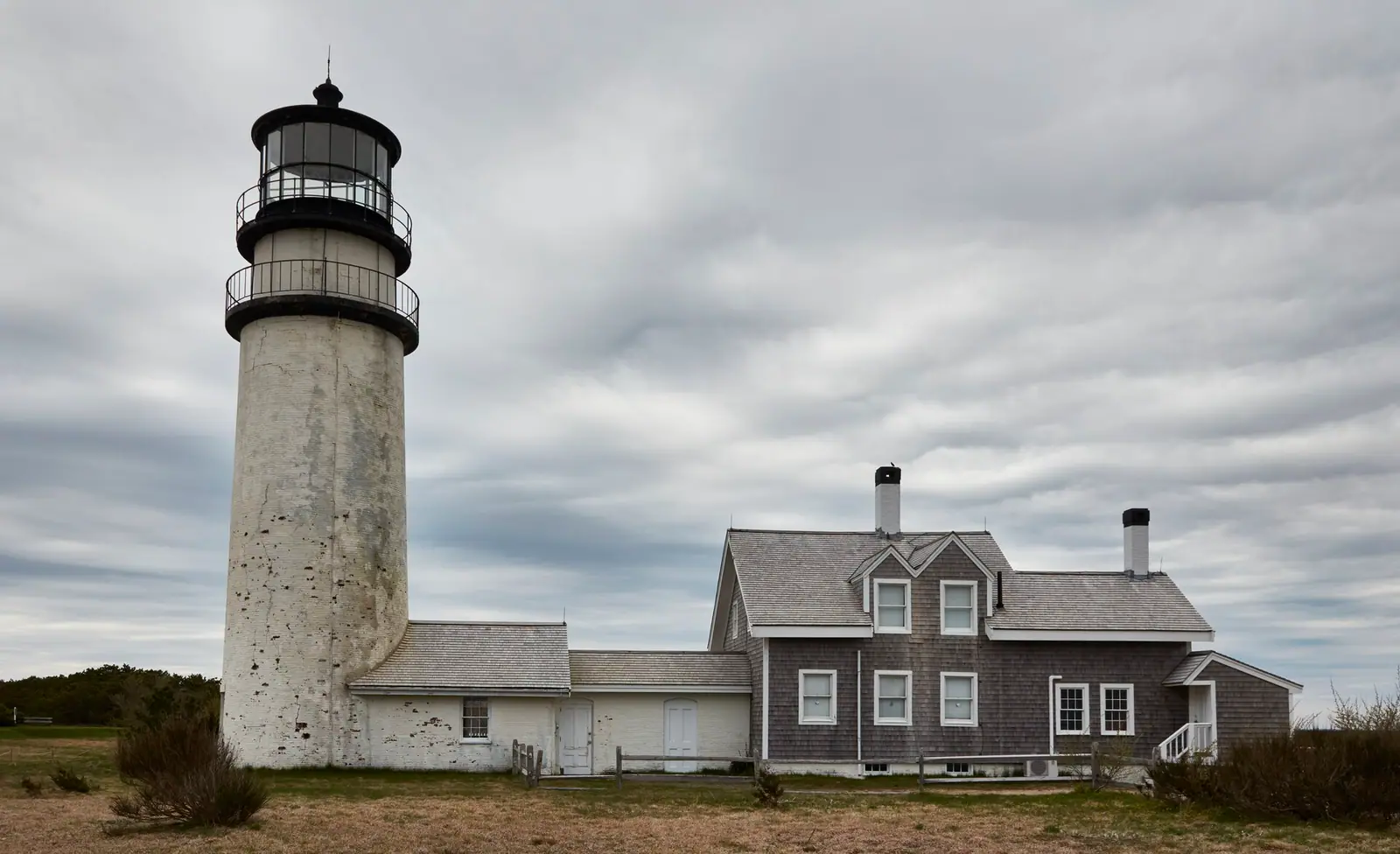
The Cape's first lighthouse, established 1797 on Truro's highest bluff and hauled 450 feet inland over eighteen days in July 1996.

Photo: Carol M. HighsmithPublic domain

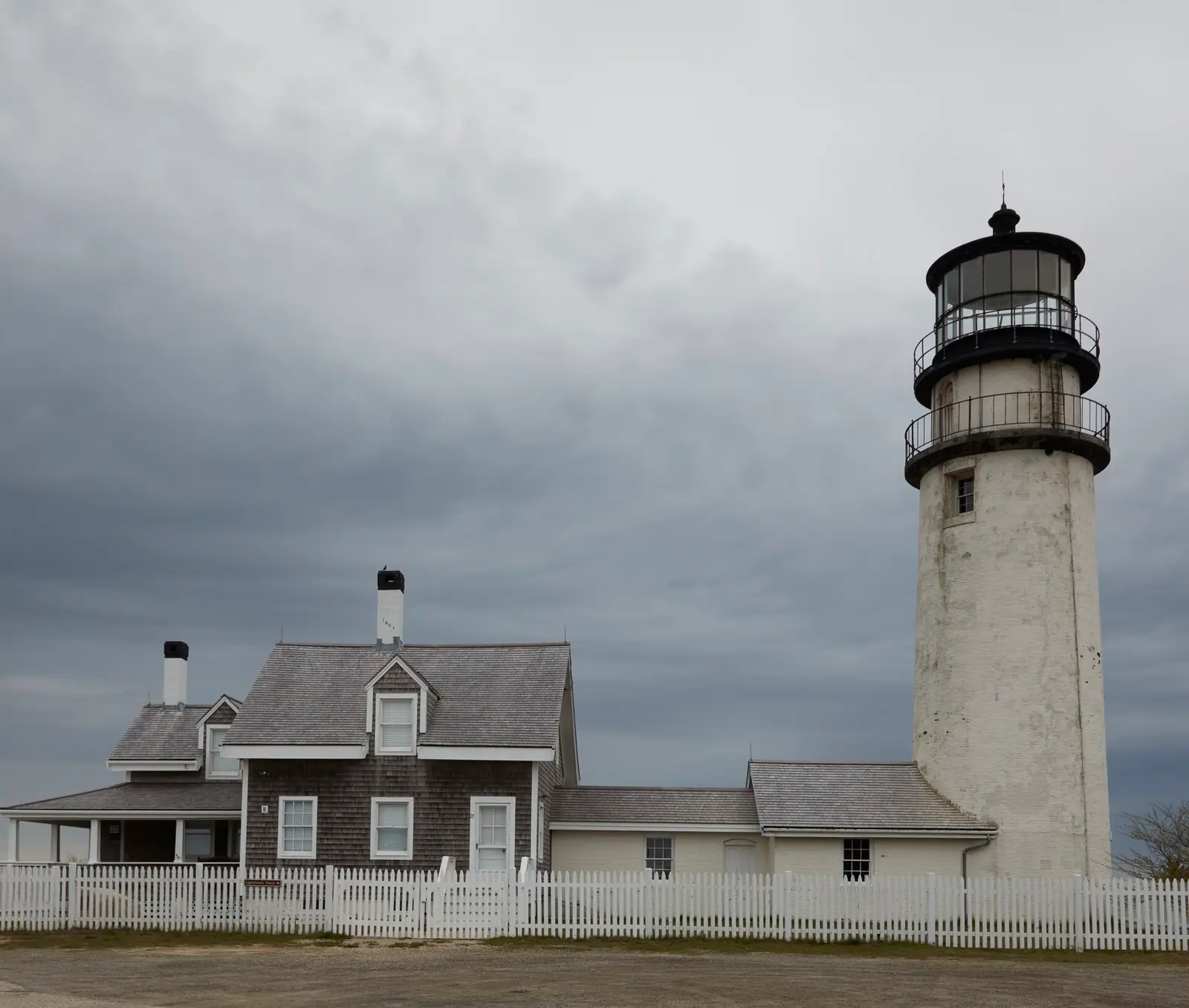
Highland Light — Cape Cod Light to anyone who grew up in Truro — is the oldest light station on the peninsula and, at 66 feet of brick on the highest ground on the Outer Cape, the tallest. A lighthouse was established here in 1797 under an authorisation signed by George Washington, the first on the Cape, to warn coastal shipping off a shore that had already swallowed an extraordinary number of vessels. Towers of 1797 and 1833 came and went; the one standing now went up in 1857.

It sits in an unlikely setting. The station occupies a clifftop that is also the middle of the Highland Links golf course, so the walk from the car park to the tower crosses fairways, and the classic photograph has a flag and a bunker in it whether you want them or not. Behind the tower, the Highland House Museum occupies a former summer hotel and carries Truro's own history.

The reason people who care about lighthouses know this one is what happened in July 1996. The cliff edge had come within a hundred feet or so of the tower. Over eighteen days, International Chimney Corporation and Expert House Movers cut the structure free, set it on rollers and hydraulic jacks, and walked the entire 66-foot brick tower 450 feet west across the golf course, fully intact. It is one of the most watched engineering jobs in the history of American lighthouse preservation, and there is a line of markers on the ground showing where it used to stand.

Thoreau stayed at this station in the 1850s and wrote about the keeper, the lamps and the cliff. Edward Hopper, who summered in Truro, painted it in 1930.

Getting there and parking

Turn east off US-6 in North Truro onto Highland Road and follow signs for Highland Light and Highland Links. The car park serves the light, the golf course and the Highland House Museum, and the walk to the tower crosses the course on a marked route.

Allow about fifteen minutes from Provincetown, twenty-five from Wellfleet and around an hour from Orleans outside the summer.

Head of the Meadow Beach is five minutes north on the same side of the highway, which makes an easy pairing: the tower first thing, then the beach.

There is no bus service. Cycling in is pleasant but Highland Road climbs, and the Head of the Meadow bike trail does not connect directly to the light.

Eighteen days in July 1996

The engineering is worth understanding, because it explains why the tower is intact rather than rebuilt.

A brick lighthouse cannot be taken apart and put back together. The solution was to treat the whole structure as a single object: excavate beneath it, cut it free of its foundation, slide steel beams underneath, jack it up onto rollers, and push it along a prepared track with hydraulic rams, a few feet at a time. The tower travelled 450 feet west over eighteen days. The keeper's house went with it. Nothing cracked.

The same two contractors did Nauset Light's 336-foot move in November of the same year, which makes 1996 the year two Cape lighthouses walked inland. The Truro Historical Society and a public subscription put up a substantial share of the money.

Markers on the ground show the original position, and the gap between them and the tower is the clearest illustration of coastal erosion anywhere on the Cape: not a statistic, a distance you can pace out.

It buys time rather than solving anything. The cliff continues to retreat, and at some point in the next century somebody will have this conversation again.

Climbing the tower

Unlike most lighthouses on this coast, Highland Light can normally be climbed, and that makes it the one to pick if you want to stand in a lantern room on Cape Cod.

The grounds are open year-round and free. The tower itself opens to the public in season — in recent years from around May until late October — with guided access, a small admission and a queue at busy hours. Days, hours and prices are set each season and are not worth guessing; check with the Truro Historical Society or the National Park Service before you drive out for it.

A minimum height rule applies to climbers, as it does at most working towers, so check before you promise a small child the top. The stair is a spiral with a final ladder section into the lantern, and the gallery is narrow.

What you get from the top is the best view on the Outer Cape: the Atlantic in a long curve north toward Provincetown and south past Wellfleet, the narrow spine of Truro, and on a clear day Cape Cod Bay on the other side. It is the view that explains the geography of the whole peninsula in about ten seconds.

The Highland House Museum next door is a separate admission and a genuinely good small local museum.
A lighthouse on a golf course, and the man who wrote about it

Highland Links has been played here since the 1890s, which makes it one of the oldest courses in the United States still on its original ground. It is a short, links-style nine on clifftop turf with the Atlantic below and the wind doing most of the defending.

  • You can walk to the tower across the course, on the marked route. Stay on it: golf balls travel fast and the club is entirely reasonable about visitors who stay where they should.
  • Non-golfers should still walk the cliff path north of the tower. The scarp here is the highest on the Cape and the view down the coast is the one Hopper painted.
  • The Highland House Museum sits a minute away in a former summer hotel, with Truro's shipwreck, wireless and farming history. Seasonal hours.
  • Head of the Meadow Beach is five minutes down the road and makes the natural pairing for the same morning.
  • Thoreau stayed at this station on his Cape walks in the 1850s and described the keeper's lamps and the cliff in his book Cape Cod. He was blunt about the wind.

There is no food at the light. North Truro is a couple of minutes away and Provincetown fifteen.

The cliff, the wind and when to come

This is the most exposed high ground on the Outer Cape and it behaves like it. The wind off the Atlantic here is relentless, and a still day at the light is worth remarking on. Bring a layer more than the temperature suggests, even in August.

The cliff edge is fenced and the fence is not advisory. The scarp is loose glacial material standing near vertical, undercut from below, and it collapses without warning — which is the whole reason the tower had to be moved. Do not step over for a photograph, and do not stand at the bottom of the face on the beach below.

Fog is the other Truro condition. This shore fogs in hard and quickly in late spring and early summer, and a lighthouse in fog is either the best photograph of your trip or a complete write-off, with no way to tell which in advance. The light and its horn are still working aids to navigation.

Winter is the connoisseur's visit: the grounds open, nobody there, hard light on brick, and the sound of the Atlantic hitting the bottom of a 120-foot cliff. The tower is shut and the museum is shut, and it does not matter.

Near Highland Light

Straight-line distances, so allow more on the road — the island is long and has one main parkway.

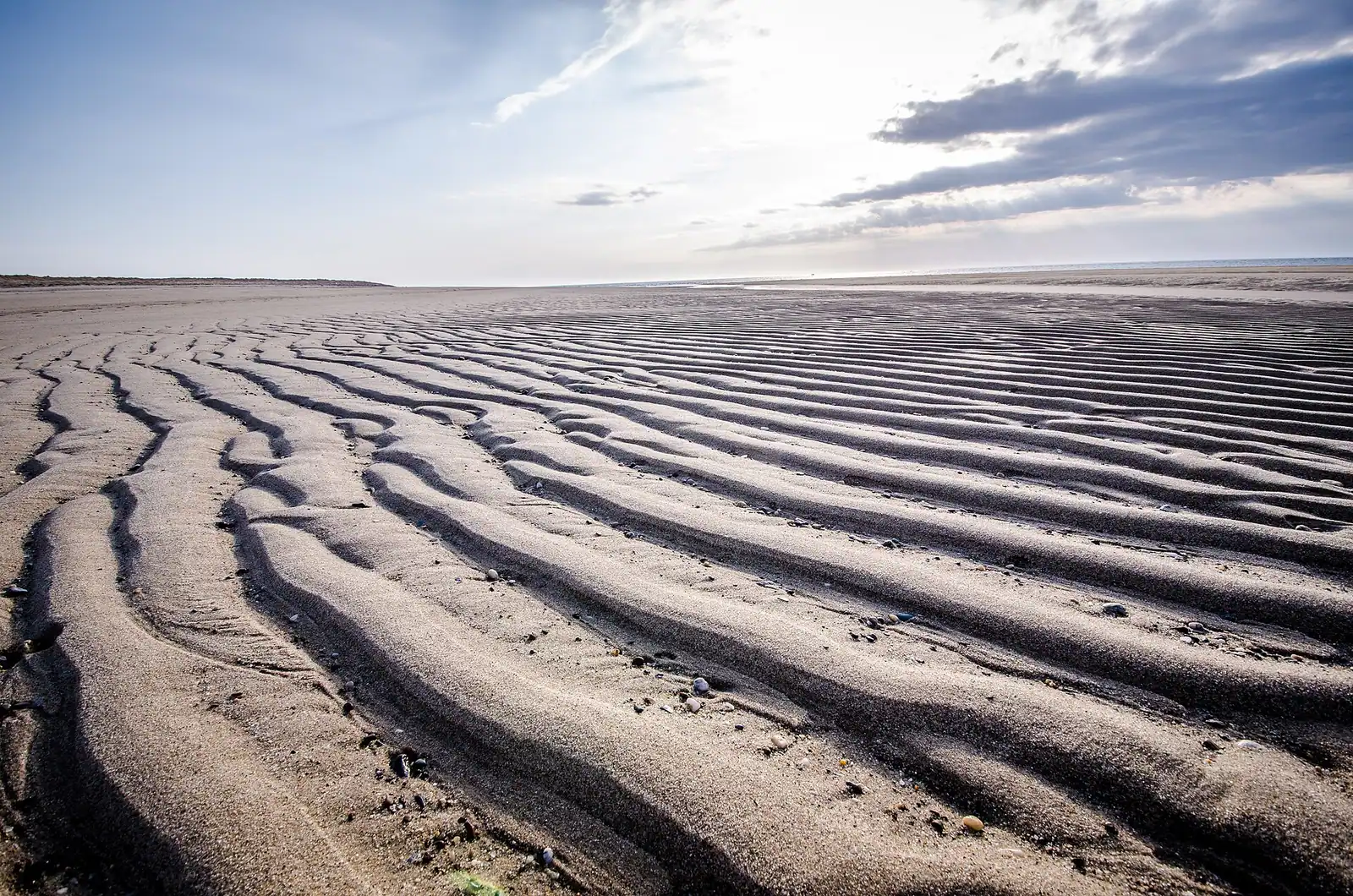
  • A long empty beach of pale sand backed by low dune vegetation with no buildings in sight

    Beach

    Head of the Meadow Beach

    The least crowded of the six park beaches, with a Truro town lot next door on a different payment system and an 1872 wreck in the sand.

    2–5 hoursNational Seashore lot: $25 per vehicle per day. The adjacent Truro town lot charges separately.0.8 mi away

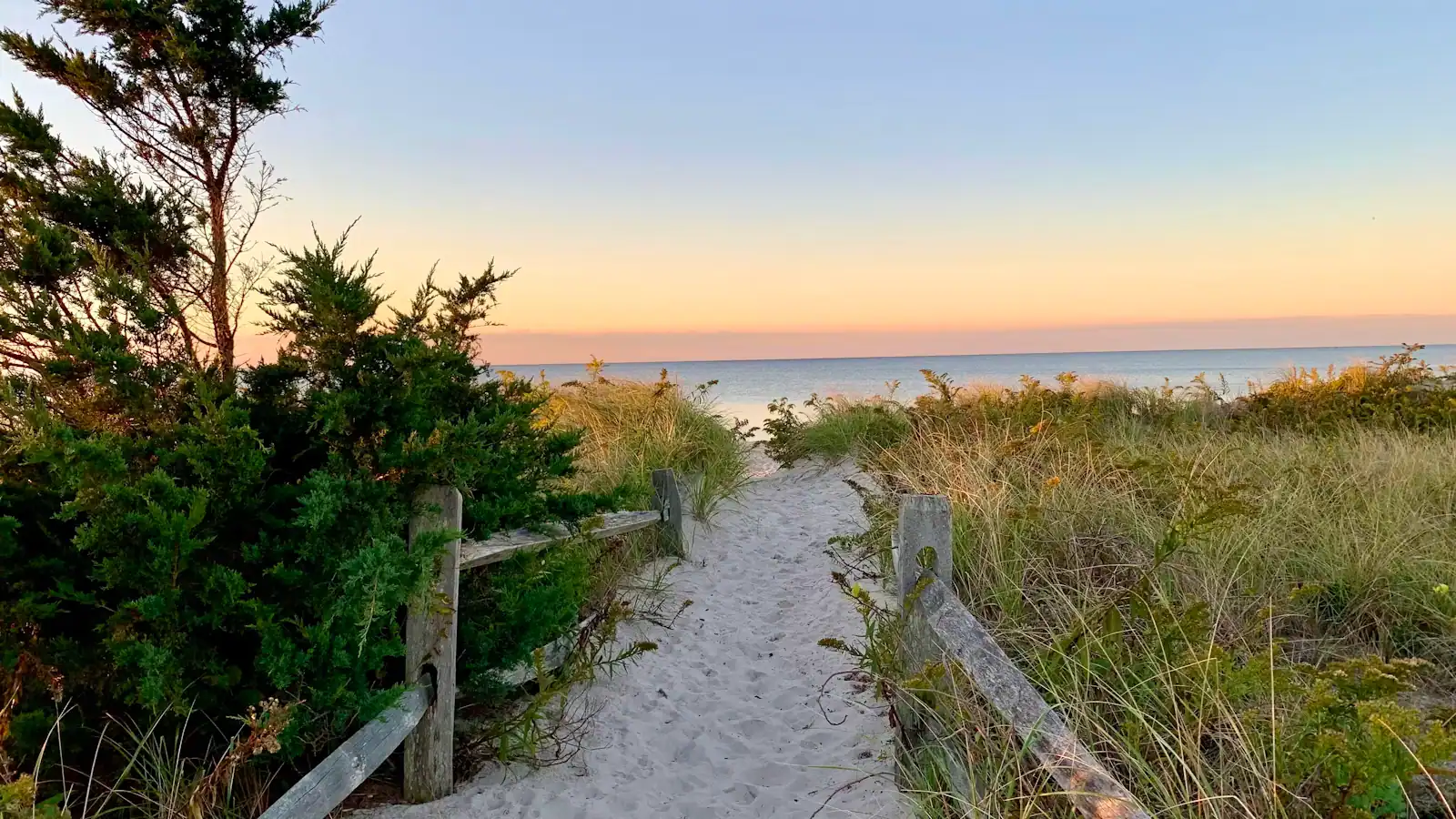
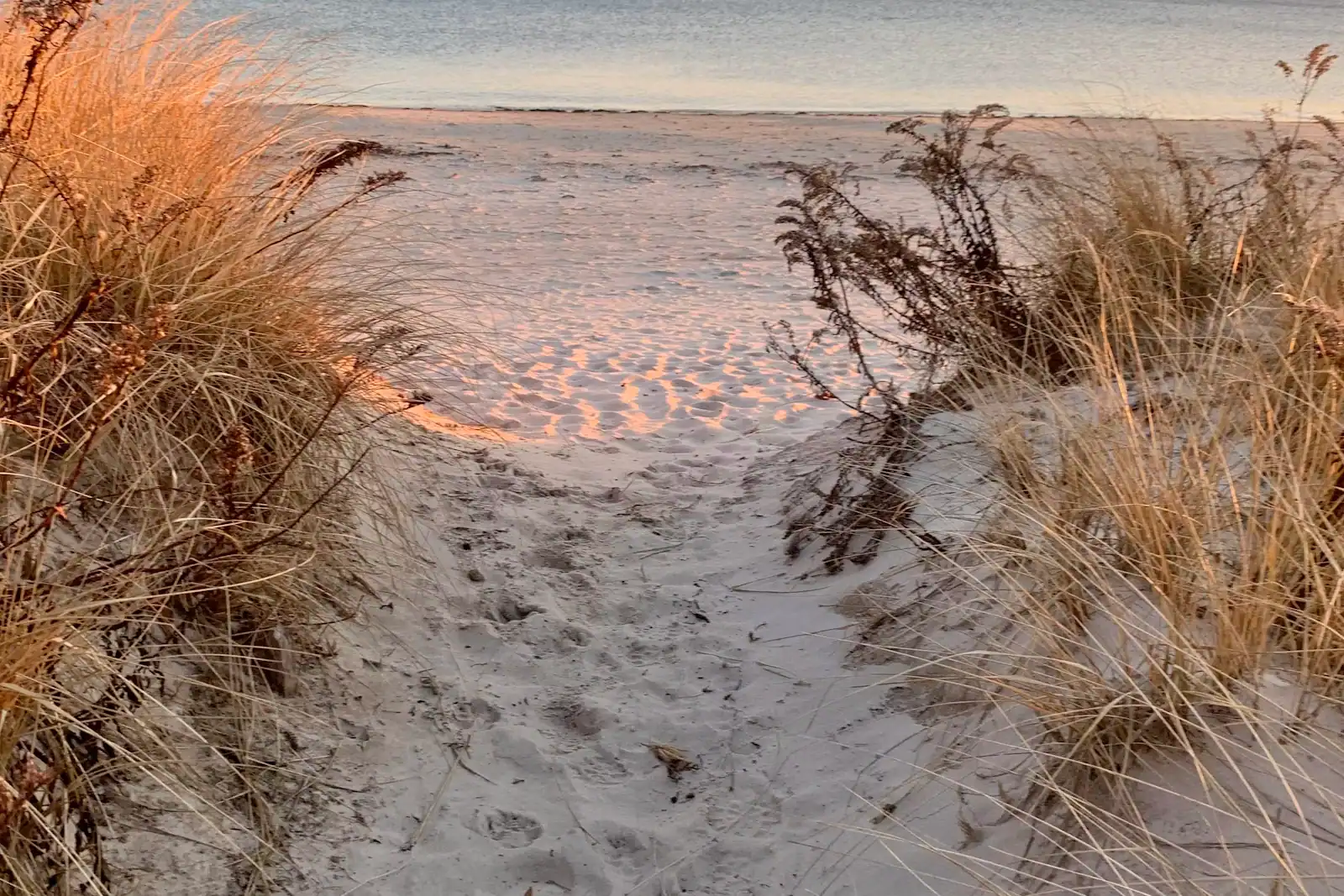
  • A sandy footpath lined with beach grass dropping down toward the shore on Cape Cod

    Neighbourhood

    Free

    Truro

    Two and a half thousand residents, no commercial centre, and the narrowest, emptiest stretch of the whole peninsula.

    2–7 hoursFree to visit. Town beaches need a Truro sticker in season; Head of the Meadow takes the federal fee.3 mi away

  • Whales surfacing together in open grey water off the Massachusetts coast

    Beach

    Race Point Beach

    The beach at the outside of the fist, facing north into deep water — the one place on the Cape where whales are visible from a towel.

    2–6 hoursNational Seashore fee: $25 per vehicle per day, or $15 per person on foot or by bicycle.9.4 mi away

  • The granite tower of the Pilgrim Monument rising above Provincetown's rooftops beside the harbour

    Neighbourhood

    Free

    Provincetown

    Three thousand people in winter and sixty thousand in August: a fishing port, an art colony since the 1890s, and unlike anywhere else.

    4–12 hoursFree to visit. Parking, ferries, the monument and tours are charged separately.6.3 mi away

Highland Light: common questions

Can you climb Highland Light?

Usually yes, in season, which makes it the lighthouse to choose on Cape Cod if you want to reach a lantern room. The tower has in recent years opened for guided climbs from around May to late October, with a small charge and a minimum height rule for climbers. Dates, hours and prices are set each season by the Truro Historical Society, so check before you drive out. The grounds themselves are open year-round and free even when the tower is shut.

How was Highland Light moved in 1996?

Intact, on rollers, over eighteen days in July 1996. Engineers excavated beneath the 66-foot brick tower, cut it free of its foundation, slid steel beams underneath, jacked it onto rollers and pushed it 450 feet west across the golf course with hydraulic rams a few feet at a time. The keeper's house went too and nothing cracked. Markers on the ground show the original position — the gap between them and the tower is the clearest picture of coastal erosion on the Cape.

Is Highland Light the oldest lighthouse on Cape Cod?

The station is. A lighthouse was established on this Truro clifftop in 1797 under an authorisation signed by George Washington, making it the first on the Cape, and at 66 feet the current tower is also the tallest. The tower you see is not the 1797 one: it is the third on the site, built in 1857 after wooden and brick predecessors of 1797 and 1833. Chatham Light, established in 1808, was the second station on the peninsula.

Why is Highland Light on a golf course?

Because Highland Links was laid out around it in the 1890s, on the clifftop turf beside the station, and it is one of the oldest courses in the United States still played on its original ground. The walk from the car park to the tower crosses fairways on a marked route, so stay on it. It also means the standard photograph of Highland Light tends to include a flagstick, which visitors either find charming or spend twenty minutes trying to crop out.