Skip to content
Search
Menu

Bookings here go through Viator, who pay us a commission. You are charged the same either way, and the commission had no say in this list.

Things to Do

Whale Watching from Cape Cod

Last updated

Whale watching from Cape Cod: humpbacks, fins and minkes on Stellwagen Bank from April to October, why Provincetown sails closest, and the rules boats follow.

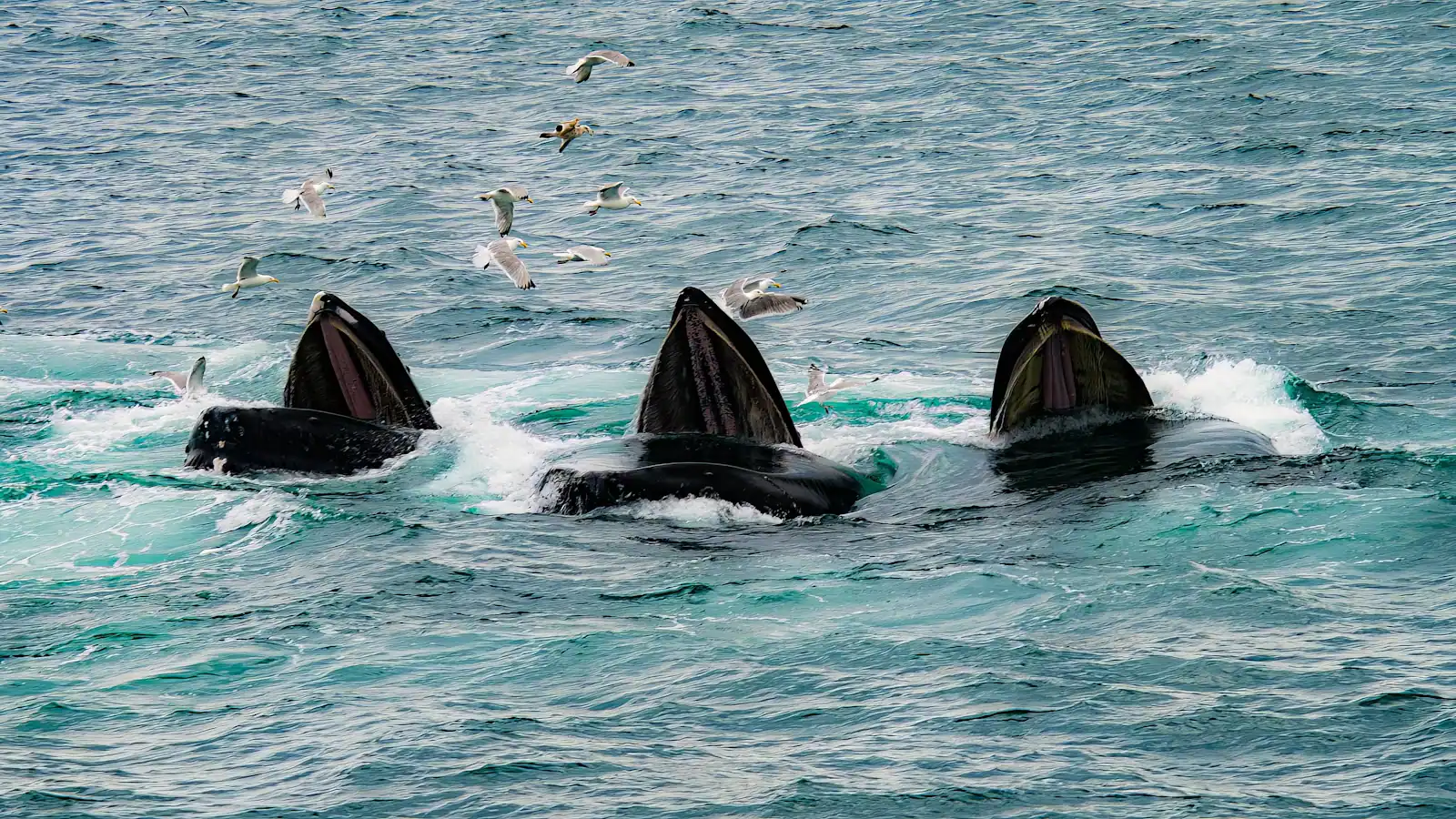
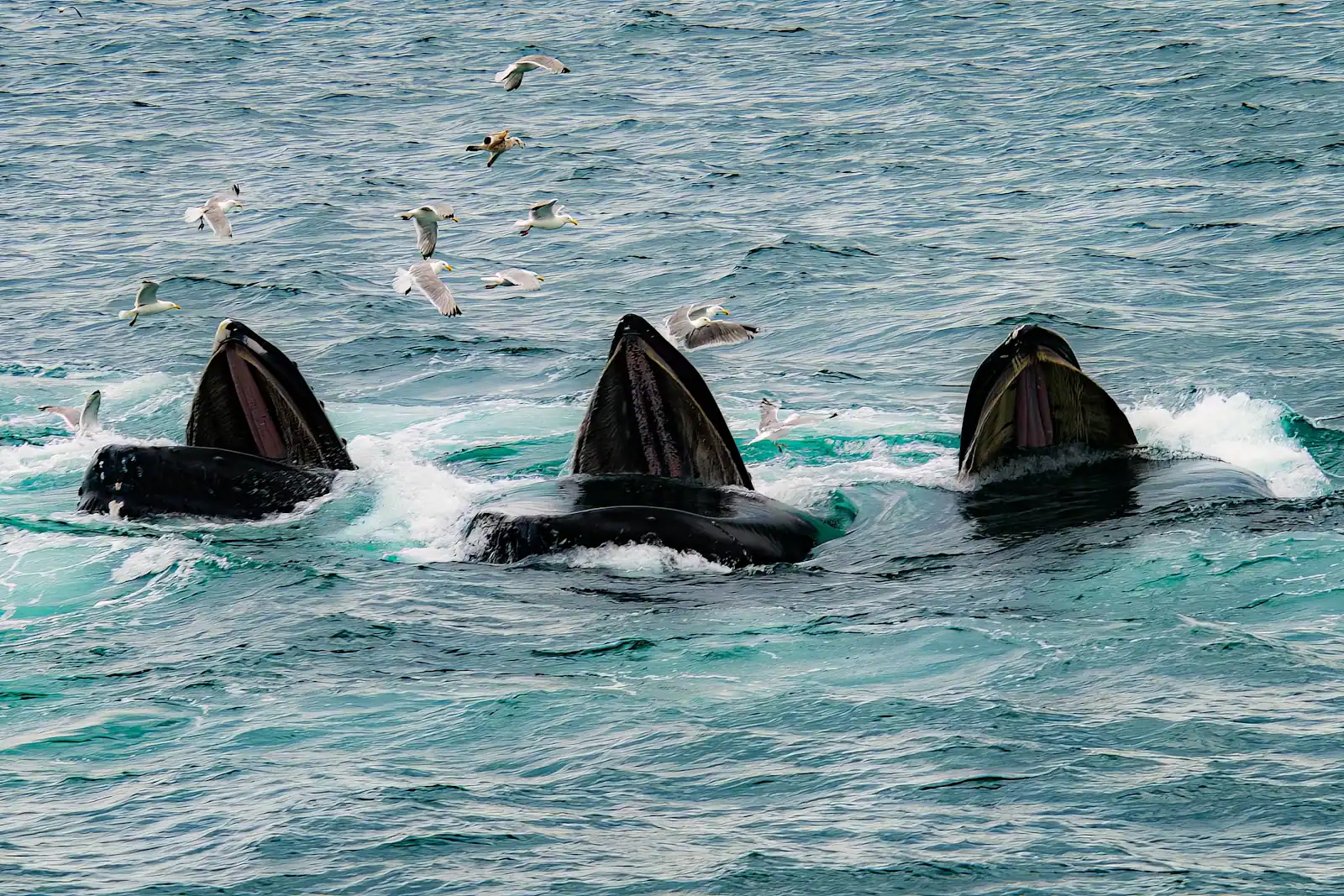
Whales surfacing together in open grey water off the Massachusetts coastUnsplash

Cape Cod has one world-class bookable experience and this is it. Five miles north of Provincetown, under water that looks like any other water, sits a drowned glacial ridge called Stellwagen Bank: a plateau lying roughly a hundred to a hundred and twenty feet down, with the seabed falling away to more than three hundred feet on one side and six hundred on the other. Current running against that relief is pushed upward, and upwelling brings nutrients to the light. Phytoplankton bloom, sand lance swarm in the sand, and every summer a significant share of the Gulf of Maine's humpback whales comes here to eat. Federal protection followed in the autumn of 1992, when 842 square miles of it became a national marine sanctuary.

The practical consequence is that the Cape's best trip is a short run offshore rather than an expedition. Boats sail from about April into late October, and a typical trip is three to four hours including transit. The common sightings are humpback, fin and minke whales, with Atlantic white-sided dolphins and grey seals as the supporting cast. Fin whales are the second largest animal that has ever lived and are regularly seen here, which is a strange thing to be able to say about a beach holiday.

Where you leave from matters more than anything else you will decide about this trip. MacMillan Pier in Provincetown sits at the tip of the hook, five miles from the bank, so a Provincetown boat is on the feeding ground within half an hour and spends most of the ticket watching. Barnstable Harbor on the Mid Cape bay side is the other established departure point, and it is a longer run out across Cape Cod Bay before the whales start. Barnstable suits anyone staying between Sandwich and Dennis who does not want a ninety-minute drive each way. Provincetown suits anyone who wants the maximum time on the bank, and it pairs with a town worth a day in its own right.

Two honest notes before you book. The first is that this is open ocean and boats are not selective about who gets seasick; the afternoon southwest breeze builds a short chop on Massachusetts Bay most summer days, and the morning departure is almost always the flatter ride. The second is that captains here work under real constraints. Federal law puts 500 yards between any vessel and a North Atlantic right whale, and NOAA's Northeast guidance sets a minimum of a hundred feet from other large whales. If a whale approaches the boat that is the whale's decision, not the captain's, and a trip that shuts down and idles for twenty minutes is a crew obeying the rules rather than one wasting your afternoon.

On a Cape where the median bookable experience costs under seventy dollars, a whale watch will be the most expensive thing most visitors pay for. It is also the only one most of them will still be talking about a decade later.

Our picks

The ones we would book

  • Editor's Pick

    The trip that justifies the whole holiday

    Why we chose it

    A morning departure from MacMillan Pier, three to four hours, naturalist aboard, on the bank within half an hour of leaving the dock. Nothing else bookable on Cape Cod is in the same category. Take the first sailing of the day, dress for fifteen degrees colder than the town, and give it a spare day in your itinerary in case the fog wins.

  • Best Value

    Cheapest way onto Stellwagen Bank

    Why we chose it

    The lowest-priced scheduled departure buys the same sanctuary, the same whales and the same naturalist commentary as the dearest one, because every boat out of Provincetown works the same ground. What you give up is the choice of hour and a quieter rail. On a coast where this is the most expensive thing most people book, that is the right trade.

    Cape Cod Kayak Rentals in the Great Marsh

    New Product

    Best ValueFree cancellationInstant confirmation

    Cape Cod Kayak Rentals in the Great Marsh (opens in a new tab)

    14 reviews

    Discover the enchanting beauty of East Sandwich's Great Marsh! Immerse yourself in stunning wildlife, scenic vistas, and the tranquility…

    3 hours

    Prices checked

    from $50
  • Best for Families

    Best whale trip with children aboard

    Why we chose it

    Look for the shortest scheduled sailing with a morning slot and a galley. Humpbacks are the surface-active species and the ones that hold a seven-year-old's attention, and the upper deck is worth the climb for sightlines. Four hours is the ceiling for most children: book the earlier departure and accept the afternoon will be a beach.

    a stop at the portuguese Bakery

    Private Sightseeing Tours

    Best for FamiliesFree cancellationPrivate tour

    Local Legends and Lobster Roll Tour (opens in a new tab)

    20 reviews

    Ready to taste Ptown? Lace up for a 2-hour trek through history and coastal rebel lore. You’ll track the footsteps of Anthony Bourdain and…

    2 hours

    Prices checked

    from $105
  • Small Group

    Best small boat for people who want the science

    Why we chose it

    A smaller vessel changes what you learn more than what you see. With fewer passengers the naturalist can answer questions rather than narrate over a tannoy, and the fluke identification that the Gulf of Maine catalogue runs on becomes something you do rather than something you hear about. Dearer per head, and the right choice on a second visit.

  • Top Rated

    Best-reviewed sailing for a single shot at it

    Why we chose it

    If your trip has room for exactly one boat and no second attempt, book the operator with the deepest review record rather than the cheapest slot. The reviews that matter describe crew handling and commentary, not whale counts, because no company controls the whales and every boat out of the same pier works the same bank.

    Wildlife abound in the Game Creek Conservation area

    Excellent Quality

    Top RatedFree cancellationInstant confirmation

    Kayak The Creek Nature Tour (opens in a new tab)

    56 reviews

    RideAway Adventures has been awarded the best tours on Cape Cod 12 years in a row. We have the only fully ACA certified guide staff on…

    2 hours

    Prices checked

    from $80
  • Accessible

    Best option for limited mobility

    Why we chose it

    The larger vessels on this route generally carry lifts or ramps and accessible heads, which makes a whale watch one of the few Cape Cod experiences that does not involve soft sand or dune stairs. Boarding at a tidal pier still means a gangway that moves, so ring and describe what you need rather than relying on a website symbol.

Why the whales are here at all

Stellwagen Bank is not a mysterious place where whales happen to gather. It is a feeding station, and the mechanism is worth a paragraph because it tells you when to go.

The bank is what a glacier left behind: a sandy, gravelly ridge deposited at the edge of the ice and then drowned as sea level rose. It lies across the mouth of Massachusetts Bay between Cape Cod and Cape Ann. Water moving over that shallow plateau from the deep ground around it is forced up, and the upwelling carries nutrients from the bottom into the sunlit layer. Plankton bloom on those nutrients. Sand lance, a slim silver fish that burrows into the sand of the bank by the million, eat the plankton. Humpbacks, fins and minkes eat the sand lance.

That is why the whale season here tracks the food rather than the calendar. Humpbacks in the North Atlantic winter in the Caribbean, where they breed and where they eat almost nothing, and come north to feed. They arrive on the bank from spring, are in numbers through summer, and drift off from October. A poor sand lance year is a quieter whale year, and it happens.

It also explains the behaviour the naturalists get excited about. Humpbacks here feed with a technique called bubble-net or bubble-cloud feeding: a whale circles beneath a school blowing a curtain of bubbles that the fish will not swim through, then comes up through the middle of the trap with its mouth open. A bubble cloud appearing on the surface a few seconds before a whale erupts through it is the single best thing you can see off this coast, and it is a Gulf of Maine speciality.

The season, month by month

When to go

Boats sail roughly April to late October. Within that, the experience changes.

April and early May. The first trips of the year, thin schedules, cold on deck and genuinely worth doing if you dress for it. Fin whales and early humpbacks. This is also when North Atlantic right whales are in Cape Cod Bay in numbers, which affects boats more than it rewards passengers, because nothing may approach within 500 yards of one.

Late May and June. Humpbacks arrive properly. Mothers with calves born that winter in the Caribbean show up, and a calf learning to breach beside its mother is the sight of the season. Fog is the June risk, and it cancels trips.

July and August. Peak: most departures, most passengers, most reliable sightings, warmest deck. Book two or three days ahead in August and take a morning departure, because the sea breeze fills in after lunch and the boat rides better before it does.

September. The connoisseur's month. Whales are still feeding hard, boats are half empty, the light is better and the afternoon chop is less reliable but often absent. If your dates are flexible, come now.

October. Schedules thin out toward the end of the month and the last departures of the year go in a cold wind. Sightings can still be excellent. Check that the operator is still running before you plan around it.

Nothing runs from November to March. The whales are in the Caribbean or off the southeastern United States, and so is the market.

What you are likely to see, and what you are not

Honest expectations make for a better trip.

Humpback whales are the main event and the reason the commentary is good. Adults run forty to fifty feet, they are the most surface-active of the large whales here, and they breach, slap their flippers and lift their tails clear when they dive. That last habit is why individuals are known by name: the underside of a humpback's tail carries a pattern of black and white markings that is unique to the animal, and the Gulf of Maine catalogue has tracked individuals on that basis for decades. A humpback named Salt, first identified off Provincetown in the mid-1970s and seen most summers since, is the best-known whale in this ocean and has produced a long line of documented calves.

Fin whales are bigger, faster and far less demonstrative: a long grey back, a tall blow and a sharp dive, with nothing theatrical about it. They are the second largest animal known to have lived. They are regular here and many passengers do not realise what they are looking at.

Minke whales are small, quick, solitary and easy to miss.

Atlantic white-sided dolphins turn up in pods of dozens and sometimes hundreds and will ride a bow wave.

North Atlantic right whales are the ones you almost certainly will not get close to. There are only around 380 left and they are protected by a 500-yard approach rule that is law rather than courtesy. Seeing one at a distance is a genuinely rare thing.

Orcas are not a Cape Cod species in any meaningful sense. Anyone promising them is overselling.

Booking, guarantees and what it costs

What it costs

Price band. Adult tickets for a three-to-four-hour Stellwagen trip generally sit well above the Cape's median bookable experience, with reduced child and senior rates and occasional early or late-season discounts. Treat any figure as needing a check: this is a seasonal market and operators reprice between years.

Guarantees. Operators on this coast commonly offer some form of sighting guarantee, usually a voucher for another trip rather than a refund if no whale is seen. Terms vary by company and by season, so read the specific wording before you assume it covers you. Sighting rates on Stellwagen in the middle of the season are high enough that the guarantee is rarely tested.

Cancellations. Trips are cancelled for weather, and fog is the common culprit in June rather than storms. Book early in your stay rather than on the last afternoon, so there is room to move. If you are driving up from the Upper Cape, ring before you set off.

Timing. Morning departures ride flatter and tend to have better light. Afternoon departures are easier to get onto at short notice in August.

Children. Most operators set a minimum age or require infants to be a certain size in a life jacket, and four hours at sea is a long time for anyone under about six. The bay-side trips out of Barnstable are marginally gentler in that respect.

Accessibility. Larger vessels on this route generally have lifts or ramps and accessible heads, but boarding at a tidal pier is not the same as boarding a bus. Ring ahead and describe your needs rather than turning up and hoping.

Book it

Everything else we track

Bookings here go through Viator, who pay us a commission. You are charged the same either way, and the commission had no say in this list.

  • Cape Cod Explorer Tour

    Short term availability

    Free cancellationInstant confirmation

    Cape Cod Explorer Tour (opens in a new tab)

    19 reviews

    RideAway Adventures has been awarded the best tours on Cape Cod 12 years in a row. We have the only fully ACA certified guide staff on…

    2 hours

    Prices checked

    from $80
  • Cape Cod Sunset Kayak Tour

    Kayaking Tours

    Free cancellationInstant confirmation

    Cape Cod Sunset Kayak Tour (opens in a new tab)

    12 reviews

    RideAway Adventures has been awarded the best tours on Cape Cod 12 years in a row. We have the only fully ACA certified guide staff on…

    2 hours

    Prices checked

    from $80

Provincetown or Barnstable: which pier to sail from

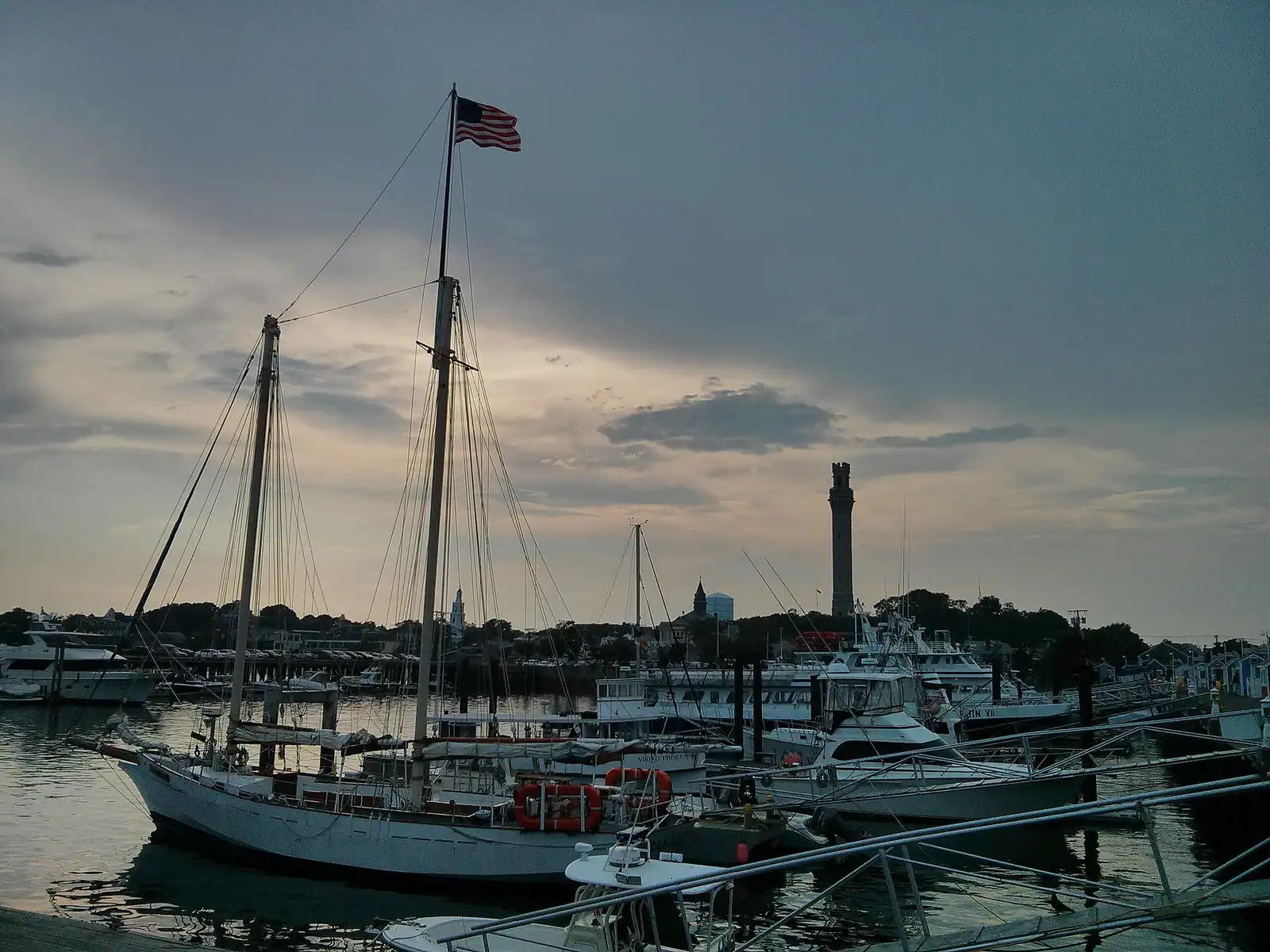
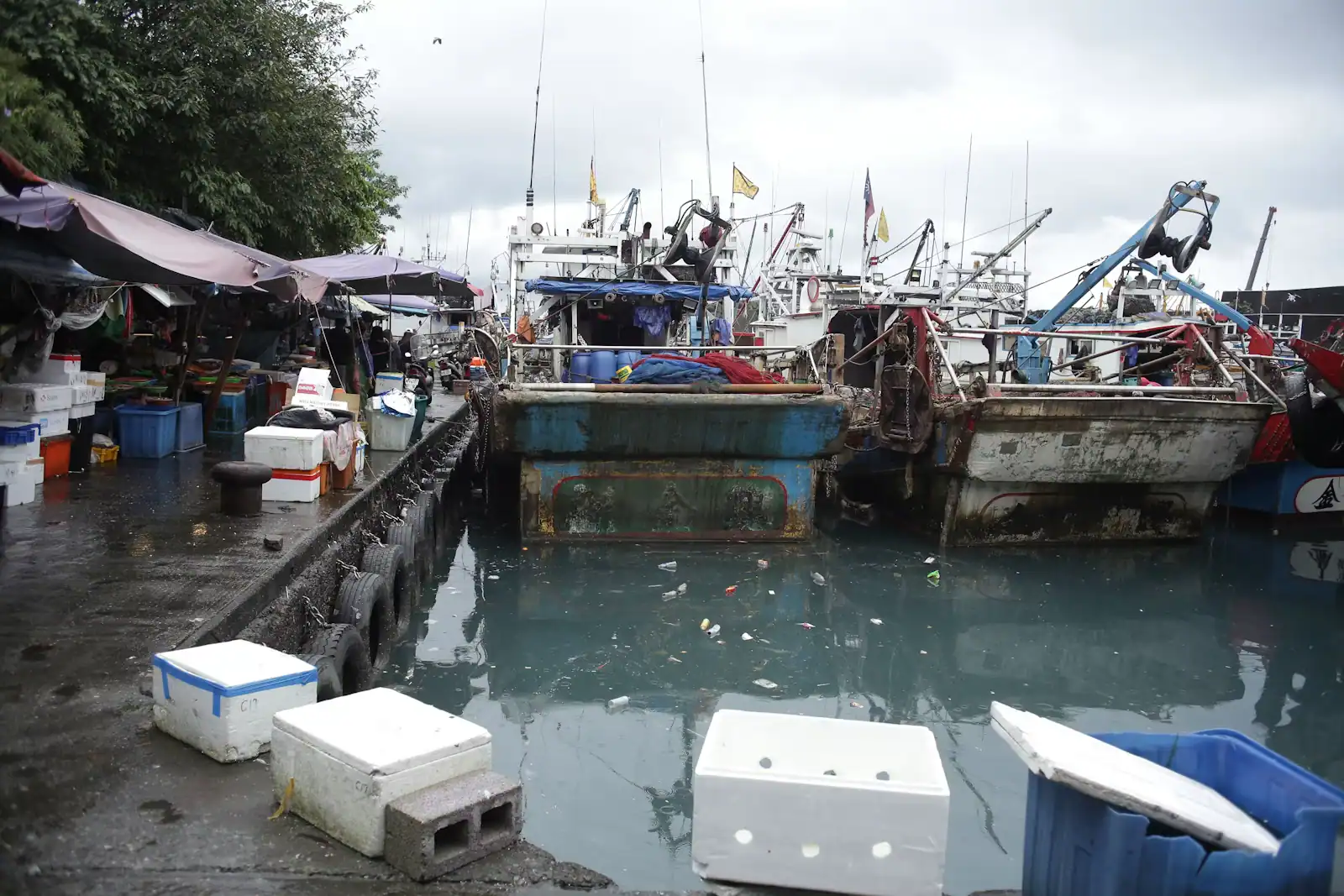
Fishing and excursion boats tied along a pier in Provincetown Harbor with the town behind themUnsplash
Fishing and excursion boats tied along a pier in Provincetown Harbor with the town behind them

How they compare

The two established departure points give you a different day, not a different price.

Provincetown (MacMillan Pier)Barnstable Harbor (Mid Cape, bay side)
Distance to the bankAbout five milesA crossing of Cape Cod Bay first
Transit as a share of the tripShort; most of the ticket is spent watchingLonger; a real part of the trip is getting there
Getting there by roadFar: roughly two hours from the canal in summer trafficEasy from Sandwich, Barnstable, Yarmouth and Dennis
Getting there by seaFast ferries run from Boston and Plymouth in seasonNo passenger ferry
The rest of the dayCommercial Street, the Pilgrim Monument, Race Point, the dune shacksBack to a bay beach, the Rail Trail, Sandwich
WaterOpen Atlantic almost immediatelySheltered bay, then open water
Best forAnyone wanting maximum time on the bank, or a full Provincetown dayAnyone based Upper or Mid Cape who does not want the drive

If you are staying on the Outer Cape, sail from Provincetown; there is no argument. If you are staying in Falmouth or Sandwich, the honest arithmetic is that a Provincetown trip is a whole-day commitment including three or four hours in the car, and Barnstable gets you on the water in twenty minutes. Neither boat can promise you more whales than the other. What a Provincetown boat can promise is more minutes among them.

One more option worth knowing: fast ferries from Boston and Plymouth land at MacMillan Pier, and some visitors combine a ferry crossing with a whale watch on the same day rather than driving the Cape at all.

The rules your captain is working under

Before you book

Passengers occasionally get annoyed with a crew for keeping their distance. It is worth knowing what they are obeying.

North Atlantic right whales: 500 yards, by law. Vessels and aircraft must stay five hundred yards from a right whale anywhere in United States waters, and a boat that finds itself inside that distance must leave immediately at slow speed. With a population of around 380 animals, entanglement and vessel strike being the two things killing them, this rule is not negotiable and it is enforced.

Other large whales: a hundred feet minimum. NOAA's Northeast guidance sets a hundred feet as the closest a vessel should come to a humpback, fin or minke, with a hundred to six hundred feet advised, and asks boats inside that band to hold a steady slow course rather than manoeuvre.

Seals: a hundred and fifty feet. The same guidance asks viewers to stay that far off a hauled-out seal.

Ten knots in Cape Cod Bay. During designated right whale periods Massachusetts requires vessels in the bay to keep to ten knots or less, which is why an early spring trip out of Barnstable can feel slow.

None of this stops the whales approaching the boat. A humpback that decides to come and look at you is entirely within its rights, and the crew's response is to put the engines in neutral and wait. Those are frequently the best fifteen minutes of the trip.

What to take, and how not to be sick

What to bring

  • More layers than the car park suggests. It is routinely fifteen degrees colder on the bank than on Commercial Street, the wind is constant and there is spray. A windproof outer layer is the single most useful thing you can bring, in August as much as in May.
  • Seasickness tablets, taken before you sail. Most remedies need an hour or more to work and none of them work once you have started. If you are prone, take something the night before as well as in the morning, book the morning departure, stay on deck in the open air and look at the horizon rather than at your phone.
  • Sun cover. Reflected light off water burns people who were cold all trip, which is a peculiarly Cape Cod way to get sunburnt.
  • Binoculars if you have them, though the whales that matter will be closer than you expect.
  • A camera with a fast shutter rather than a long lens. Breaches are unpredictable and over in a second; most usable photographs from these trips are wide shots with the boat rail in them.
  • Cash for the galley and something to eat. Four hours is longer than children think it is.
  • No drone. They are prohibited around marine mammals and no crew will permit one.

One more thing. Sit or stand on the upper deck if you can manage the stairs. Height buys you sightlines and a longer look at an animal that is only up for eight seconds at a time.

On the ground

Where to go

Every place below has its own page — hours, parking, what it costs and what to expect when you get there.

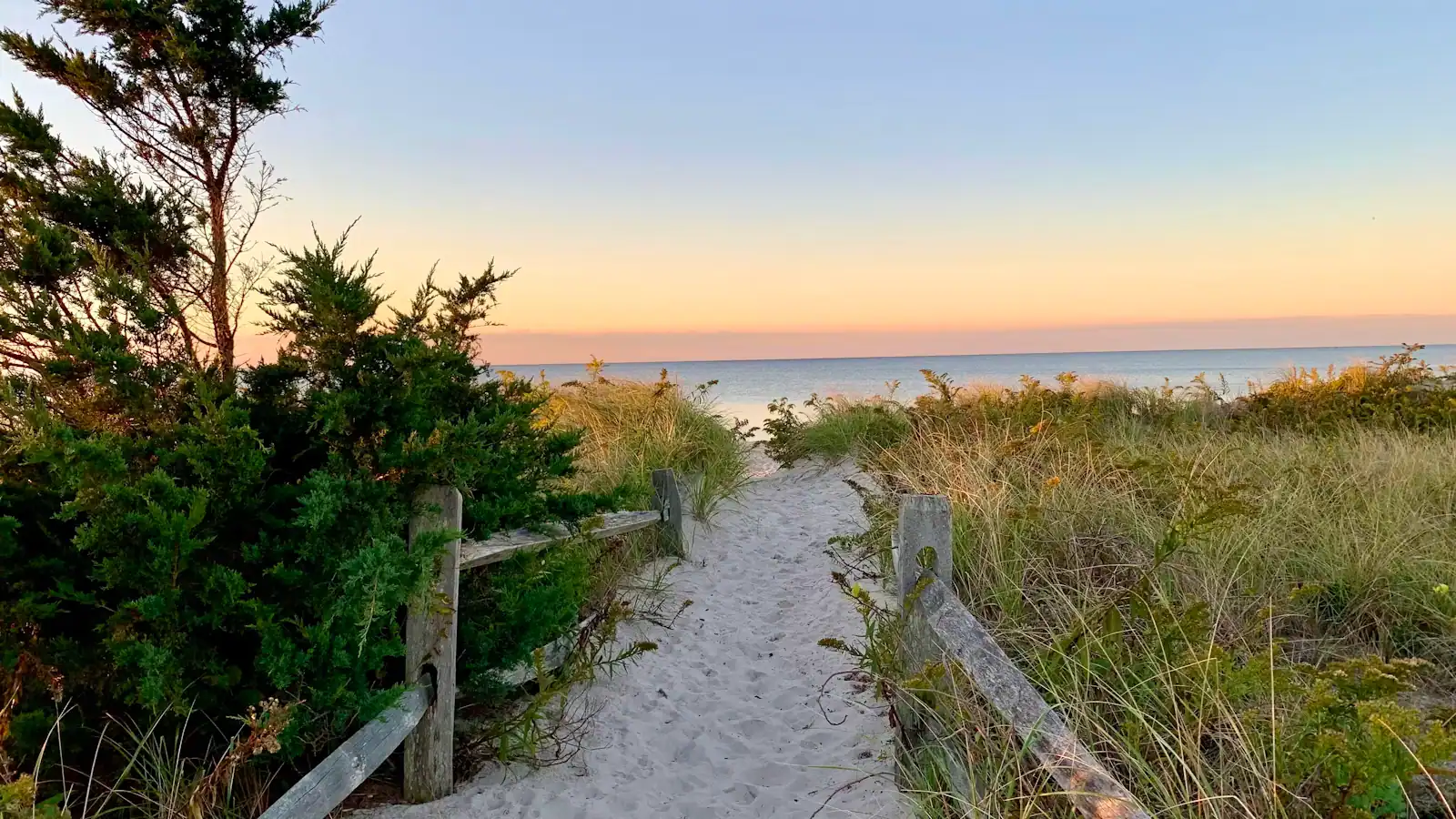
  • A sand path cut through beach grass opening onto the open Atlantic on Cape Cod's outer shore

    Park

    Cape Cod National Seashore

    Forty miles of protected Atlantic shore, six guarded ocean beaches, and one $25 vehicle fee that covers every one of them for the same day.

    3–8 hours$25 per private vehicle per day, valid at all six park beaches. $60 annual park pass.

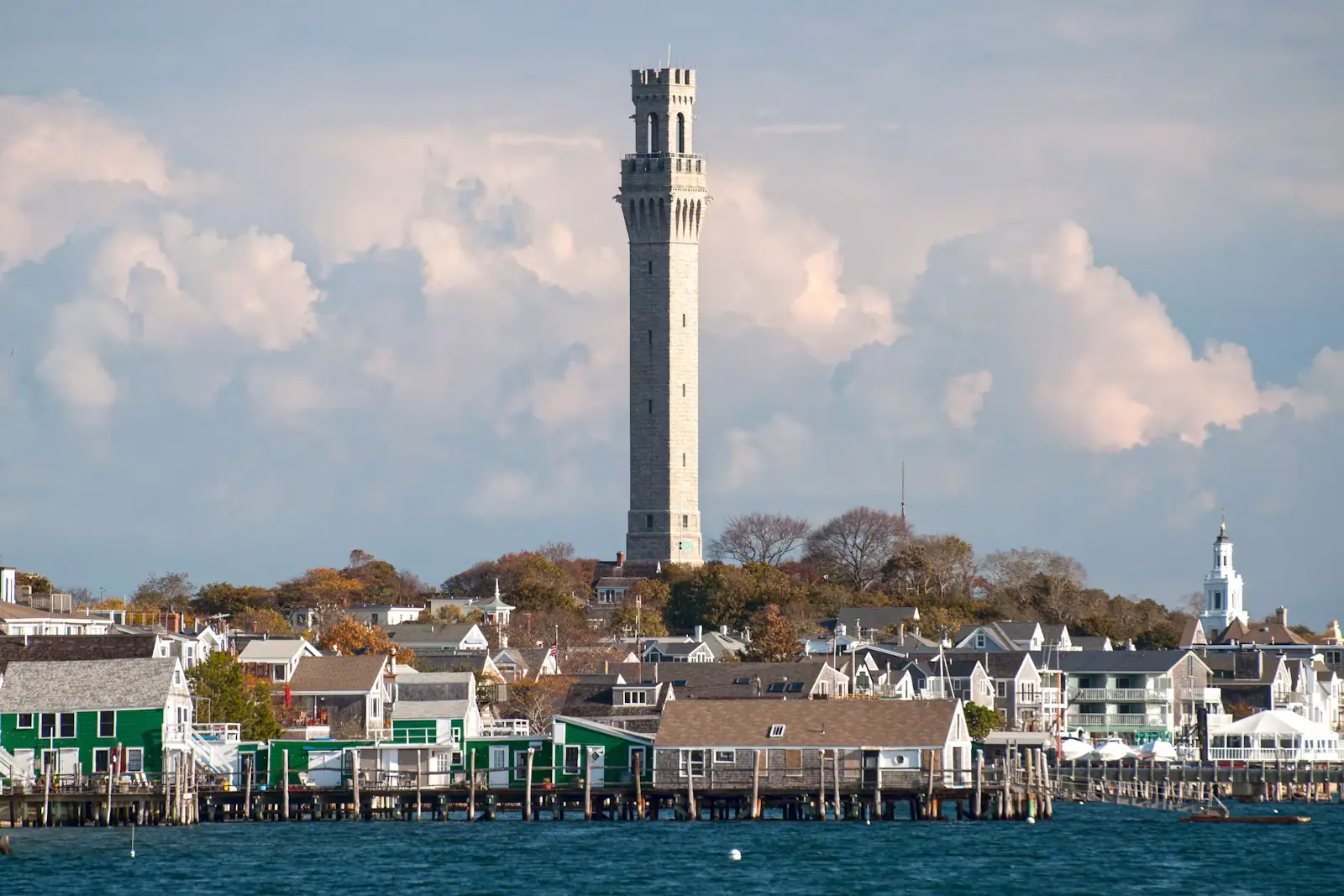
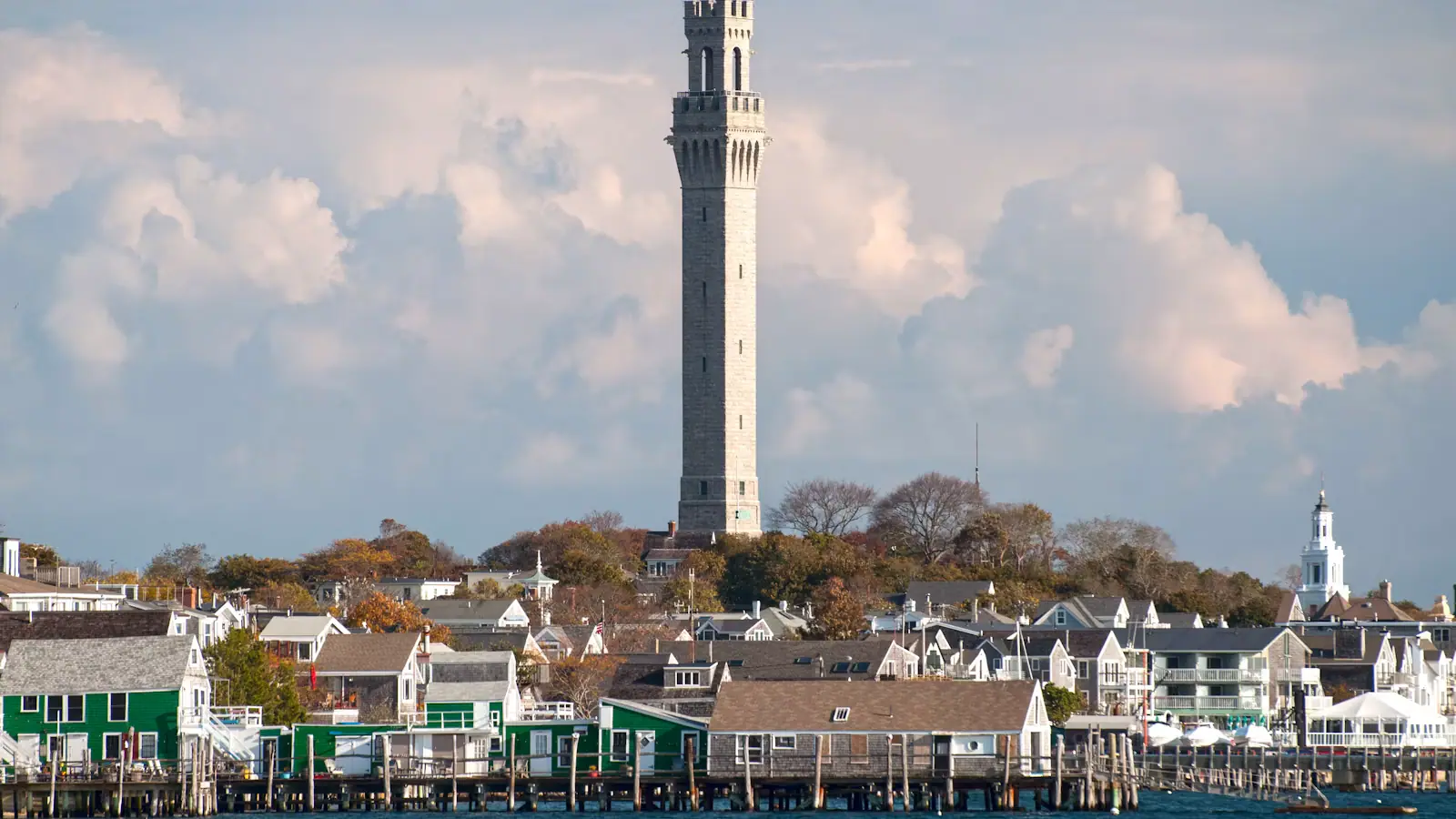
  • The granite tower of the Pilgrim Monument rising above Provincetown's rooftops beside the harbour

    Neighbourhood

    Free

    Provincetown

    Three thousand people in winter and sixty thousand in August: a fishing port, an art colony since the 1890s, and unlike anywhere else.

    4–12 hoursFree to visit. Parking, ferries, the monument and tours are charged separately.

  • Whales surfacing together in open grey water off the Massachusetts coast

    Beach

    Race Point Beach

    The beach at the outside of the fist, facing north into deep water — the one place on the Cape where whales are visible from a towel.

    2–6 hoursNational Seashore fee: $25 per vehicle per day, or $15 per person on foot or by bicycle.

  • Fishing and excursion boats tied along a pier in Provincetown Harbor with the town behind them

    Marina

    Free

    MacMillan Pier

    One working pier carrying the Boston ferries, fifteen whale-watch boats and a fishing fleet — and the departure point for Stellwagen Bank.

    0.5–4 hoursFree to walk. Whale-watch trips, ferries and parking are charged separately.

  • The granite tower of the Pilgrim Monument rising above Provincetown's rooftops beside the harbour

    Landmark

    Pilgrim Monument

    A 252-foot granite campanile modelled on a Tuscan town hall, climbed by ramps, with the best view of Cape Cod's geography from anywhere.

    1–2 hoursPaid admission covering both the tower climb and the Provincetown Museum. The grounds are free.

  • Rows of boats moored in a marina basin on flat water at first light

    Neighbourhood

    Free

    Hyannis

    The Cape's only working downtown: island ferries, an airport, a hospital and a Main Street that stays open in February.

    2–8 hoursFree to walk. Ferries, cruises, concerts and museum admission are separately priced.

Straight answers

Questions people actually ask

Where is the best place to go whale watching on Cape Cod?

Provincetown, if the drive is manageable. MacMillan Pier sits about five miles from Stellwagen Bank, so a boat leaving there is on the feeding ground within half an hour and spends most of the trip watching rather than travelling. Barnstable Harbor on the Mid Cape is the other established departure point and is far easier to reach from the Upper and Mid Cape, but a longer part of the ticket goes on crossing Cape Cod Bay.

What is the best time of year for whale watching on Cape Cod?

Boats sail from roughly April to late October, with July and August the busiest and most reliable. June brings humpback mothers with new calves but also the Cape's fog, which cancels trips. September is the quiet favourite: whales still feeding hard, half-empty boats, better light and easier booking. Nothing runs between November and March, when the humpbacks are breeding in the Caribbean.

What whales will I see off Cape Cod?

Humpbacks are the main event and the most surface-active, breaching, slapping their flippers and lifting their tails when they dive. Fin whales, the second largest animal known to have lived, are regular but undemonstrative. Minkes are small and easy to miss. Atlantic white-sided dolphins turn up in large pods. North Atlantic right whales pass through but cannot be approached within 500 yards by law, so close encounters are not on offer.

How long is a Cape Cod whale watch?

Most trips run three to four hours including the run out and back. From Provincetown that means a short transit and a long stretch on Stellwagen Bank; from Barnstable Harbor more of the time goes on the crossing. Allow extra either side for parking, boarding and a queue at the gangway, and treat a whale watch as half your day rather than an item you can slot between other things.

Why do whale watching boats stay so far from the whales?

Because the distances are set by federal rules, not by the captain. Vessels must remain 500 yards from a North Atlantic right whale anywhere in United States waters, and NOAA's Northeast guidance sets a minimum of a hundred feet from humpbacks, fins and minkes, with a hundred to six hundred feet advised. A whale is free to approach the boat, and when one does the crew puts the engines in neutral and waits.

Is Cape Cod whale watching worth it?

On a peninsula with unusually thin bookable inventory, this is the one experience worth the money without qualification. Stellwagen Bank is a protected feeding ground five miles off Provincetown where a substantial part of the Gulf of Maine humpback population spends the summer, sighting rates in season are high, and the naturalist commentary is unusually good because the individual whales here have been catalogued for decades.

Will I get seasick on a Cape Cod whale watch?

Possibly, because Stellwagen is open ocean and the afternoon southwest breeze puts a short chop on Massachusetts Bay most summer days. The practical answers are to book the morning departure, take a remedy at least an hour before sailing rather than after you feel unwell, stay on deck in the open air and watch the horizon. Boats carry sick bags without comment, which tells you how routine it is.

Do whale watching trips on Cape Cod have a guarantee?

Operators on this coast commonly offer some form of sighting guarantee, and it usually takes the form of a voucher for another trip rather than a refund. Terms differ between companies and between seasons, so read the specific wording before booking rather than assuming. In practice sighting rates on Stellwagen in midsummer are high enough that most passengers never find out what their guarantee said.