Skip to content
Search
Menu

Bookings here go through Viator, who pay us a commission. You are charged the same either way, and the commission had no say in this list.

Marina

MacMillan Pier

Last updated

One working pier carrying the Boston ferries, fifteen whale-watch boats and a fishing fleet — and the departure point for Stellwagen Bank.

Almost everything that moves in Provincetown moves across this pier. In season MacMillan carries something like eleven ferry trips a day to Boston and Plymouth with more than five thousand passengers, around fifteen whale-watch vessels with a combined capacity approaching three thousand six hundred, a commercial fishing fleet of roughly fifty-five boats, the harbourmaster, the shellfish landings, and a few cruise-ship tenders a year. It is a genuinely working structure with a visitor operation bolted onto it, and standing on it at four in the afternoon while the day boats come in is one of the better free things to do on the Cape.

It began as Railroad Wharf, completed in 1873 when the railway finally reached the tip of the Cape, and it was the reason Provincetown could send fish to Boston the same day. It was later renamed for Donald B. MacMillan, born here in 1874, who sailed with Peary and spent a career on Arctic expeditions. A federal Rural Development loan of $1.95 million funded the rebuild from 2003 that keeps the fishing fleet working alongside the tourist boats.

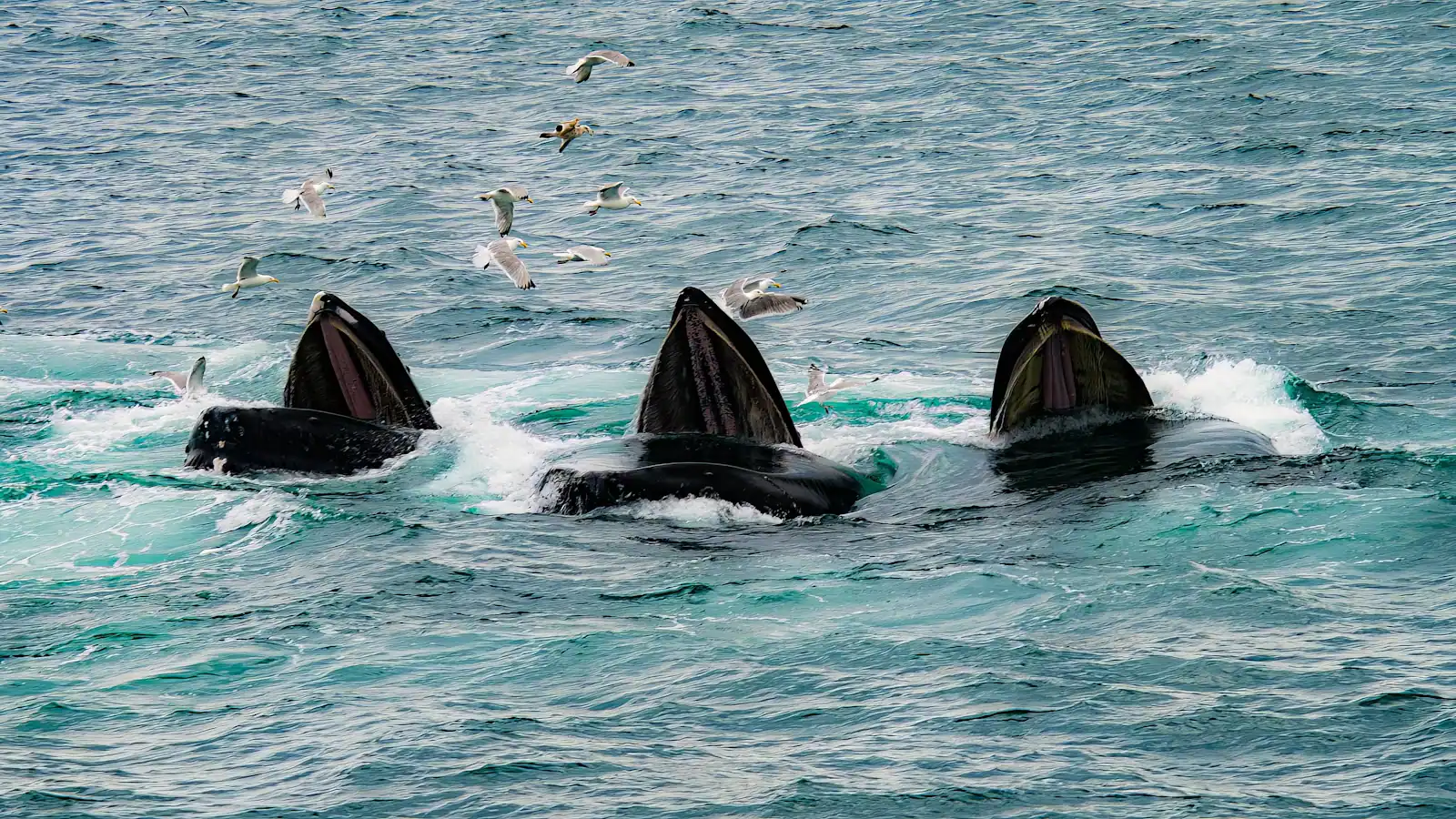
For visitors the pier matters for one reason above all others. This is where you get on a boat to Stellwagen Bank. The sanctuary lies about five miles north of Provincetown, the run out takes something in the region of fifty minutes, and it is among the most reliable whale-watching grounds in the North Atlantic — an underwater plateau whose upwelling concentrates sand lance, and with them humpback, fin and minke whales from roughly April to October.

Given how thin Cape Cod's bookable inventory is generally, this is the one pier on the peninsula where the choice is real.

Getting there and parking

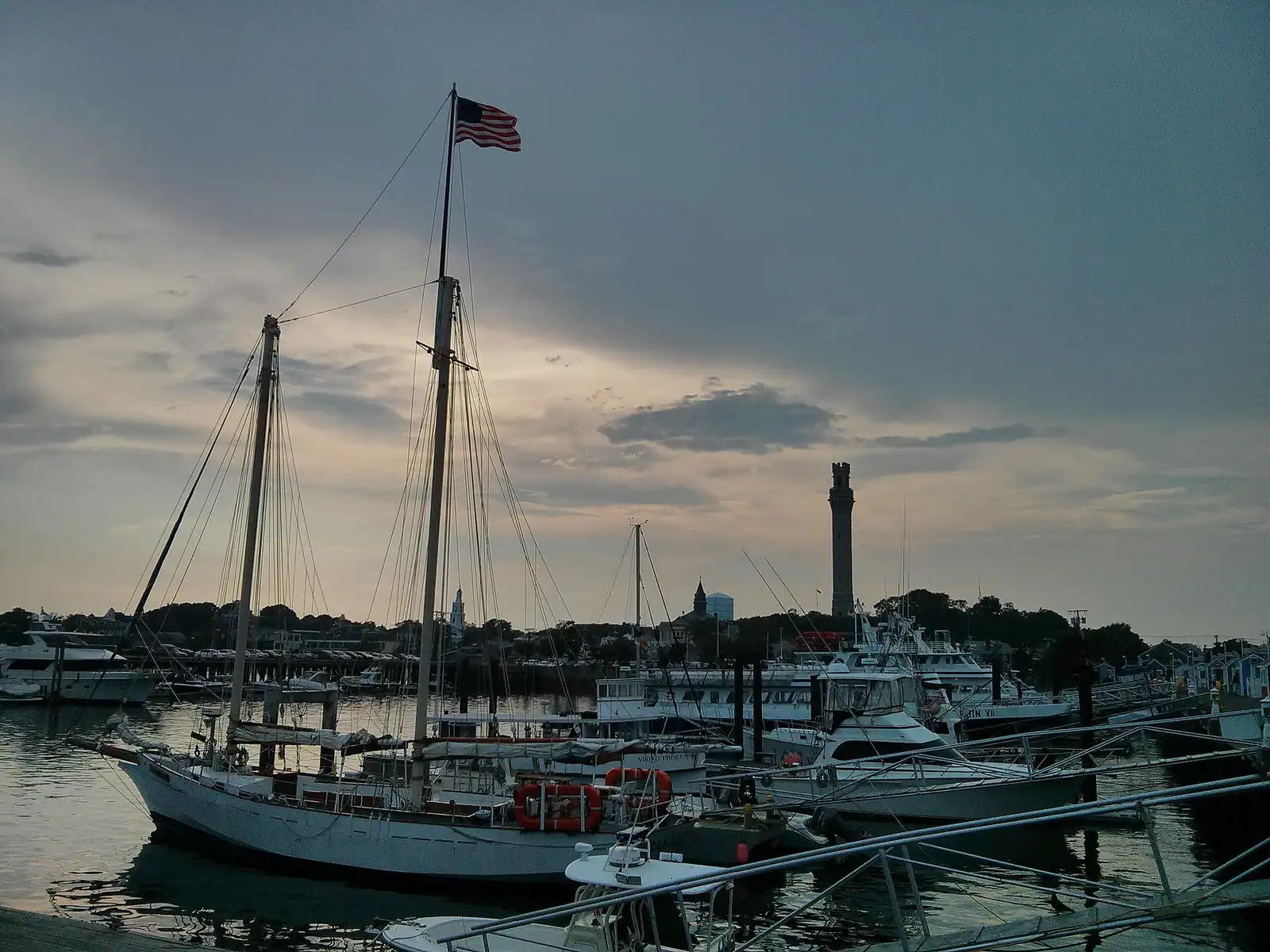
The pier runs out from the middle of Provincetown's waterfront, a minute from Commercial Street and directly below the Pilgrim Monument on its hill. On foot from anywhere in the town centre it is a few minutes.

Parking is the problem, not the walk. The municipal lot at the pier is the town's largest and it charges by the hour; in July and August it fills, and hunting for a space on Commercial Street is a poor use of a morning. If you are day-tripping, come on the ferry.

The seasonal shuttle between the town centre and the National Seashore beaches stops nearby, and bike hire is available within a couple of minutes' walk.

If you are driving down for a morning whale watch, allow well over the map time from anywhere west of Orleans and considerably more on a summer weekend, when the canal bridges decide everyone's schedule.

Boats to Stellwagen Bank

Provincetown is the closest departure point in Massachusetts to Stellwagen Bank, which is the whole commercial argument for sailing from here rather than from Boston or Plymouth. The run is roughly fifty minutes each way, against two hours or more from ports further west, so a Provincetown trip spends more of its three to four hours actually watching whales.

  • Take the first sailing of the day. Wind builds through the afternoon on Massachusetts Bay, morning trips are cancelled less often, and the crossing is materially more comfortable on flat water.
  • Season runs roughly April to October. Early season brings fin whales and the first humpbacks; late summer is the most reliable for surface feeding; right whales pass through in spring and bring their own rules.
  • Most operators sail with a naturalist and many run a sighting guarantee giving a free return trip if nothing is seen. Ask what the guarantee actually covers before booking.
  • Seasickness is the main thing that ruins these trips. Take something an hour before boarding rather than when you start to feel it, sit low and midships, and stay outside watching the horizon.
  • Bring more layers than the harbour temperature suggests. Twelve miles offshore at twenty knots is a great deal colder than Commercial Street, in any month.
  • Binoculars help less than you think. Whales come close; a wide field of view is more useful.

The approach rules, which are law

Whale watching in these waters is regulated, and the numbers are worth knowing because they explain why a captain will refuse to move closer.

North Atlantic right whales are critically endangered, and federal law requires vessels to stay 500 yards away anywhere in United States waters. There is no discretion in this, no exception for whale-watch boats, and a captain who spots one will back off and tell you why. If a right whale surfaces near the boat, the vessel must move away at a safe, slow speed.

For other large whales — humpback, fin, minke — NOAA's Northeast guidance sets a minimum of 100 feet, with 100 to 600 feet advised as the operating range. The rule applies to the vessel approaching the whale. A humpback that chooses to swim under the boat is a different matter entirely and is the reason people talk about these trips for years.

Seals carry their own guidance: stay at least 150 feet away, on the water and on the beach.

The practical effect is that a good operator will sometimes hold position and wait rather than chase. That is the trip working correctly. An operator who runs at animals is breaking the rules and giving you a worse experience, because whales approached hard dive and leave.
The Boston and Plymouth ferries

The seasonal fast ferry from Boston is the best way to reach Provincetown and one of the more pleasant ninety minutes on the eastern seaboard: out past the harbour islands and across open Massachusetts Bay, with whales occasionally visible from the deck on the crossing.

It lands here, in the middle of town. From the gangway you are a few minutes' walk from Commercial Street, the bike hire shops, the whale-watch ticket booths and the foot of High Pole Hill below the Pilgrim Monument. No car, no parking, no bridge queue.

The Plymouth service is the shorter crossing and the other seasonal option.

Practical points that matter. Both services are seasonal and neither runs through the winter. Weekend sailings in July and August sell out, so book. Sailings are cancelled in heavy weather and fog, which on this coast in late spring is not rare, so leave slack in a day trip rather than planning a tight connection. And check the last return of the day before you order a second drink on Commercial Street: missing it means an expensive night or a very long taxi.

Bicycles are usually carried for a fee, which makes a ferry-and-bike day the best way to do Provincetown and the Province Lands without a car.

Standing on the pier for free

You do not have to buy a ticket to anything. The pier is public, you can walk its length, and it repays half an hour.

Come between about three and five in the afternoon. That is when the day boats come alongside, the whale-watch vessels return and unload, and the fishing boats land. Gulls, cormorants, the occasional seal working the pilings, and a lot of very competent people doing physical work quickly in a small space.

The Provincetown fleet is much reduced from the port that supported a railway terminus, but it is still here, still largely Portuguese-descended, and still the reason the town has a harbour rather than a marina. Watch where you stand: this is a working dock, the vehicles are not slowing down for photographs, and the crews are on a schedule.

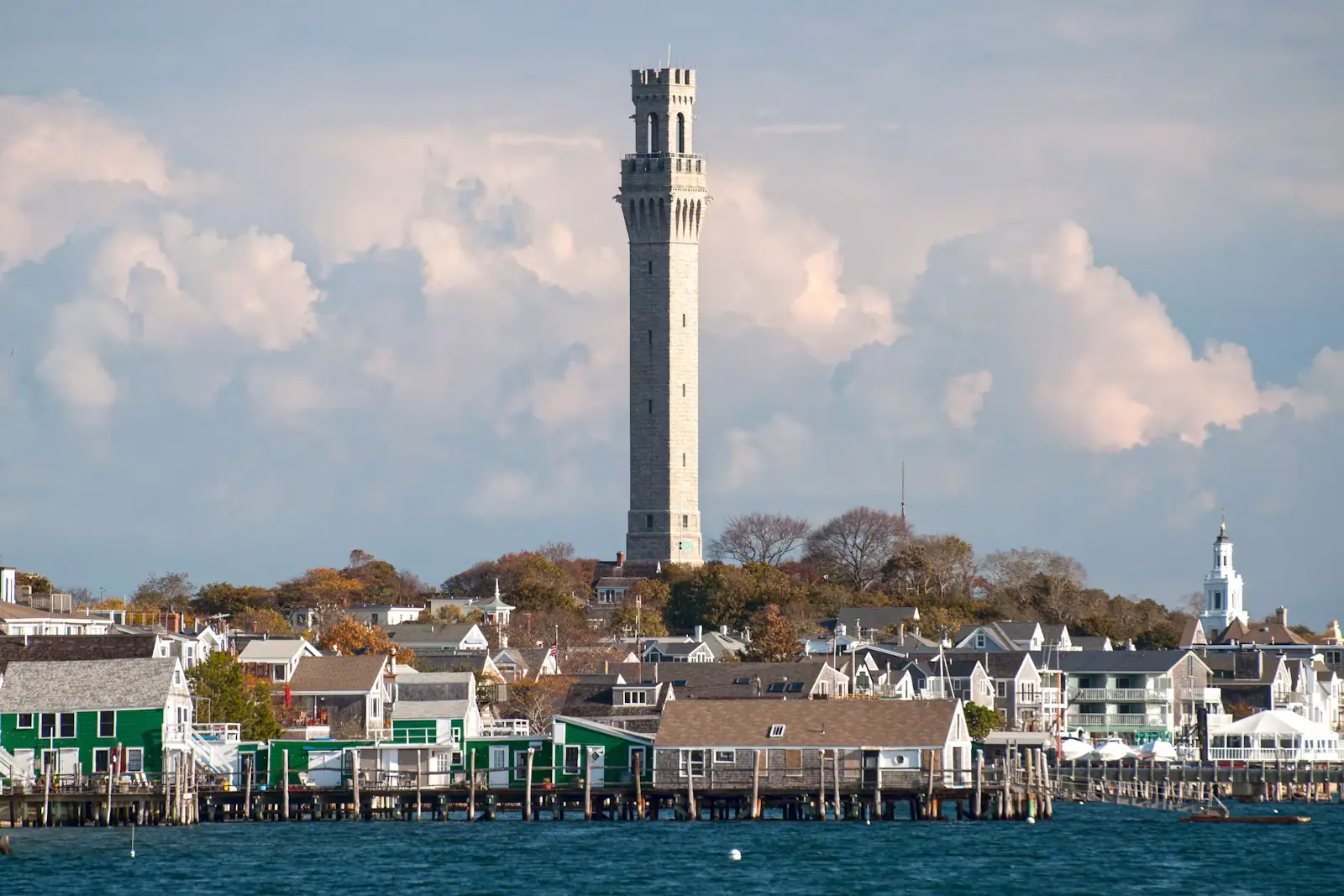
At the harbour end you get the best view back at the town — the whole of Commercial Street's waterfront, the Pilgrim Monument on the hill behind, and the curve of the harbour toward Long Point and the breakwater.

The whale-watch ticket booths are on the pier itself, which makes walking up and comparing departure times practical if you have not booked, though in August the good sailings go early.

Tours that visit MacMillan Pier

Operators run these trips past MacMillan Pier, or stop there as part of a longer route. We list what the booking data supports — not everything that mentions the name.

Bookings here go through Viator, who pay us a commission. You are charged the same either way, and the commission had no say in this list.

Private and small-group departurespriced per boat or per vehicle, not per person

Near MacMillan Pier

Straight-line distances, so allow more on the road — the island is long and has one main parkway.

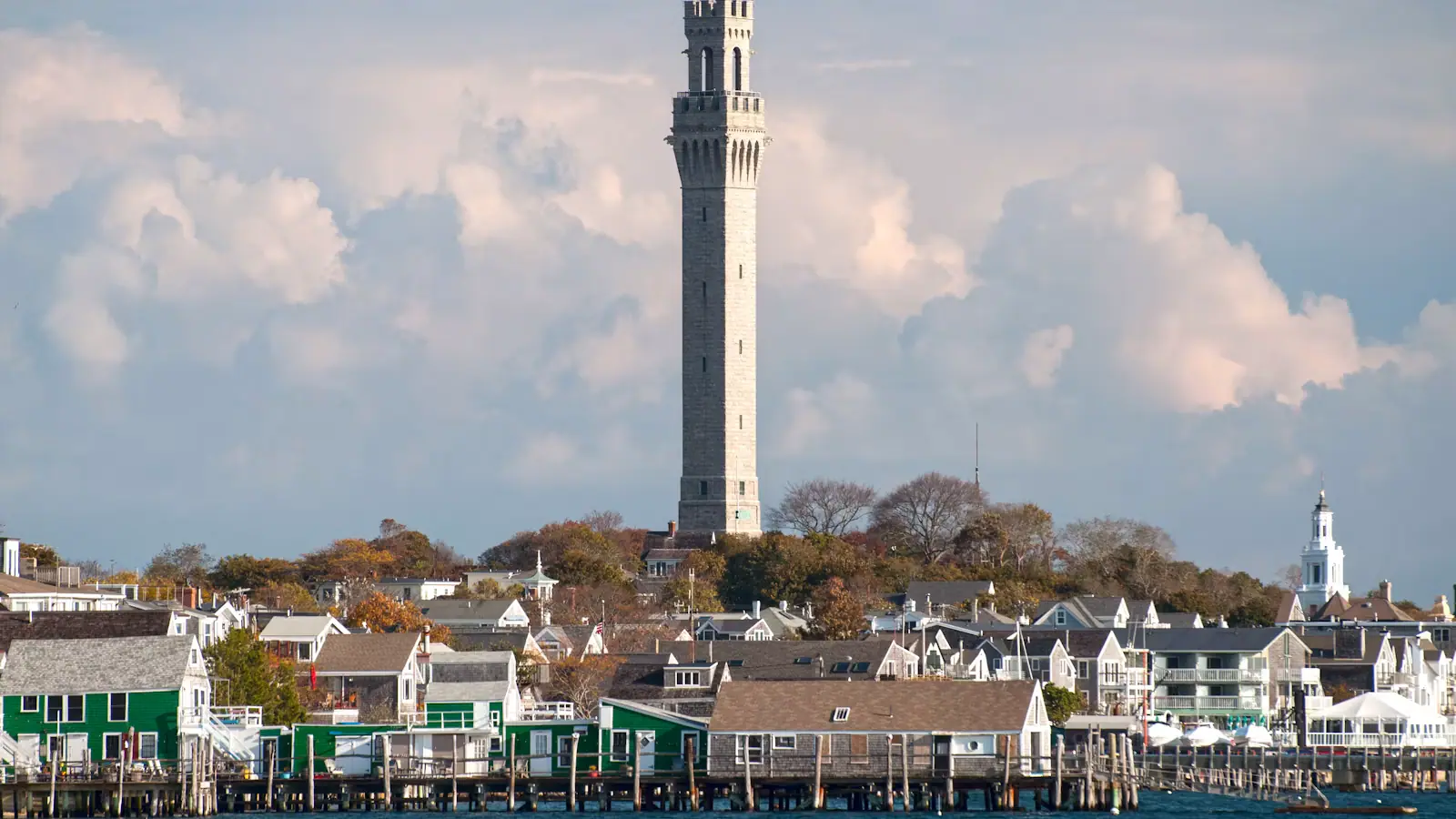
  • The granite tower of the Pilgrim Monument rising above Provincetown's rooftops beside the harbour

    Neighbourhood

    Free

    Provincetown

    Three thousand people in winter and sixty thousand in August: a fishing port, an art colony since the 1890s, and unlike anywhere else.

    4–12 hoursFree to visit. Parking, ferries, the monument and tours are charged separately.0.3 mi away

  • The granite tower of the Pilgrim Monument rising above Provincetown's rooftops beside the harbour

    Landmark

    Pilgrim Monument

    A 252-foot granite campanile modelled on a Tuscan town hall, climbed by ramps, with the best view of Cape Cod's geography from anywhere.

    1–2 hoursPaid admission covering both the tower climb and the Provincetown Museum. The grounds are free.0.3 mi away

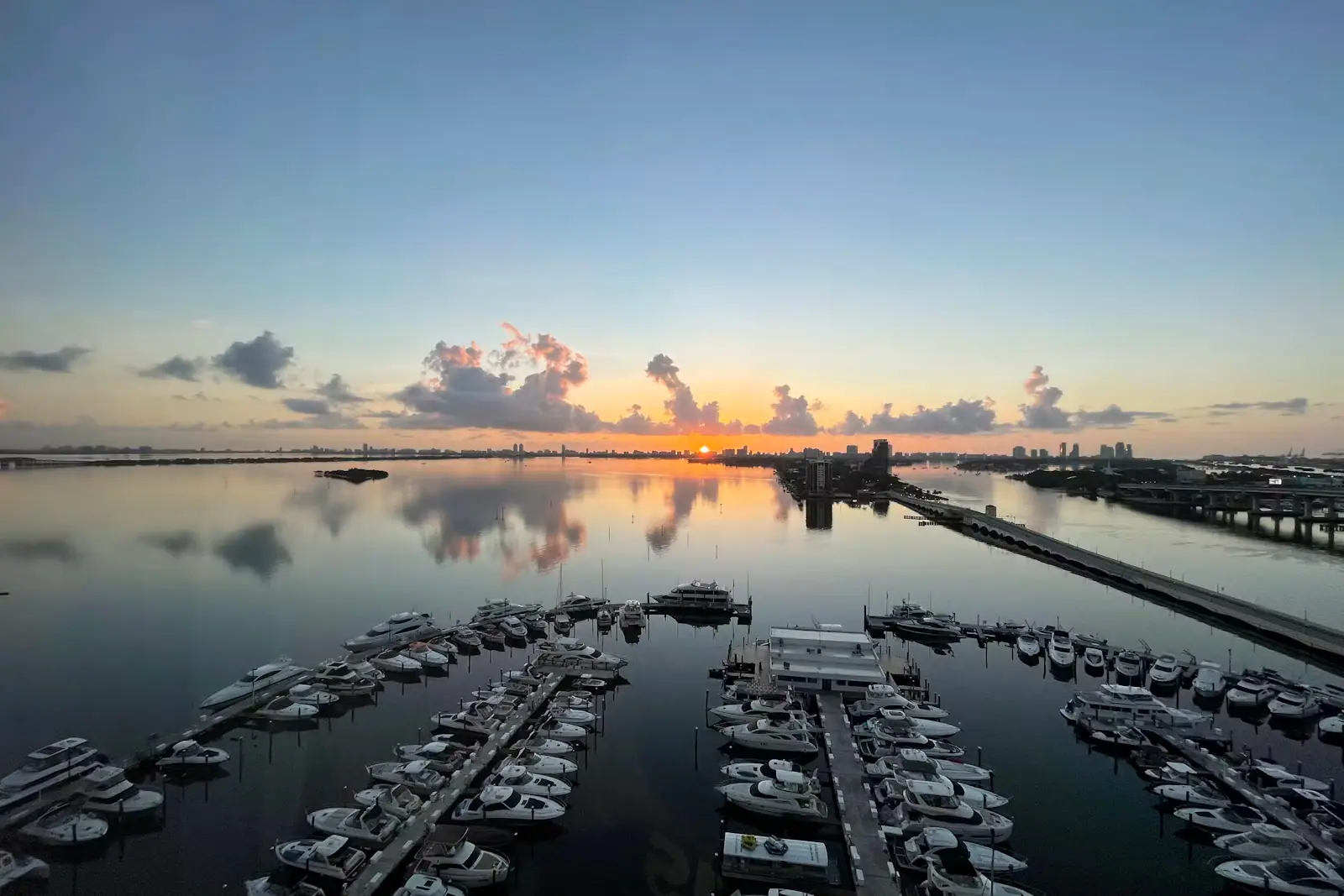
  • Sunset over flat water with two low island profiles on the horizon

    Beach

    Herring Cove Beach

    The only park beach on the bay side: warmer water, no shore break, no staircase, and a sunset that draws a crowd with folding chairs.

    2–5 hoursNational Seashore fee: $25 per vehicle per day, or $15 per person on foot or by bicycle.2.3 mi away

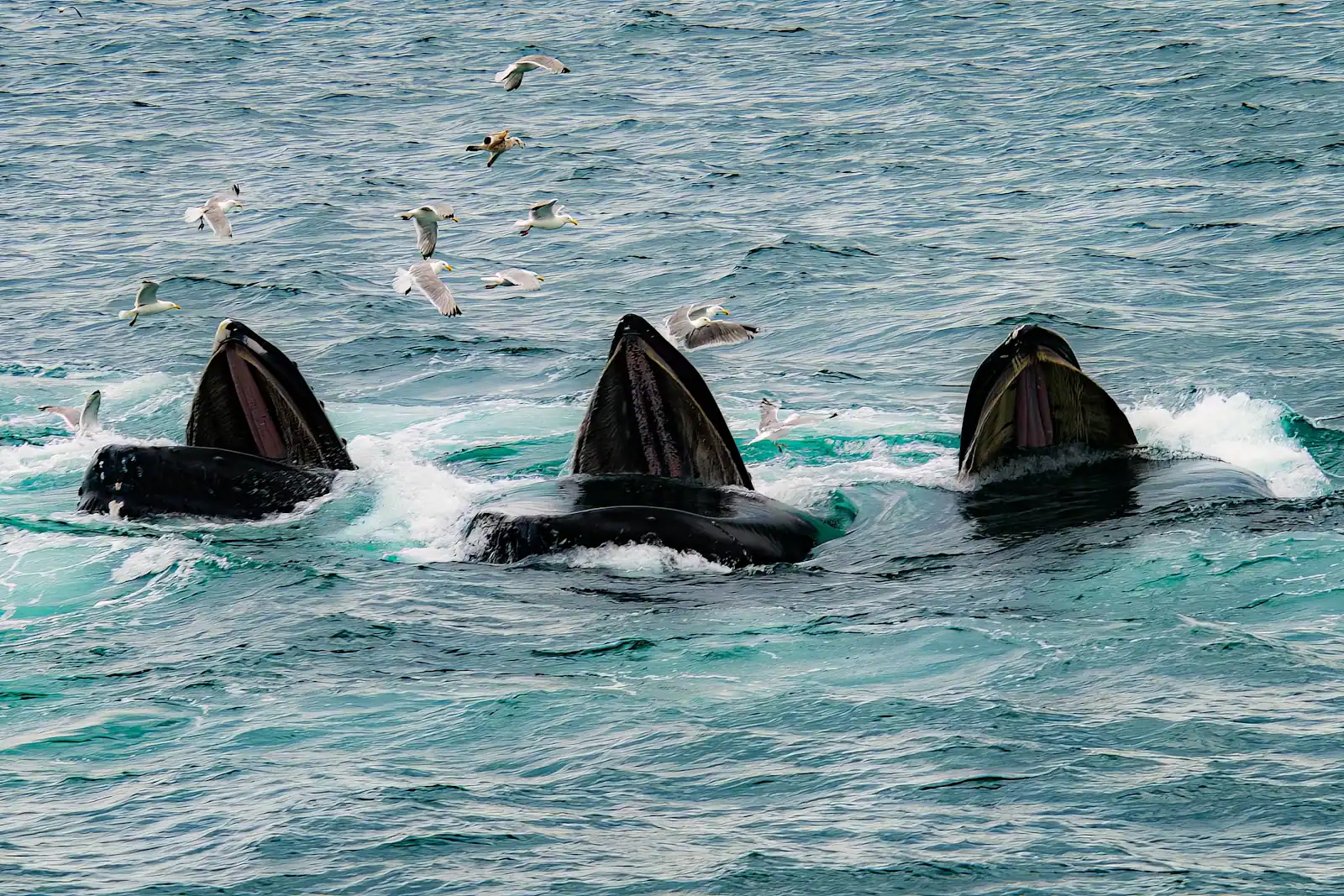
  • Whales surfacing together in open grey water off the Massachusetts coast

    Beach

    Race Point Beach

    The beach at the outside of the fist, facing north into deep water — the one place on the Cape where whales are visible from a towel.

    2–6 hoursNational Seashore fee: $25 per vehicle per day, or $15 per person on foot or by bicycle.3.3 mi away

MacMillan Pier: common questions

Where do whale watch boats leave from in Provincetown?

MacMillan Pier, in the middle of the town's waterfront, where the ticket booths sit on the pier itself. Around fifteen whale-watch vessels work from here in season with a combined capacity approaching three thousand six hundred passengers. Provincetown is the closest Massachusetts departure point to Stellwagen Bank, about five miles north, so the run out takes roughly fifty minutes against two hours or more from ports further west — which means more of your trip is spent watching whales.

How close can a whale watch boat get to a whale?

Closer than you would expect for most species and not close at all for one. Federal law requires vessels to stay 500 yards from a North Atlantic right whale anywhere in United States waters, with no exceptions. For humpbacks, fins and minkes, NOAA's Northeast guidance sets a minimum of 100 feet with 100 to 600 feet advised. Those limits govern the vessel approaching the whale; a curious humpback that swims under the boat is doing something the rules do not prohibit.

When is the best time to go whale watching from Cape Cod?

The season runs roughly April to October, and the best single decision is to book the first sailing of the day. Wind builds through the afternoon on Massachusetts Bay, morning trips are cancelled less often and the crossing is far more comfortable on flat water. Early season brings fin whales and the first humpbacks; late summer is the most reliable for surface feeding. Take something for seasickness an hour before boarding, and bring more layers than the harbour temperature suggests.

Can you take the ferry from Boston to Provincetown?

Yes, seasonally, and it is the best way to reach the tip of the Cape. The fast ferry crosses Massachusetts Bay in about ninety minutes and lands at MacMillan Pier in the centre of town, within a few minutes' walk of Commercial Street, the bike hire shops and the Pilgrim Monument. There is a shorter seasonal service from Plymouth. Nothing runs in winter, weekend sailings in summer sell out, and crossings are cancelled in heavy weather and fog.