Skip to content
Search
Menu

Bookings here go through Viator, who pay us a commission. You are charged the same either way, and the commission had no say in this list.

Plan your trip

The Best Time to Visit Cape Cod

Last updated

When to visit Cape Cod: why September beats July for swimming, what closes between Columbus Day and Memorial Day, and the two-month lag in sea temperature.

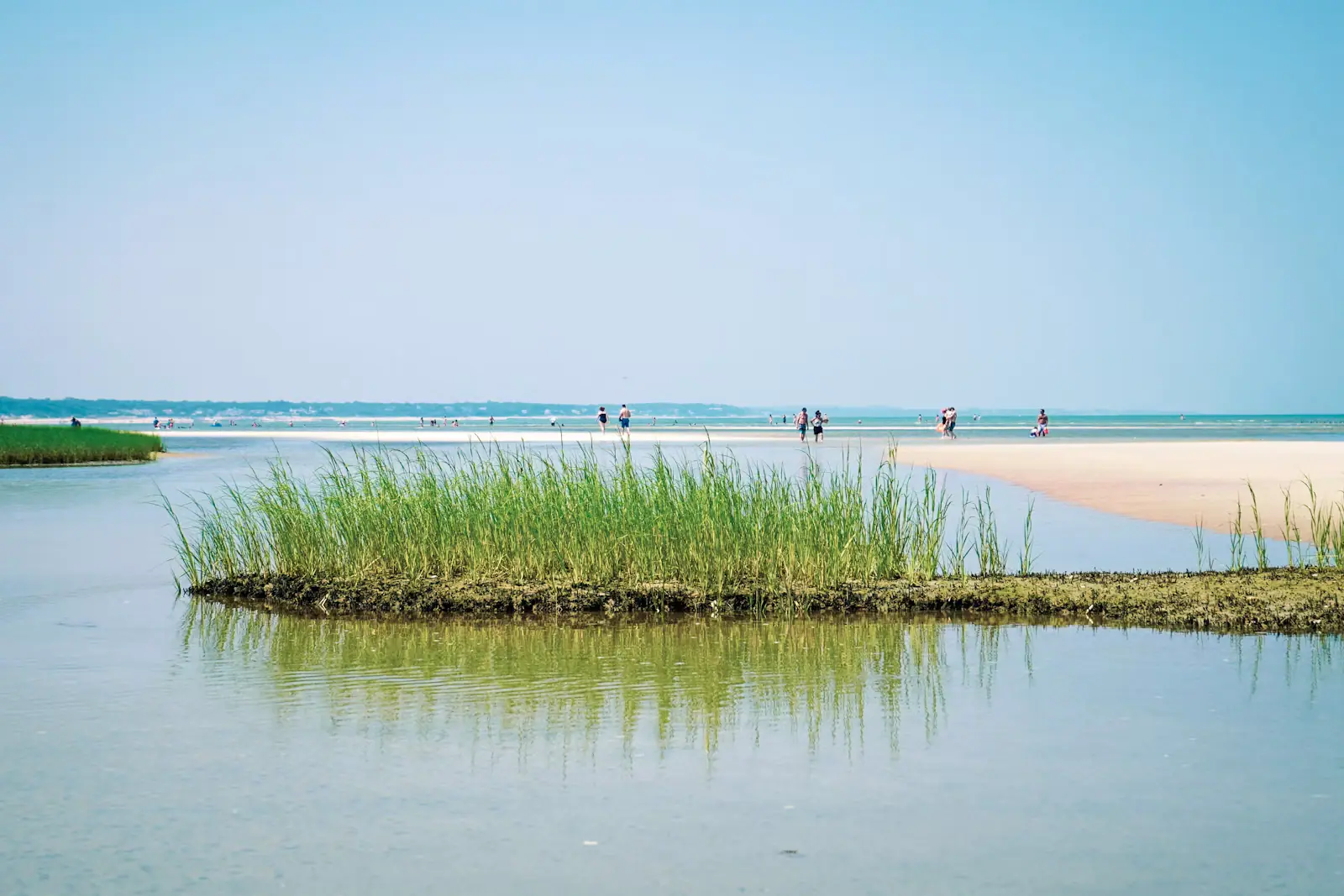
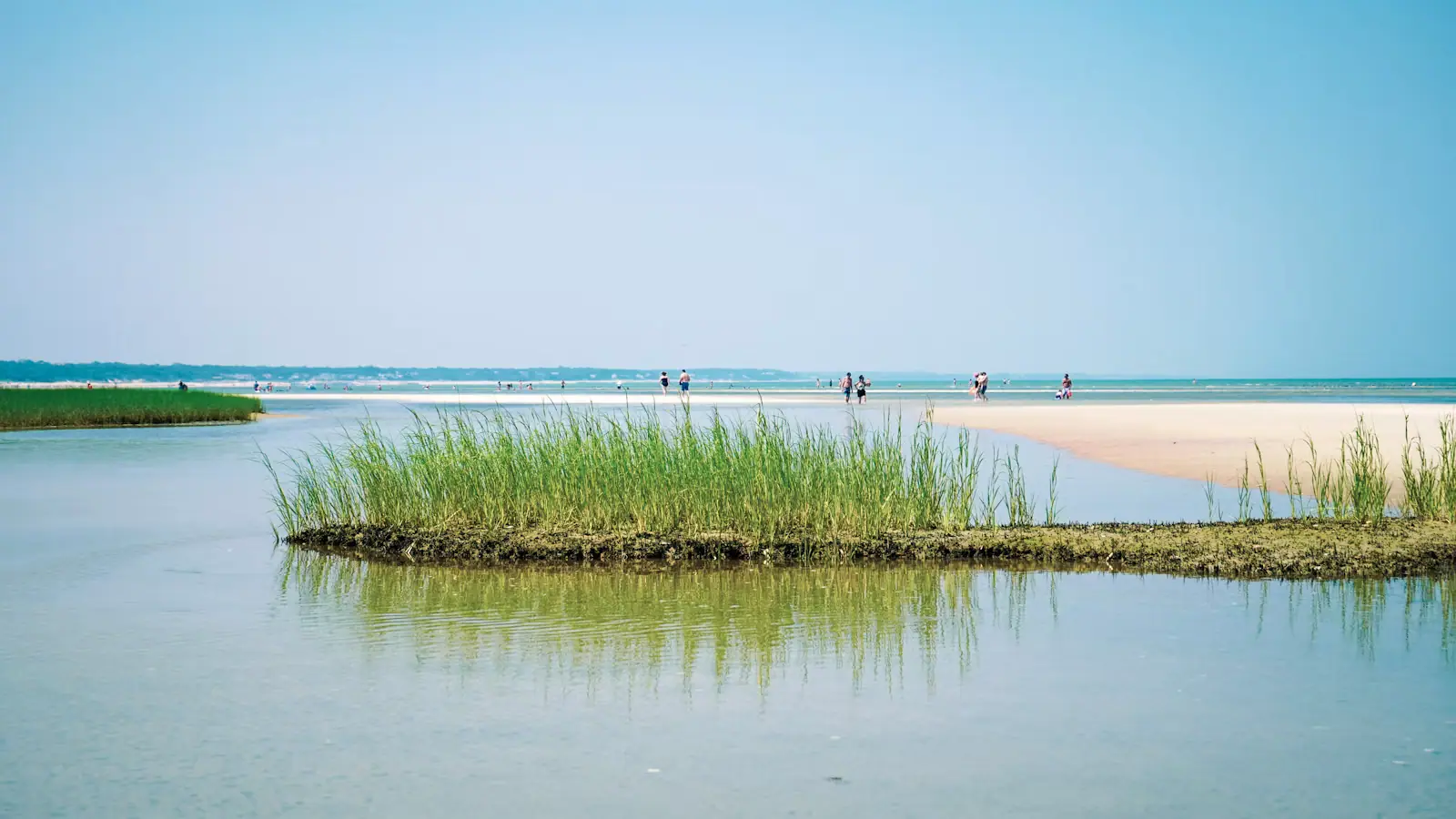
People walking out across wet sand flats at low tide on the bay side of Cape CodUnsplash

Cape Cod has the sharpest season of any American beach destination, and the two things you need to know about it both run counter to instinct.

The first is that the sea here lags the air by about two months. Surrounded by cold Atlantic water on three sides, the Cape warms slowly and cools slowly. The ocean is at its coldest in March, weeks after the worst of the winter air has gone, and at its warmest in early September, weeks after the hottest afternoons. That single fact reorganises a Cape calendar. June looks like summer and swims like spring. The second week of September looks like autumn and swims like August. Locals have known this for generations and book accordingly.

The second is that a large share of the peninsula shuts. The working season runs from Memorial Day to Columbus Day, and outside it restaurants board up, galleries go to weekends, whale boats are hauled out and some towns go quiet enough that you will drive past twenty dark storefronts looking for dinner. Provincetown and Hyannis keep a genuine winter life. Truro in January is a different country. This is not a minor caveat to be buried at the bottom of a page: it is the single most important thing to check before booking anything between mid-October and late May.

Between those two facts sits the answer most people are looking for. The best three weeks on Cape Cod are the ones immediately after Labor Day. The families have gone, the water is at its annual peak, the light goes long and low, lodging rates fall sharply, and the restaurants are still open because Columbus Day has not arrived yet. If you can travel then, travel then.

July and August give you a Cape running at full volume, which is the right choice if you are bringing children who need everything open, and the wrong one if you dislike queues, bridge traffic and paying peak rates for a house that turns over on a Saturday.

The shoulders each have a specific argument. April and May bring the whale boats back to Stellwagen Bank, an empty Rail Trail and low prices, in exchange for cold water and businesses reopening in stages. Late October and November give you cranberry harvest, storms worth watching and almost nobody, along with a shrinking list of places that are actually trading.

What follows breaks that down season by season and month by month, with the closures stated plainly rather than implied.
Our picks

The ones we would book

  • Editor's Pick

    The September sailing to Stellwagen Bank

    Why we chose it

    Late-season whale trips out of Provincetown pair the calmest bay conditions of the year with humpbacks still feeding hard before they head south. Crowds have gone, boats are quieter, and the light on the water in September is the best of the season. The strongest single argument for timing a Cape trip to the weeks after Labor Day.

  • Best for Beginners

    An April boat, when the whales are hungriest

    Why we chose it

    The fleet restarts around April as humpbacks return to the bank to feed after migrating north. Early-season sailings are quiet, cheaper than midsummer and often exceptional because the animals are working the surface. Dress for genuinely cold offshore conditions — the sea is near its annual minimum and the wind has no warmth in it yet.

    The Lucinda Lipol Tour of Provincetown

    Walking Tours

    Best for BeginnersFree cancellationInstant confirmation

    The Lucinda Lipol Tour of Provincetown (opens in a new tab)

    405 reviews

    Formerly the Anne Hutchinson Tour of Provincetown, Lucinda Liphol has taken over the talking points. Her tongue is so sharp she can't…

    45 minutes

    Prices checked

    from $35
  • Best for Families

    A midsummer seal cruise when the ocean is too cold to swim

    Why we chose it

    June and early July are the awkward weeks: summer air, spring water, children who will not stay in the sea. A short sheltered run from Chatham or Harwich out to the Monomoy shoals fills the gap, needs no swimming and delivers wildlife inside half an hour. A better use of a cold-water morning than another failed beach attempt.

    Finish at the Famous Tea Dance!

    Walking Tours

    Best for FamiliesFree cancellationPrivate tour

    The Martinis & Mingle Tour (opens in a new tab)

    27 reviews

    Toast to Ptown’s past on a Commercial Street stroll blending craft cocktails and bohemian history. Perfect for drink lovers and history…

    1–2 hours

    Prices checked

    from $88
  • Sunset

    An August evening on the bay, when the days are still long

    Why we chose it

    The Cape's bay shore faces west, which on the Atlantic seaboard is unusual enough to be worth planning around. An evening sail from Provincetown or Barnstable in high summer gives you a long, slow sunset over open water and a cool ride home. Take a layer: the temperature drops faster on Cape Cod Bay than the afternoon suggests.

    a stop at the portuguese Bakery

    Private Sightseeing Tours

    SunsetFree cancellationPrivate tour

    Local Legends and Lobster Roll Tour (opens in a new tab)

    20 reviews

    Ready to taste Ptown? Lace up for a 2-hour trek through history and coastal rebel lore. You’ll track the footsteps of Anthony Bourdain and…

    2 hours

    Prices checked

    from $105

Why September is the answer

When to go

Ask anybody who lives here and they will name the three weeks after Labor Day, for four reasons that stack.

The sea is at its warmest. Because the water lags the air by about two months, early September is the annual peak on all three coasts. Nantucket Sound and Cape Cod Bay are as warm as they get. Even the Atlantic beaches of the National Seashore, which can sit in the low sixties in July, are at their most tolerable. This is the only time of year when the outer beaches swim comfortably for most people.

The crowds vanish overnight. The American school year restarts and Cape traffic drops off a cliff. The bridges flow, the beach lots do not fill, and Chatham's Main Street is walkable again.

Rates fall while the weather does not. Weekly rentals and hotels reprice immediately after Labor Day, often substantially, for weather that is still in the seventies and often better than August because the humidity has broken.

Everything is still open. This is the key distinction from October. The seasonal shutdown begins around Columbus Day, so early and mid-September still has full restaurant service, running boats and staffed visitor centres.

The costs are small but real. Lifeguards come off the National Seashore beaches after Labor Day, so ocean swimming becomes unguarded on a coast with a strong shore break. Some businesses go to reduced days. And hurricane remnants occasionally track up the eastern seaboard in September, which is worth watching on a forecast but is a much smaller feature of the Cape's year than the winter nor'easters are.

Early October holds most of the advantages with colder water, better colour in the scrub oak and the cranberry bogs flooded for harvest.

Water temperature, coast by coast

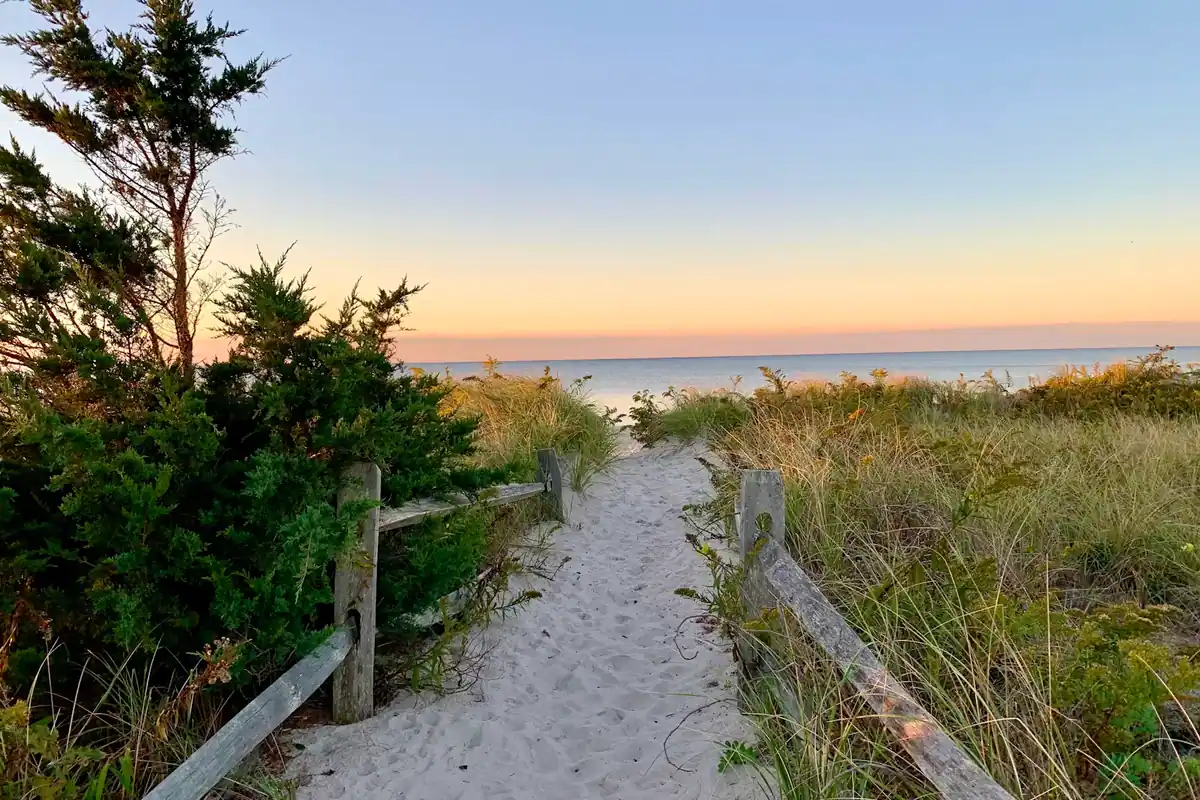
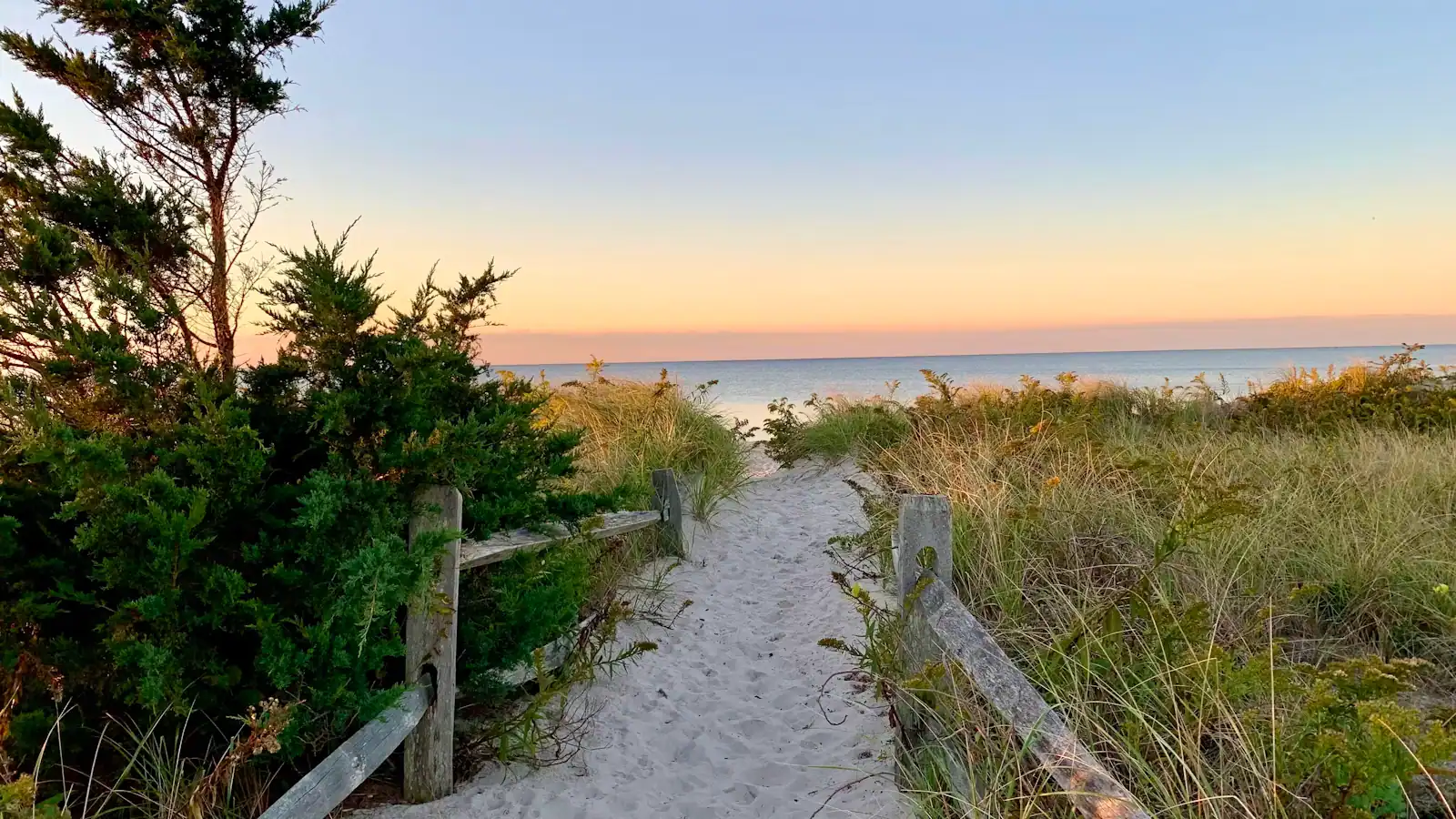
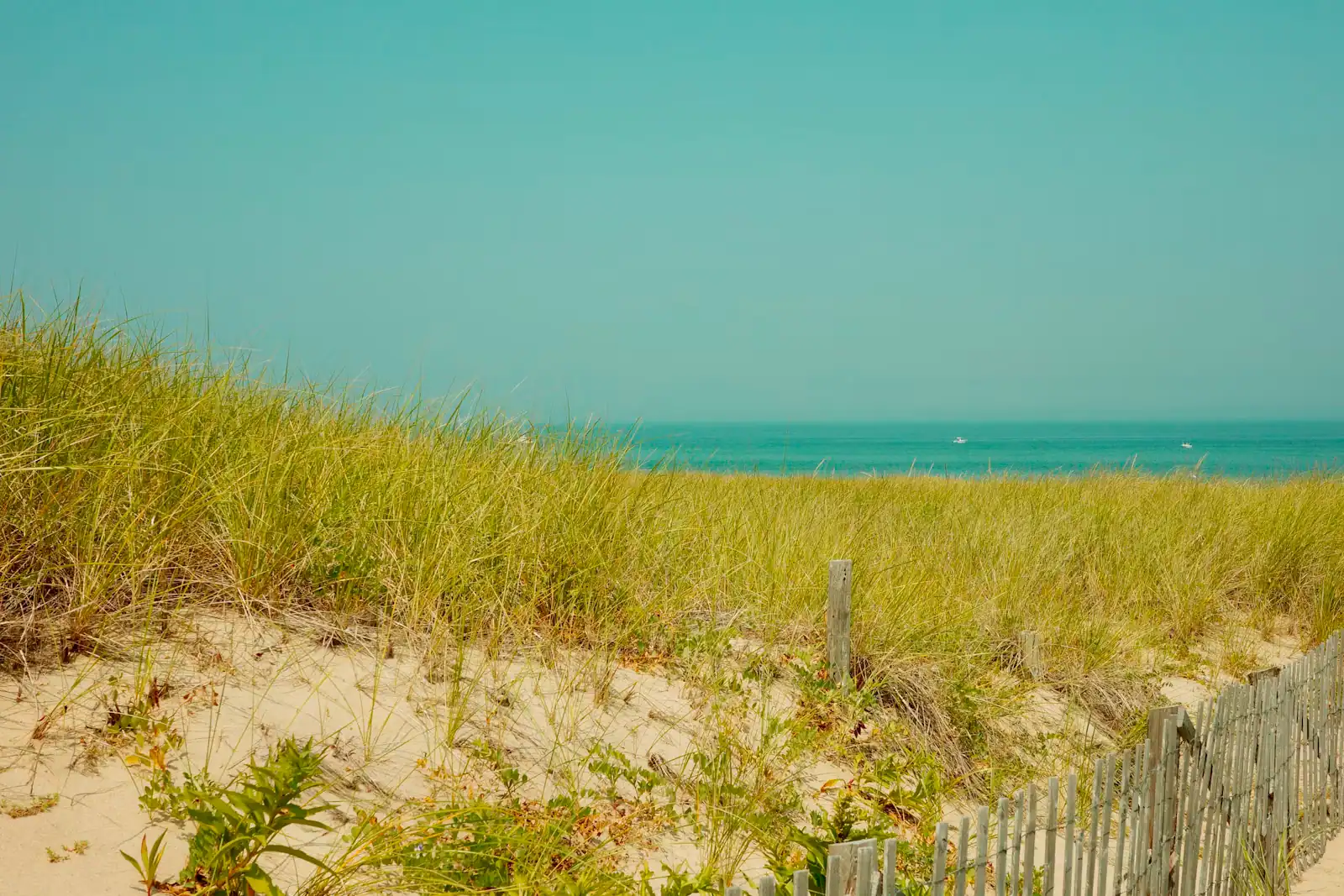
A sand path cut through beach grass opening onto the open Atlantic on Cape Cod's outer shoreUnsplash
A sand path cut through beach grass opening onto the open Atlantic on Cape Cod's outer shore

The single most common complaint from first-time visitors is that the sea was colder than they expected. It usually means they swam on the wrong coast at the wrong time of year.

The Atlantic side — the National Seashore beaches from Chatham up to Race Point — is the cold one. It faces open ocean over a steep bottom, and it commonly sits in the low sixties Fahrenheit in July, colder in June, warming into the upper sixties by late August and early September. That is swimmable for many people and genuinely bracing for others, and the shock of cold water is a real safety factor rather than a matter of comfort: it shortens your breath and drains strength faster than you expect. Wetsuits are normal here for surfers all season.

The bay side, inside the hook from Sandwich round to Truro, is far warmer. Shallow water over enormous sand flats heats fast on a flooding tide, and by August it is comfortable for anyone. On a hot afternoon the water coming in over sun-warmed flats at Skaket or Brewster can feel almost bath-like.

Nantucket Sound, along the south shore from Falmouth to Harwich, is the warmest ordinary swimming on the Cape and the most consistent. Protected by the islands, shallow a long way out, with the smallest waves of the three.

And the kettle ponds, which most visitors never consider, are freshwater, sheltered and warmer in August than any of the salt options. Several sit inside the National Seashore.

Two timing notes. The annual minimum is in March, not January, and the annual maximum is in early September, not August. And an unusually warm week in June barely moves the sea at all, because there is far too much water to heat quickly.

The booking rhythm, and when to commit

Local tips

  • Summer rentals turn over on Saturdays, almost universally, which is why Saturday traffic over the bridges is worse than any other day. If you can take a mid-week booking or a Sunday-to-Sunday, do.
  • Book July and August accommodation absurdly early. Many Cape houses rebook the same weeks to the same families year after year, and what reaches the open market goes months ahead.
  • September sells out later but it does sell out. The people who know about it are not a small group any more.
  • Whale-watch sailings should be booked for the first half of your stay, whatever month you come. Weather cancels trips, and you want somewhere to move it to.
  • Check the National Seashore fee season if you are travelling in spring or late autumn. Fees are collected seasonally, which means a November beach day costs nothing.
  • Off-season travel needs item-by-item confirmation. Ring the restaurant. Check the museum's current days. Do not drive an hour on the strength of a website that has not been updated since August.
  • Watch the tide, not just the calendar, for a bay day. Arriving at Skaket or the Brewster flats at low water means a long walk to reach the sea.
  • If you want an unguarded-free beach day, come between late June and Labor Day. That is the entire lifeguard season on the National Seashore beaches, and it is shorter than the swimming season.

Book it

Everything else we track

Bookings here go through Viator, who pay us a commission. You are charged the same either way, and the commission had no say in this list.

Sharing, or having it to yourselves

Most of what is bookable here sells two ways, and the cheaper one is not always the cheaper one. A shared departure is priced per person; a private booking is priced for the party, so the arithmetic flips somewhere around four to six people — and it is the only version where you pick the time. Check the party size each listing actually covers before you decide.

  • Book a seat

    A shared departure, priced per person. The cheapest way to do this for one or two people.

    Cape Cod Kayak Rentals in the Great Marsh

    New Product

    Free cancellationInstant confirmation

    Cape Cod Kayak Rentals in the Great Marsh (opens in a new tab)

    14 reviews

    Discover the enchanting beauty of East Sandwich's Great Marsh! Immerse yourself in stunning wildlife, scenic vistas, and the tranquility…

    3 hours

    Prices checked

    from $50
  • Book the whole thing

    Priced for the party rather than the seat, and you choose the departure time.

  • Cape Cod Sunset Kayak Tour

    Kayaking Tours

    Free cancellationInstant confirmation

    Cape Cod Sunset Kayak Tour (opens in a new tab)

    12 reviews

    RideAway Adventures has been awarded the best tours on Cape Cod 12 years in a row. We have the only fully ACA certified guide staff on…

    2 hours

    Prices checked

    from $80
  • Savor the charm of The Red Inn, a historic Provincetown gem offering stunning waterfront views, cozy elegance, and timeless New England hospitality.

    Short term availability

    Free cancellationPrivate tour

    Provincetown West End History Tour (opens in a new tab)

    7 reviews

    Join Your guide Cathy and embark on a captivating journey through Provincetown’s West End, where the sands of time meet the tides of…

    1–2 hours

    Prices checked

    from $68

The four seasons, honestly compared

How they compare

Temperatures are Mid Cape normals around Hyannis. The Outer Cape runs a degree or two cooler in summer and milder in winter, and it always gets more wind.

SeasonTypical high / lowCrowdsWhat it is good forWhat it costs you
Summer, June to August76 / 61 FPeakEverything open, lifeguards on duty, whales reliable, bay flats at their bestPeak rates, bridge queues, beach lots full by mid-morning
Autumn, September to November62 / 46 FModerate falling to lowThe warmest sea of the year in early September, cranberry harvest, empty trails, sharp rate dropsProgressive closures from Columbus Day; by November, little is open
Winter, December to February41 / 24 FLowNor'easters at the outer shore, seals in their thousands, empty Seashore beaches, cheap lodgingMost of the peninsula is shut; cold, raw wind
Spring, March to May54 / 38 FLowWhale boats restart, the Rail Trail to yourself, low prices, reopening town by townThe coldest sea of the year in March; a sunny day inland can be raw and foggy at the coast

Rainfall is worth a line of its own. The Cape gets roughly 43 inches a year, falling fairly evenly across the months, so there is no wet season and no dry one. Rain here does not arrive as a predictable afternoon hour the way it does further south. It arrives as an entire grey day, two or three times a month, in any season.

If you want one sentence: come the week after Labor Day, and if you cannot, come in late June before the crowds thicken and after the water has started to turn.

What closes between Columbus Day and Memorial Day

Before you book

This is the part of the Cape that surprises people, and it is worth being blunt.

From around Columbus Day in October, the peninsula begins closing down. It happens progressively rather than overnight: first the seasonal ice cream and mini-golf, then the smaller restaurants, then the galleries, then the boats. By January a large share of the Cape's hospitality businesses are dark, and several small towns have almost nothing trading at all. Reopening runs the other way through April and May, business by business, and Memorial Day weekend is the switch that flips everything back on at once, along with the crowds and the summer rates.

What stays open. Provincetown keeps a genuine year-round community with restaurants, bars and the Pilgrim Monument grounds, and it hosts winter events. Hyannis works all year because it is the Cape's practical centre: hospital, supermarkets, ferries, chain hotels, the JFK museum. Falmouth and Chatham keep a reduced but real winter life. The larger Mid Cape museums and Heritage Museums and Gardens generally trade through with adjusted hours.

What does not. Most Outer Cape restaurants outside Provincetown. Most galleries and small shops. Whale-watch boats, seal cruises and dune tours. Many inns and B&Bs. Seasonal ferry services, including the Boston to Provincetown fast boat and the high-speed Nantucket catamaran for part of the winter.

What is unaffected, and is genuinely the reason to come. The National Seashore beaches stay open, cost nothing outside the fee season, and are yours alone. The Rail Trail and canal paths are open all year, grey seals are at their thickest around Monomoy, and nor'easters drive surf at the outer shore worth watching from a safe distance.

The rule: before travelling in the off season, confirm the specific restaurant, museum or boat you are counting on. Do not rely on a listing, this page included.

Month by month, with the thing that is actually happening

How they compare

MonthWhat the Cape is doing
JanuaryDeep off season. Provincetown and Hyannis only. Grey seals thick around Monomoy. Nor'easters worth watching
FebruaryColdest month. Empty Seashore beaches. Lodging at its cheapest. Check everything before you drive
MarchSea at its annual minimum. Reopening has not started. The Rail Trail is dry and deserted
AprilWhale boats return to Stellwagen Bank as the humpbacks arrive. Businesses reopen in stages. Cold water, low prices
MayThe Cape wakes up. Heritage's rhododendrons, horseshoe crabs spawning on the big moon tides, everything open by the end of the month
JuneSummer air, spring water. Lifeguards from late June. Quieter than July, and the ocean will still take your breath
JulyFull volume. Everything open, everything booked, bridges at their worst on Friday and Sunday afternoons
AugustAs July, with warmer water and the most reliable weather of the year. Book many months out
SeptemberThe best three weeks. Warmest sea, crowds gone, rates cut, everything still trading. Lifeguards off after Labor Day
OctoberCranberry harvest, scrub oak turning, cool water, very few people. Closures begin around Columbus Day
NovemberCold-stunned sea turtles strand inside the bay and volunteers patrol the beaches after dark. Most of the Cape is shut
DecemberTown holiday strolls in Sandwich, Chatham and Falmouth are a genuine local tradition. Otherwise, winter

Two entries in that table are worth travelling for. The cranberry wet harvest floods the bogs through October and turns them scarlet; these are working farms, so view from public roads. And the turtle strandings are a direct consequence of the Cape's shape: the hook traps Kemp's ridley and loggerhead turtles that have not moved south in time, they become cold-stunned as the water cools, and volunteers walk the bay beaches after dark to find them.

On the ground

Where to go

Every place below has its own page — hours, parking, what it costs and what to expect when you get there.

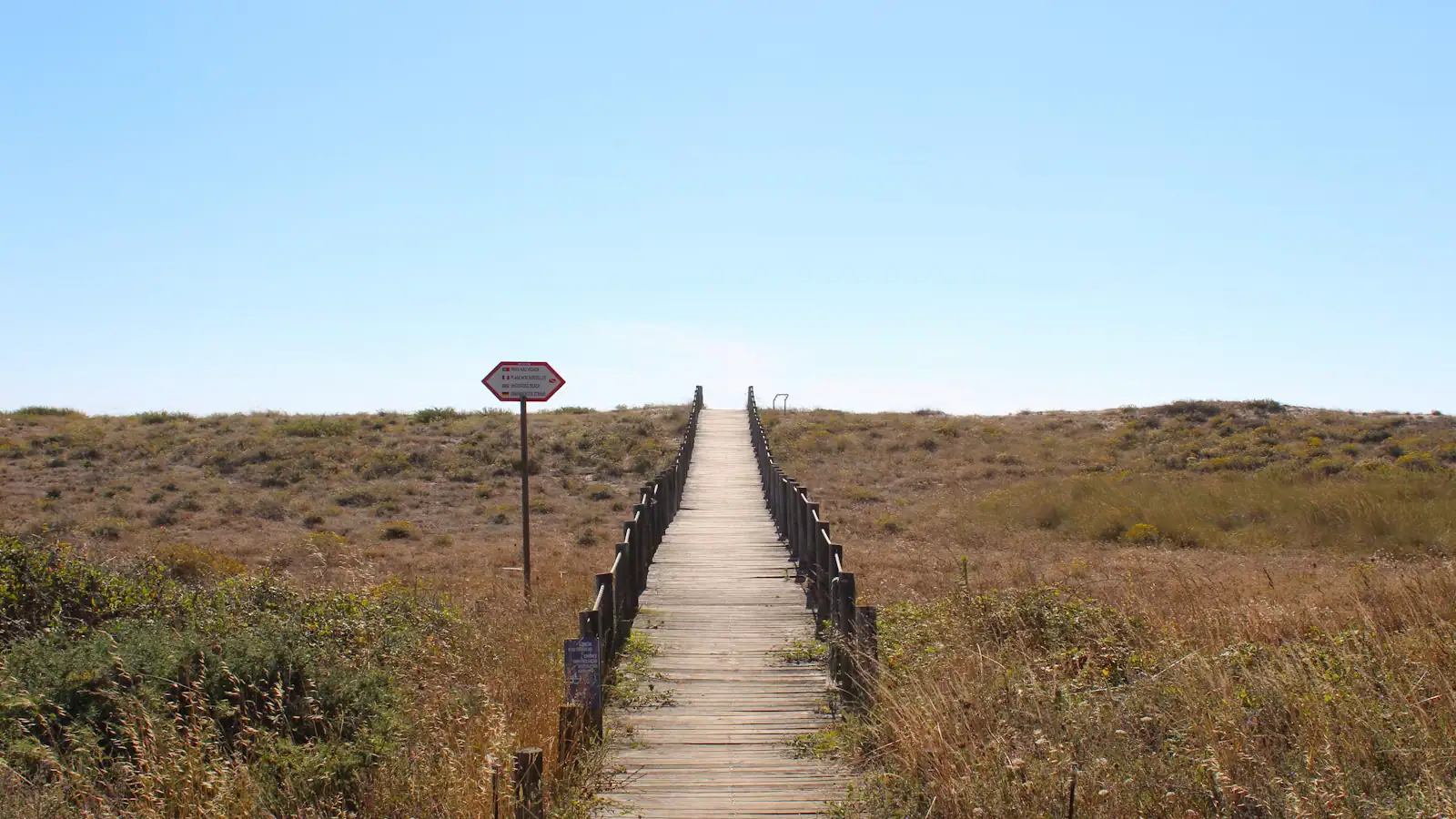
  • A sand path cut through beach grass opening onto the open Atlantic on Cape Cod's outer shore

    Park

    Cape Cod National Seashore

    Forty miles of protected Atlantic shore, six guarded ocean beaches, and one $25 vehicle fee that covers every one of them for the same day.

    3–8 hours$25 per private vehicle per day, valid at all six park beaches. $60 annual park pass.

  • The granite tower of the Pilgrim Monument rising above Provincetown's rooftops beside the harbour

    Neighbourhood

    Free

    Provincetown

    Three thousand people in winter and sixty thousand in August: a fishing port, an art colony since the 1890s, and unlike anywhere else.

    4–12 hoursFree to visit. Parking, ferries, the monument and tours are charged separately.

  • A sandy footpath lined with beach grass dropping down toward the shore on Cape Cod

    Beach

    Coast Guard Beach

    A barrier spit with salt marsh behind it, the best bodysurfing on the Outer Cape, and a summer parking rule that catches people out.

    2–5 hoursNational Seashore fee: $25 per vehicle per day, or $15 per person arriving on foot or by bicycle.

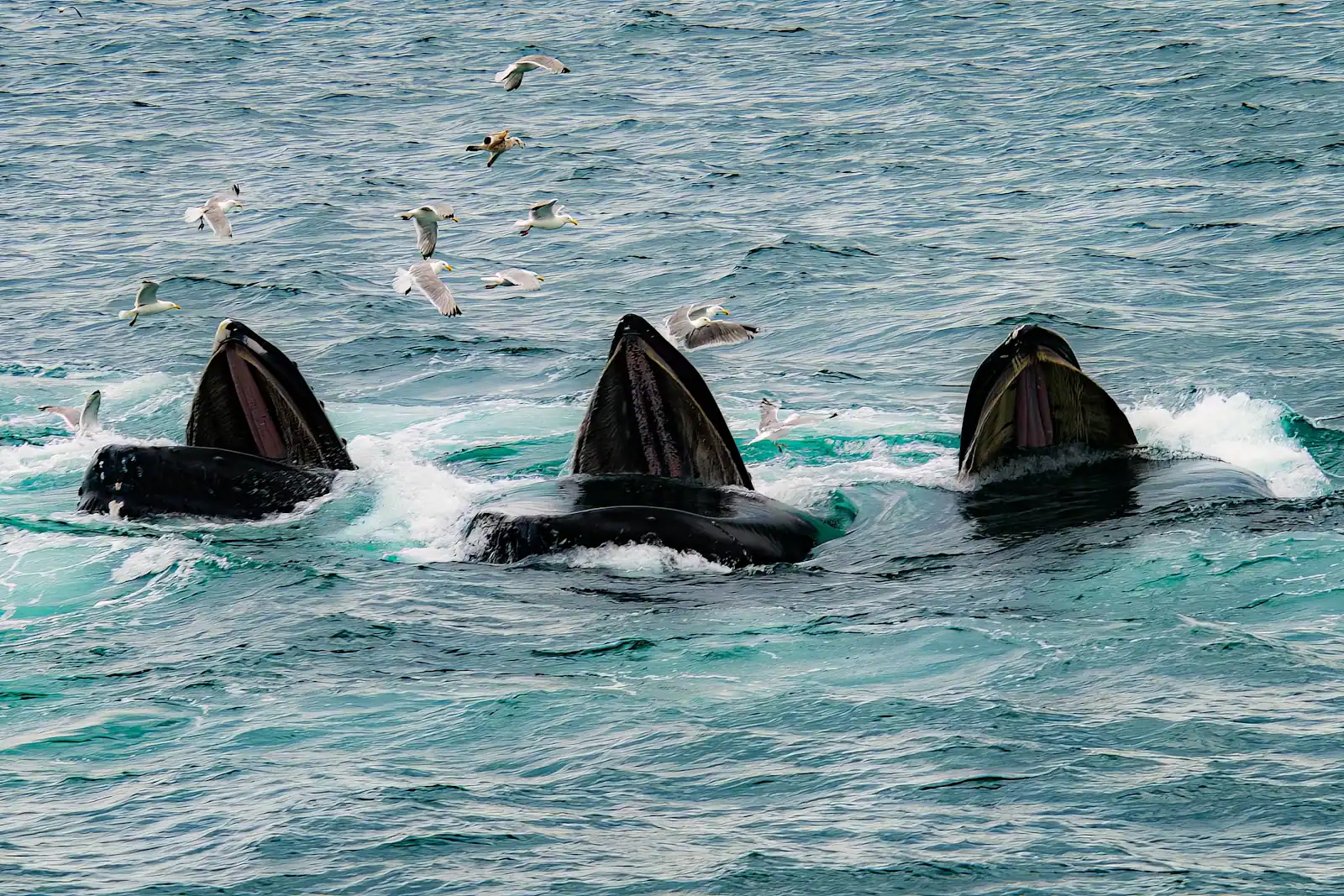
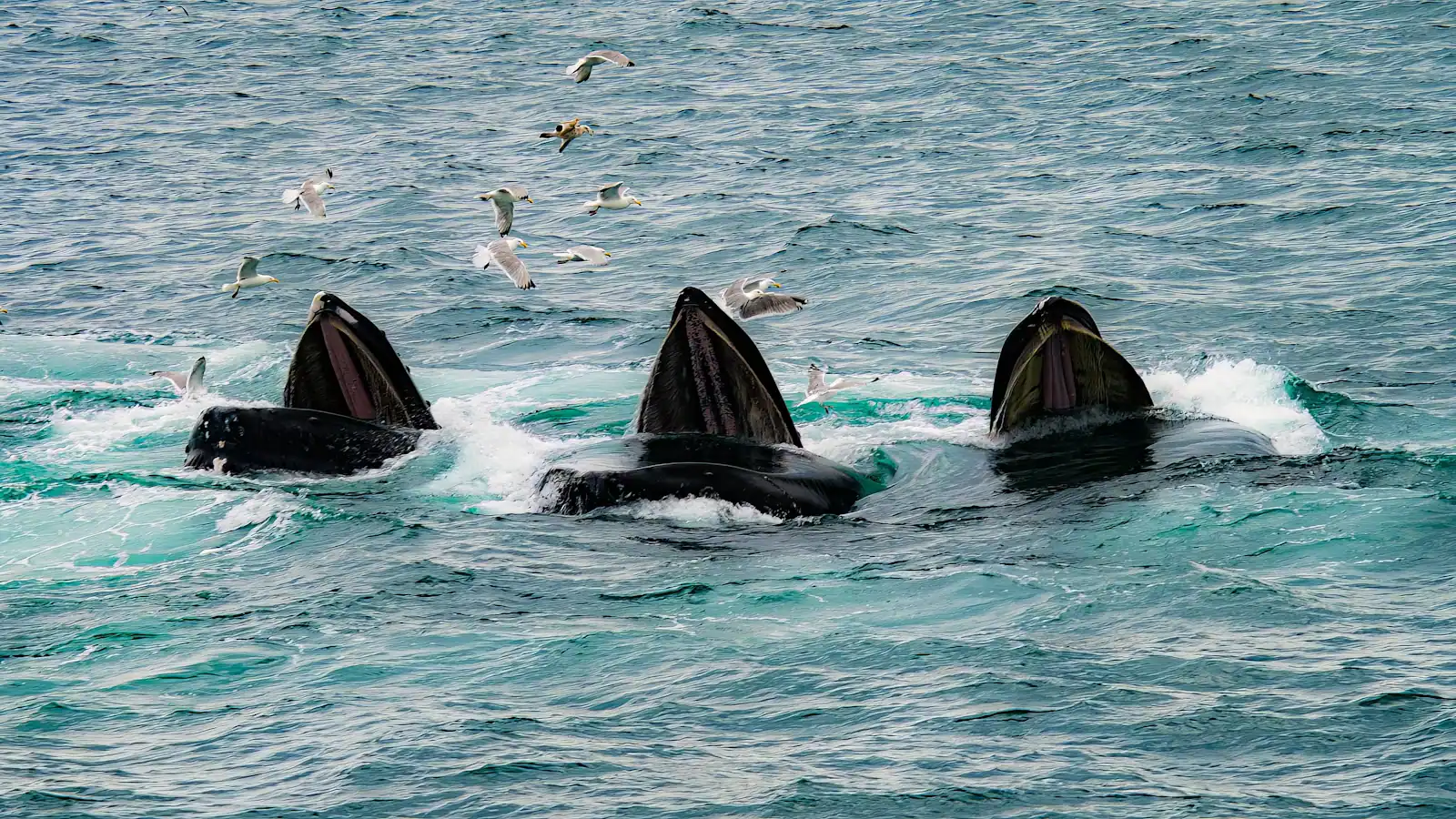
  • Whales surfacing together in open grey water off the Massachusetts coast

    Beach

    Race Point Beach

    The beach at the outside of the fist, facing north into deep water — the one place on the Cape where whales are visible from a towel.

    2–6 hoursNational Seashore fee: $25 per vehicle per day, or $15 per person on foot or by bicycle.

  • A paved pathway running between green grass under an overcast sky

    Trail

    Free

    Cape Cod Rail Trail

    Twenty-five and a half paved miles on an old railbed through seven towns, and the way to reach a beach in August without parking.

    1.5–6 hoursFree to use. Some trailhead car parks charge or require a town sticker.

  • Salt marsh grass and a winding tidal channel under a wide overcast sky on Cape Cod

    Nature preserve

    Free

    Monomoy National Wildlife Refuge

    Two wilderness barrier islands off Chatham holding thousands of grey seals and the Atlantic coast's largest common tern colony.

    1–4 hoursFree. Refuge lands carry no entrance charge; boat trips with private operators are separately priced.

  • Low sun over a thin sheet of water lying on an exposed sand flat at low tide

    Beach

    Free

    Skaket Beach

    Warm, shallow bay water over a flat that empties for most of a mile — and a car park small enough that it shuts by mid-morning in July.

    2–5 hoursFree to enter. Town parking is charged in season by daily rate or Orleans beach sticker.

  • People walking out across wet sand flats at low tide on the bay side of Cape Cod

    Neighbourhood

    Free

    Brewster

    The bay town where low tide opens a walking surface that was open sea an hour earlier, and fills again faster than people expect.

    3–8 hoursFree to visit. Town beach lots need a Brewster sticker in season; Nickerson charges day-use parking.

Straight answers

Questions people actually ask

When is the best time to visit Cape Cod?

The three weeks immediately after Labor Day. The sea reaches its annual peak in early September because the water lags the air by around two months, the crowds leave when the American school year starts, rates drop sharply and everything is still open because the seasonal shutdown does not begin until Columbus Day. July and August are the alternative if you need every attraction running and can absorb the prices and the bridge traffic.

Is Cape Cod worth visiting in the off season?

Yes, for the right trip, and only if you plan around the closures. From Columbus Day to Memorial Day a large share of the peninsula's restaurants, galleries, boats and inns shut, and some towns go almost completely dark. What you get in return is empty National Seashore beaches, thousands of grey seals, nor'easters driving surf at the outer shore, holiday strolls in the old villages and very cheap lodging. Base yourself in Provincetown or Hyannis.

How warm is the water on Cape Cod in summer?

It depends entirely on which coast. Nantucket Sound and Cape Cod Bay are comfortable through July and August, often in the low seventies Fahrenheit. The Atlantic beaches of the National Seashore are much colder, frequently in the low sixties into July, warming toward the upper sixties by late August. The ocean lags the air by roughly two months, which means early September is the warmest swimming of the whole year.

What month is cheapest to visit Cape Cod?

February, comfortably, with January and early March close behind. Lodging rates in deep winter are a fraction of summer, and National Seashore entrance fees are not collected outside the fee season. The trade-off is severe: most of the Cape is closed, the weather is cold and raw, and your choice of open restaurants is limited to Provincetown, Hyannis and a handful elsewhere. For cheap with everything open, aim for late April, May or October.

Is September a good time to visit Cape Cod?

It is the best time. The sea is at its annual warmest, the crowds disappear after Labor Day, rental and hotel rates fall immediately, and the seasonal shutdown has not started so restaurants and boats are still running. The one real change is that lifeguards come off the National Seashore beaches after Labor Day, so ocean swimming becomes unguarded on a coast with a strong shore break and cold water.

Does it rain a lot on Cape Cod?

About 43 inches a year, spread fairly evenly across the months, so there is no wet season and no dry season. The practical consequence is that Cape rain does not come as a predictable afternoon hour. It comes as a whole grey day, a few times a month, in any season, which is why building a wet-weather fallback into a week here matters more than watching for a storm window. Fog is a separate and frequent feature of the outer beaches.

When can you see whales off Cape Cod?

Roughly April through October. Boats out of Provincetown and Barnstable begin running in spring as humpbacks return to Stellwagen Bank to feed, sightings are most reliable from June through September, and the fleet winds down in autumn. Early-season trips in April and May are often excellent because the animals are feeding hard and the boats are quiet, though you should dress for genuinely cold conditions offshore.

How crowded is Cape Cod in July and August?

Very. The year-round population multiplies several times over, National Seashore beach lots close when full by the middle of a clear morning, the Sagamore and Bourne bridges back up for miles on Friday and Sunday afternoons, and popular restaurants need booking. It is still manageable if you move early, cross the canal before nine or after seven, and accept that Chatham and Provincetown in August are busy towns rather than quiet ones.