Skip to content
Search
Menu

Bookings here go through Viator, who pay us a commission. You are charged the same either way, and the commission had no say in this list.

Beach

Race Point Beach

Last updated

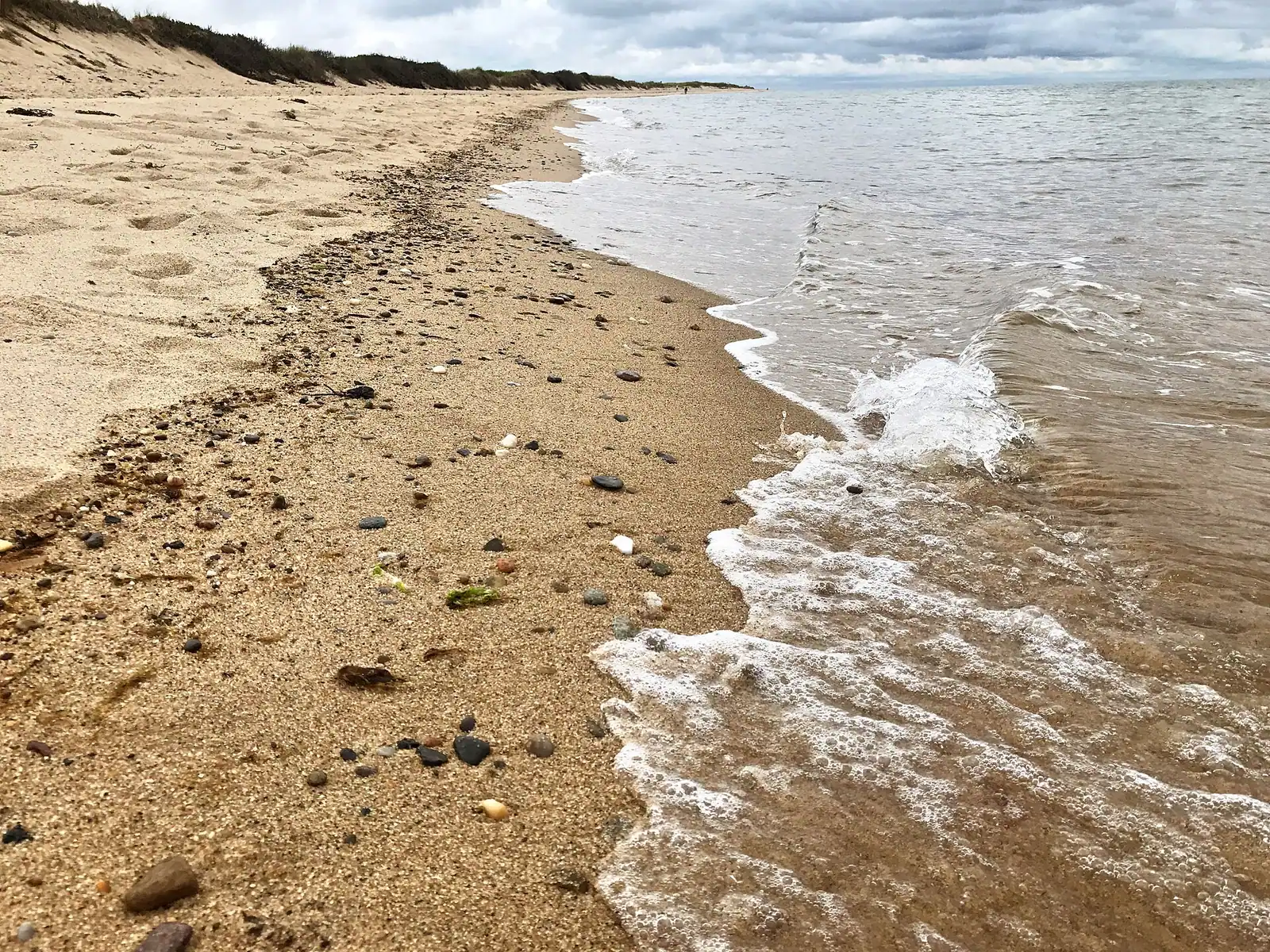
The beach at the outside of the fist, facing north into deep water — the one place on the Cape where whales are visible from a towel.

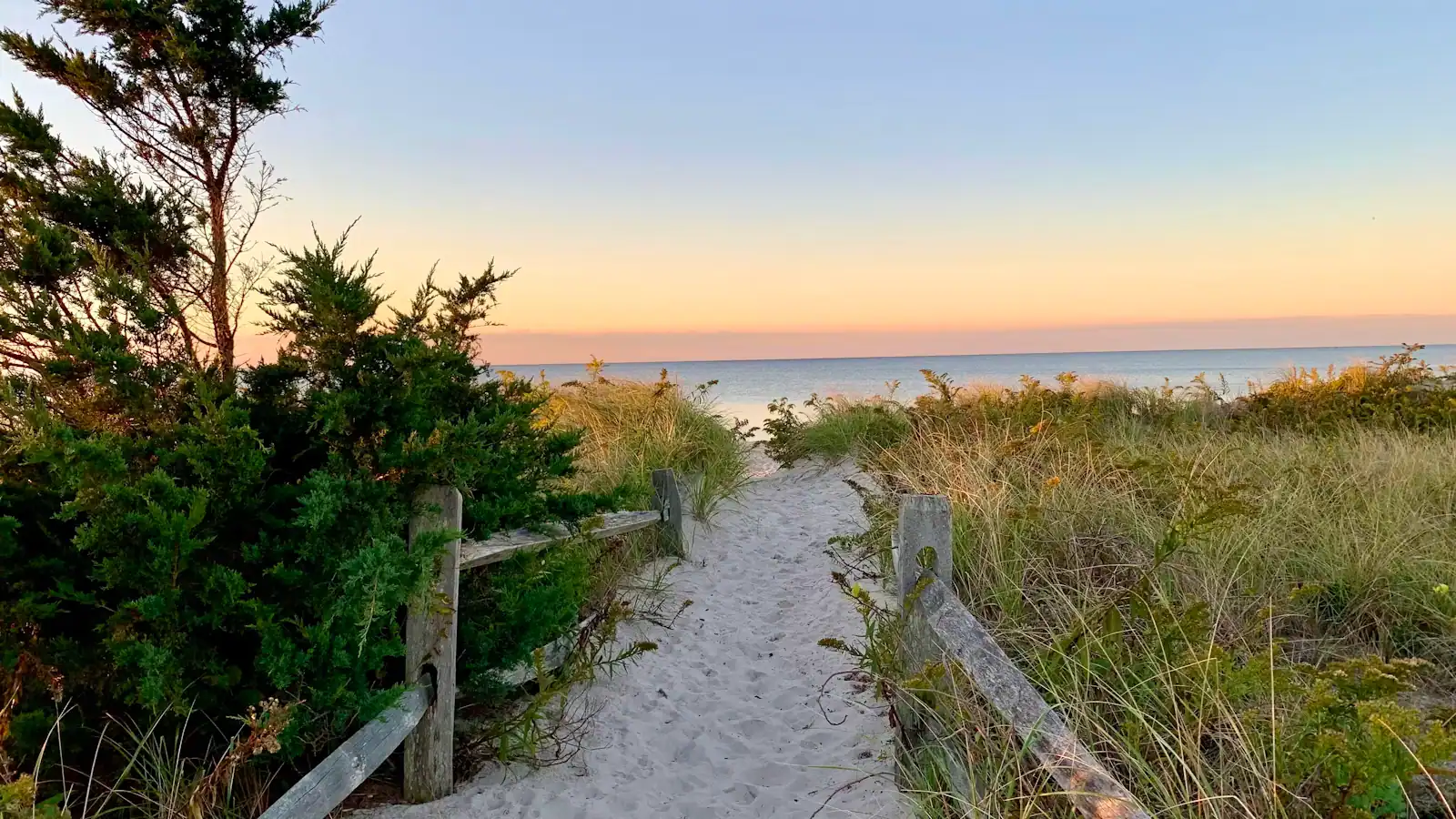
Everywhere else on Cape Cod the Atlantic is to your east. At Race Point it is to your north, because the hook has curled through ninety degrees and you are standing on the outside of the fist. That single fact reorganises everything. In high summer the sun comes up out of the water on your right hand and goes down into it on your left, which is not true of any other beach on this peninsula. The prevailing southwest wind blows offshore here rather than onshore, so the water is often glassy on the afternoons when Nauset is a mess of whitecaps.

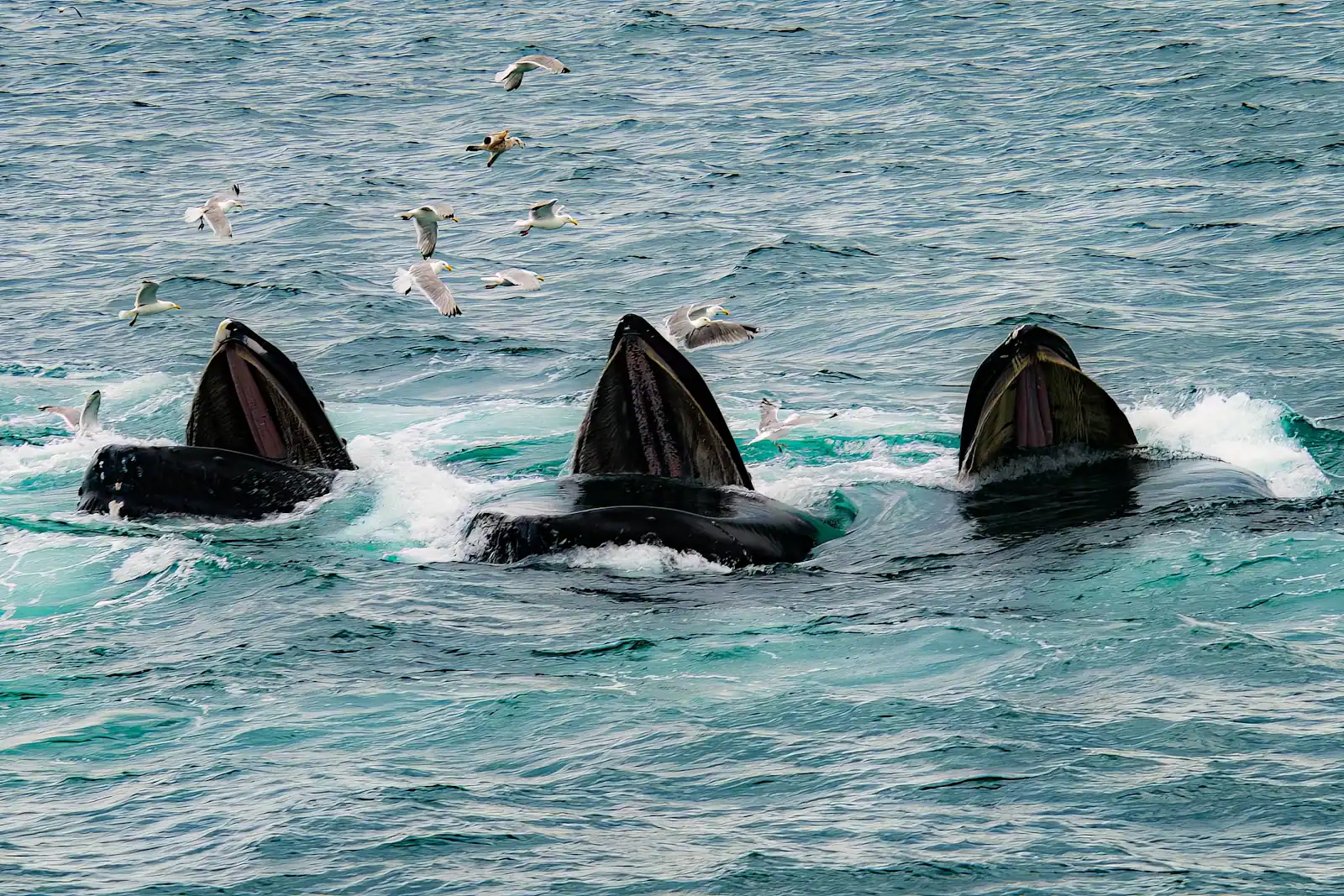
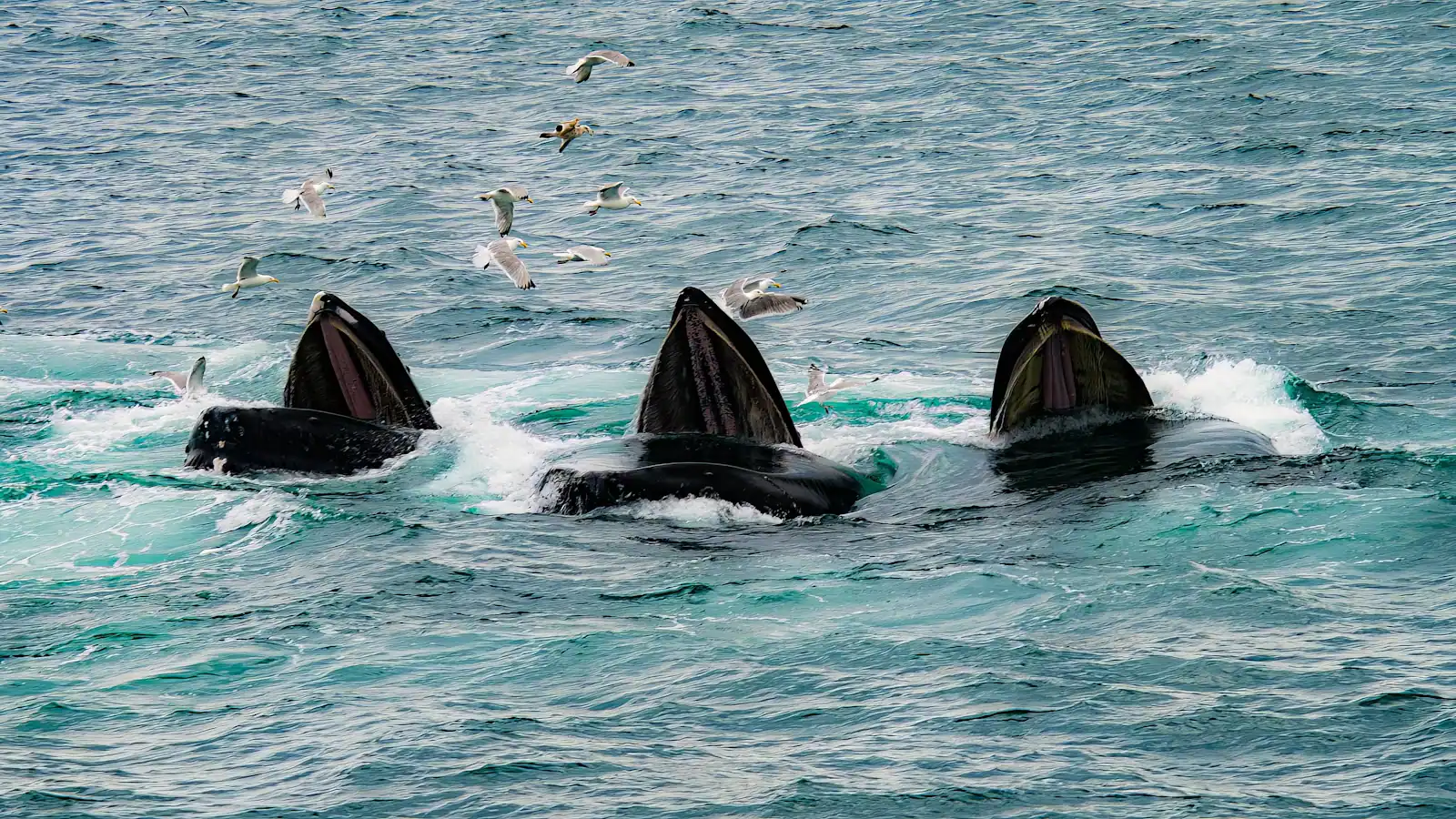
More importantly, the bottom drops away fast. Race Point sits at the edge of the deep channel where Cape Cod Bay meets Massachusetts Bay, and feeding whales come startlingly close to the beach. Humpbacks and fin whales blow within sight of the sand on a good morning in June, and it is the only place on the Cape where whale watching from a towel is a reasonable plan rather than a fantasy.

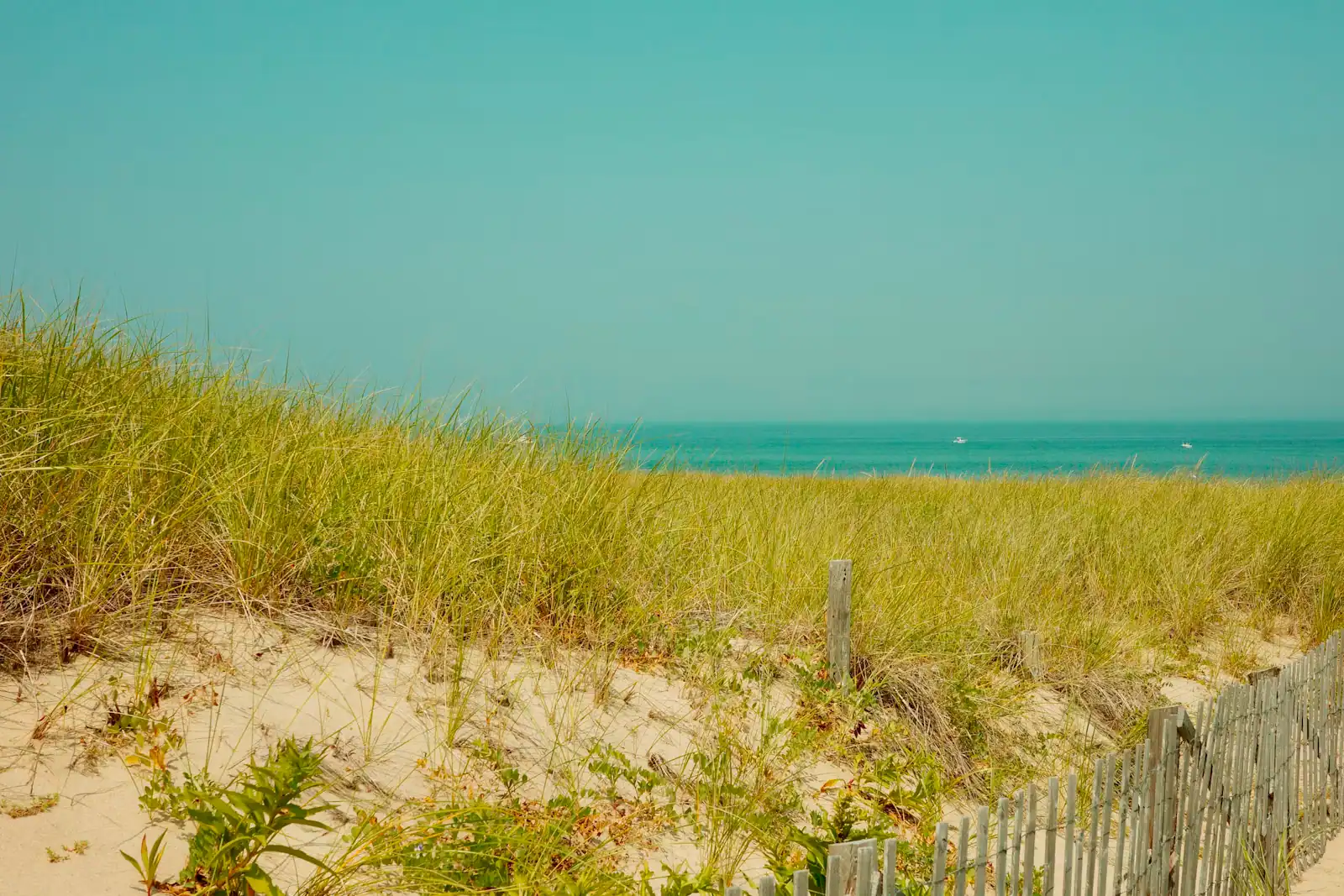
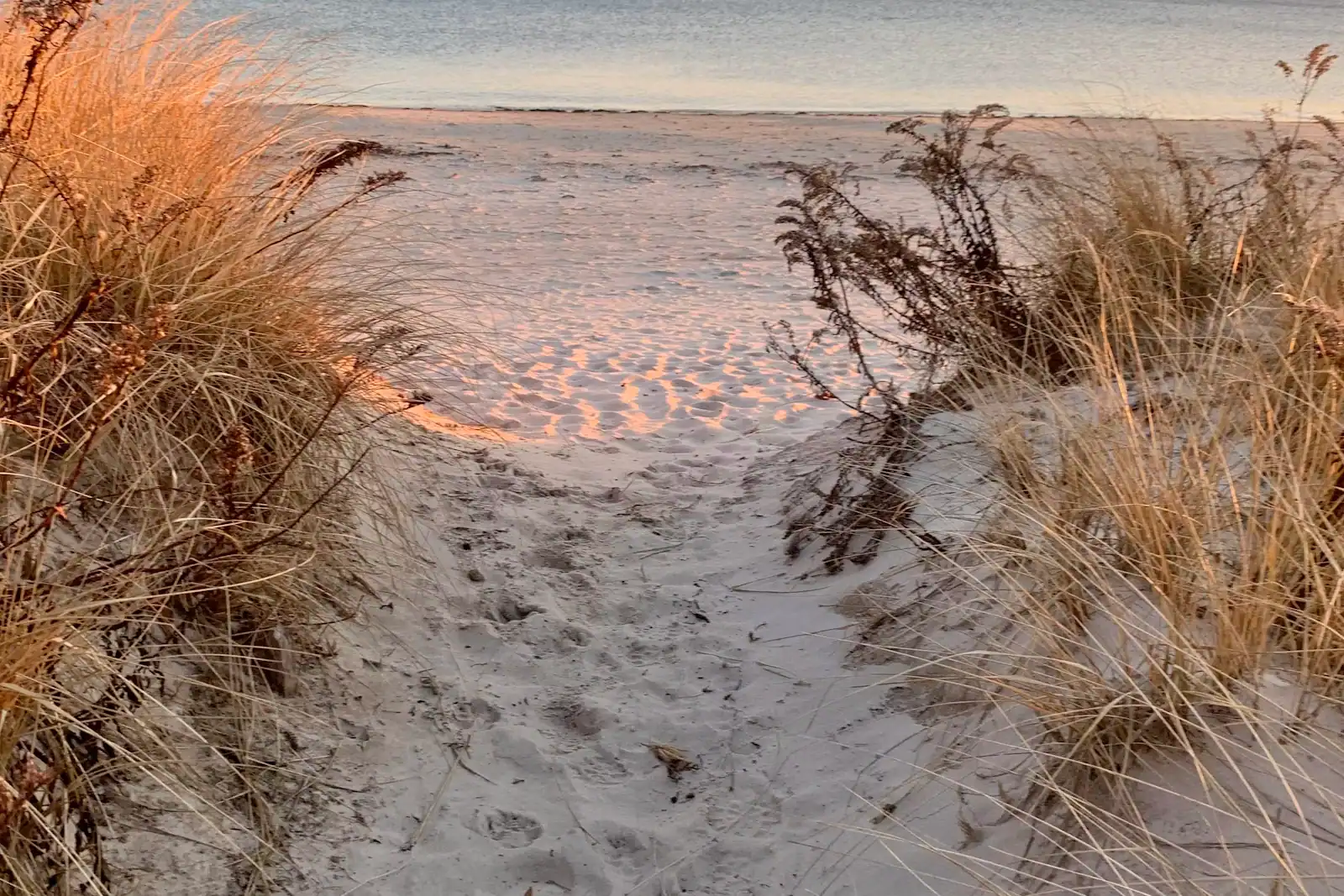
Behind the beach lies the Province Lands: a landscape of bare parabolic dunes, cranberry hollows and stunted pine that looks nothing like the rest of the Cape and rather a lot like a desert with the sea in the wrong place. The Province Lands Visitor Center sits on a hill in the middle of it with a rooftop deck and one of the best free views in Massachusetts.

Two historic buildings anchor the ends of the story. The Old Harbor Life-Saving Station, a surfmen's station barged around the Cape to Race Point when erosion threatened its Chatham site, stands near the beach. Race Point Light, a 45-foot cast-iron tower of 1876, sits a long walk west across the sand.

Getting there and parking

Race Point Road leaves US-6 at the eastern edge of Provincetown and runs north through the Province Lands to the beach lot. The Province Lands Visitor Center is signed on the way, and is worth ten minutes for the rooftop deck.

From Provincetown centre the drive takes about ten minutes and from Wellfleet about half an hour. In August, town parking in Provincetown is harder than beach parking at Race Point, so if you are staying in town, ride the seasonal shuttle or cycle.

The Province Lands bike trail connects the visitor centre, Race Point and Herring Cove on paved paths through the dunes. It is scenic and it is hilly; it is not a flat family potter.

Oversand vehicle access to the light and the outer beach requires a National Park Service permit issued at the park's oversand station, with equipment conditions that must be met before you are let on.

Watching whales from the sand

This is the claim that sounds like marketing and is not. The hundred-fathom contour runs unusually close to the tip of the Cape, Stellwagen Bank is about five miles north, and whales that are feeding on sand lance push right into the shallows off Race Point.

Best odds are from late spring into early summer, in the morning, with a flat sea and binoculars. Look for a blow — a low bushy spout that hangs for a second — rather than for a fin. Humpbacks are the showy ones; fin whales are longer, faster and far less demonstrative; minkes surface once and are gone. Grey seals are constant and are not whales, which is a mistake every visitor makes at least once.

None of this is guaranteed on any given day and nobody should drive from Boston for it. If seeing a whale is the point of the trip, book a boat from MacMillan Pier in Provincetown and take the fifty-minute run out to Stellwagen Bank, where the odds are a different order of magnitude.

If you do see one from the beach, note that federal rules on approach distance apply to vessels, not to you standing still on sand. Kayakers and paddleboarders are vessels, and should not go anywhere near.

Walking out to Race Point Light

The lighthouse is visible from the beach and looks close. It is not. The walk west along the sand takes roughly forty-five minutes each way for a reasonably fit adult, over soft sand, with no shade and no water, and it is considerably harder than the distance suggests.

The tower itself is a 45-foot cast-iron structure built in 1876 to replace an 1816 original, automated in 1972 and now solar-powered. The American Lighthouse Foundation looks after the station and lets rooms in the keeper's house and the whistle house overnight, which is one of the genuinely unusual places to sleep in New England: no road, no neighbours, a considerable walk to dinner and the light turning above you.

The alternative to walking is an oversand vehicle permit from the National Park Service, which allows a properly equipped four-wheel-drive onto the designated sand route. The permit system has requirements about tyres, recovery equipment and vehicle type, and it is not something to improvise on arrival with a rental crossover.

Go early or late. The middle of a July afternoon on that sand is genuinely punishing, and the light on the tower is better at either end of the day anyway.

Oversand vehicles, and the beach that is not a road

Race Point is one of the few places in the National Seashore where you can legally drive on the beach, and the arrangement confuses people badly.

A National Park Service oversand permit is required. It is not a parking pass, it is a vehicle permit with conditions: four-wheel drive, tyre deflation, a shovel, a jack and board, a tow rope, and in the self-contained category a marine toilet and holding tank for overnight stays. Permits are sold in limited numbers and the popular categories go early in the season.

What you must not do is take an ordinary car onto soft sand to see what happens. Recovery is expensive, the salt does permanent damage, and a stuck vehicle on a nesting beach causes a problem far larger than your afternoon.

Shorebird closures reshape the corridor every summer. Piping plovers and least terns nest on the open sand between the parking area and the light, and sections of the route close from spring into midsummer while chicks are on the ground. The closures are not negotiable and the rangers do not treat them as advisory.

None of this affects the ordinary beachgoer, who parks in the paved lot and walks fifty yards.
Parking, cold water and the dune ride

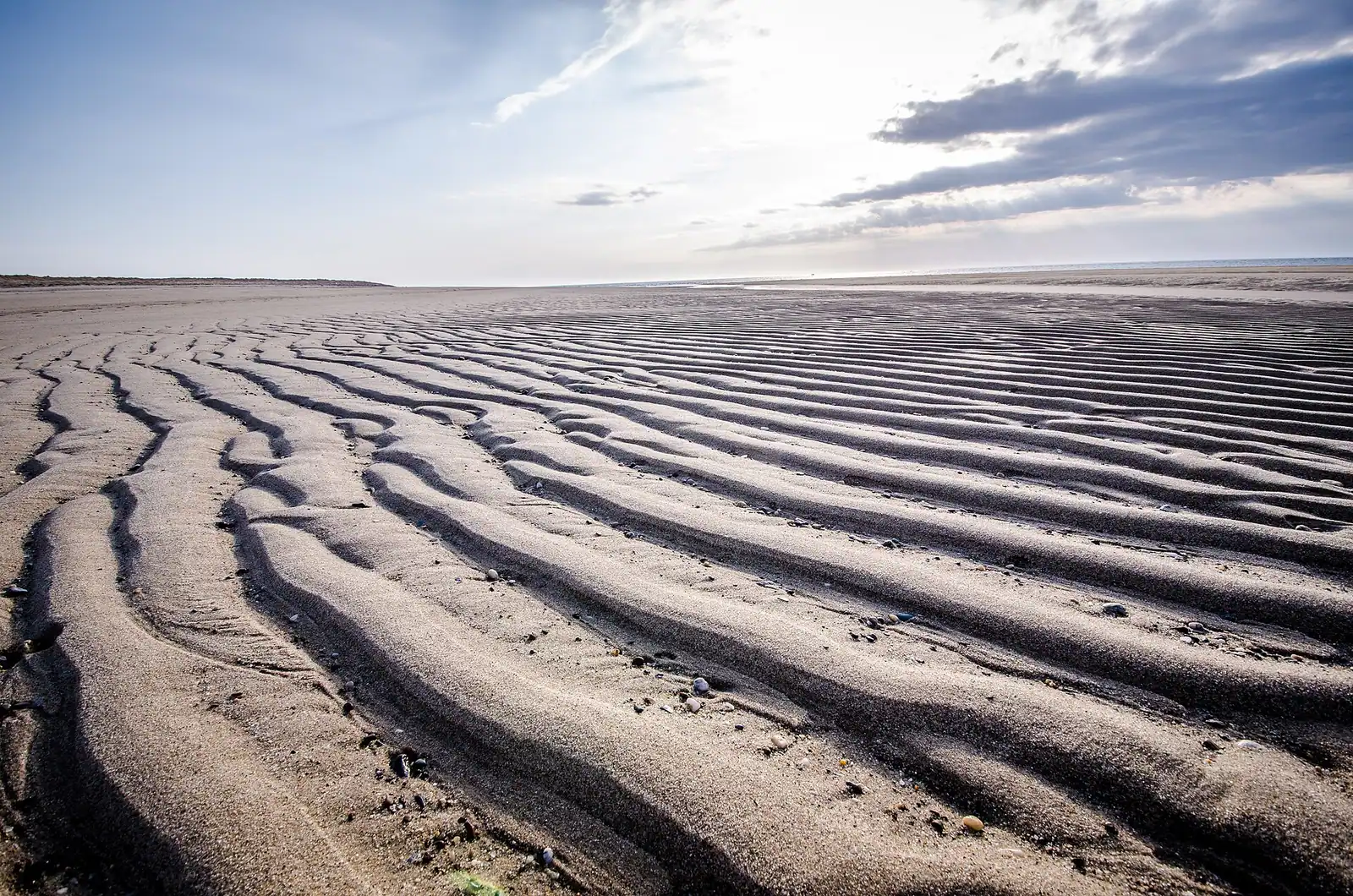
The paved lot sits directly behind the dune with the sand a minute's walk away over flat ground, which makes Race Point one of the two easiest National Seashore beaches to reach with a pushchair, a wheelchair or a great deal of kit. There is a seasonal bathhouse with restrooms and cold showers.

  • The lot fills later than the Eastham beaches but does fill in August. Early afternoon is the worst hour.
  • The water is cold and the drop is steep. No gentle shelf here — a few paces out the bottom goes, and the current along the shore runs harder than it looks.
  • The Province Lands bike trail loops roughly five and a half miles through the dunes from the visitor centre, and it is hilly. Blind crests, steep pitches and sand blown across the tarmac catch riders expecting a rail trail.
  • The seasonal shuttle between Provincetown centre and the park beaches saves a great deal of trouble in August, when town parking is a separate problem entirely.
  • Grey seals are everywhere and white sharks follow them. Purple advisory flags fly all season. Swim near a lifeguard, in shallow water, and get out when the water is cleared.

Sunset here faces down Cape Cod Bay toward the mainland, which is why the lot empties late.

Tours that visit Race Point

Operators run these trips past Race Point, or stop there as part of a longer route. We list what the booking data supports — not everything that mentions the name.

Bookings here go through Viator, who pay us a commission. You are charged the same either way, and the commission had no say in this list.

Private and small-group departurespriced per boat or per vehicle, not per person

  • Finish at the Famous Tea Dance!

    Walking Tours

    Free cancellationPrivate tour

    The Martinis & Mingle Tour (opens in a new tab)

    27 reviews

    Toast to Ptown’s past on a Commercial Street stroll blending craft cocktails and bohemian history. Perfect for drink lovers and history…

    1–2 hours

    Prices checked

    from $88
  • a stop at the portuguese Bakery

    Private Sightseeing Tours

    Free cancellationPrivate tour

    Local Legends and Lobster Roll Tour (opens in a new tab)

    20 reviews

    Ready to taste Ptown? Lace up for a 2-hour trek through history and coastal rebel lore. You’ll track the footsteps of Anthony Bourdain and…

    2 hours

    Prices checked

    from $105

Near Race Point

Straight-line distances, so allow more on the road — the island is long and has one main parkway.

  • Sunset over flat water with two low island profiles on the horizon

    Beach

    Herring Cove Beach

    The only park beach on the bay side: warmer water, no shore break, no staircase, and a sunset that draws a crowd with folding chairs.

    2–5 hoursNational Seashore fee: $25 per vehicle per day, or $15 per person on foot or by bicycle.1.4 mi away

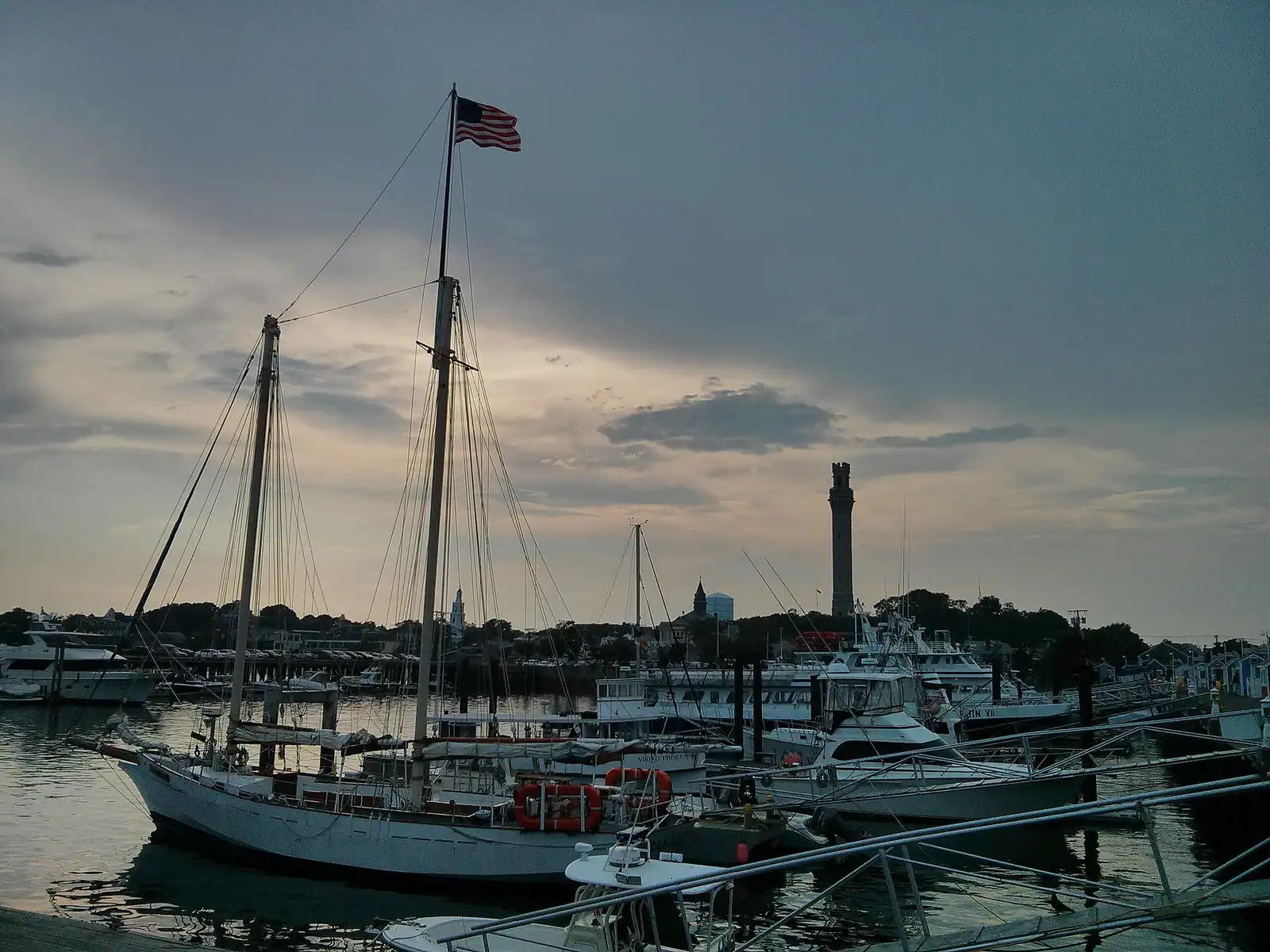
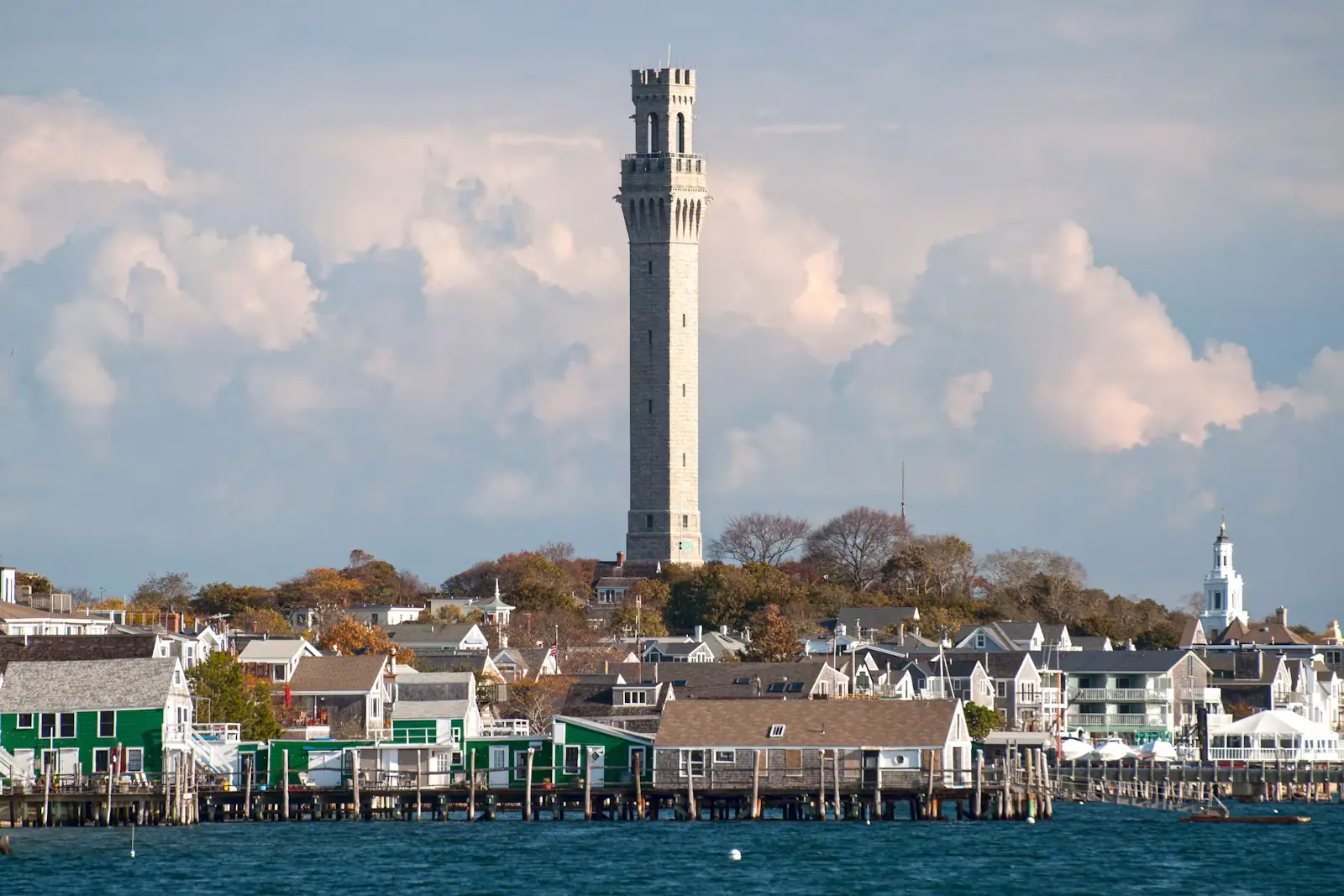
  • The granite tower of the Pilgrim Monument rising above Provincetown's rooftops beside the harbour

    Neighbourhood

    Free

    Provincetown

    Three thousand people in winter and sixty thousand in August: a fishing port, an art colony since the 1890s, and unlike anywhere else.

    4–12 hoursFree to visit. Parking, ferries, the monument and tours are charged separately.3.1 mi away

  • Fishing and excursion boats tied along a pier in Provincetown Harbor with the town behind them

    Marina

    Free

    MacMillan Pier

    One working pier carrying the Boston ferries, fifteen whale-watch boats and a fishing fleet — and the departure point for Stellwagen Bank.

    0.5–4 hoursFree to walk. Whale-watch trips, ferries and parking are charged separately.3.3 mi away

  • The granite tower of the Pilgrim Monument rising above Provincetown's rooftops beside the harbour

    Landmark

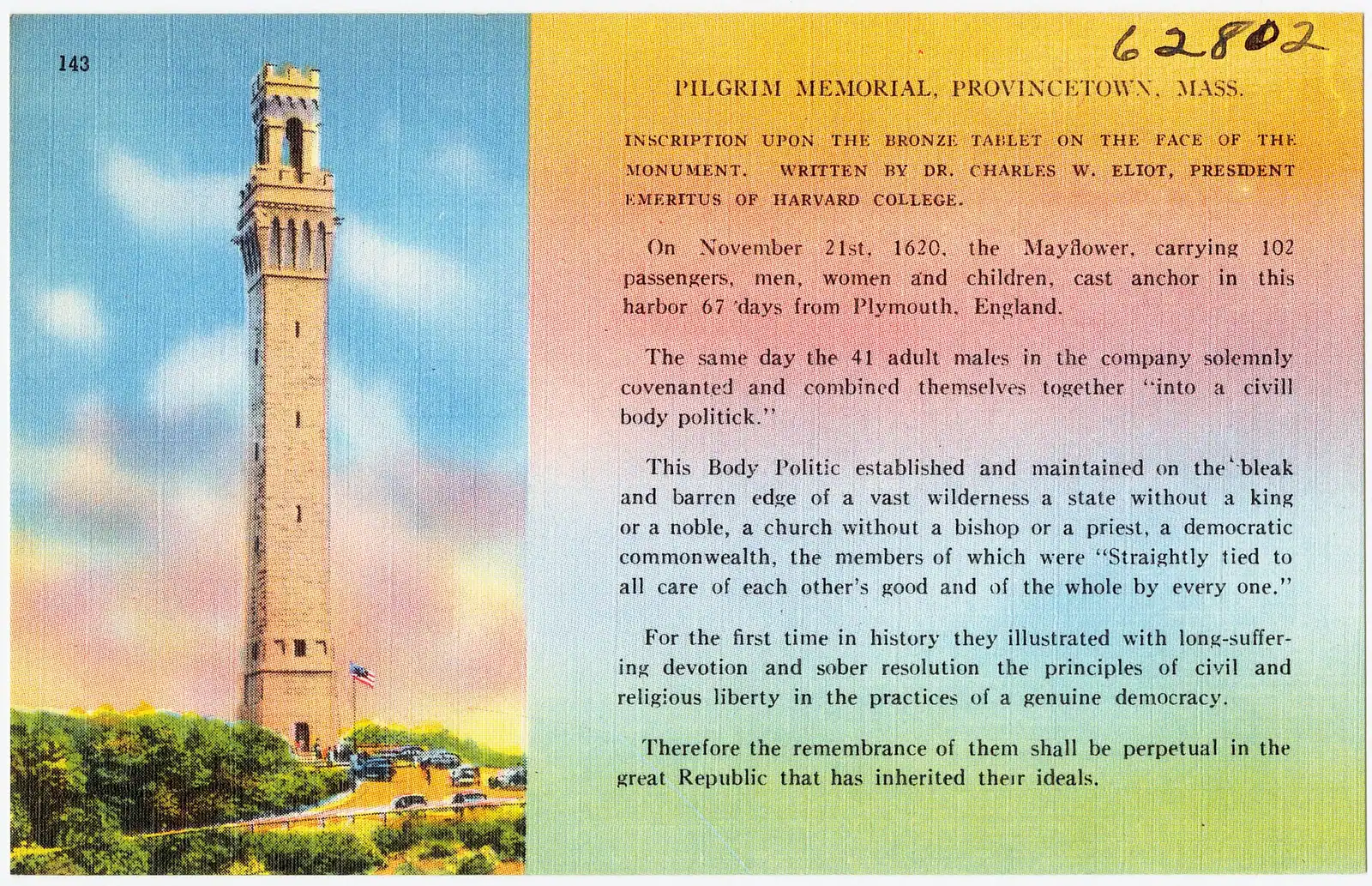
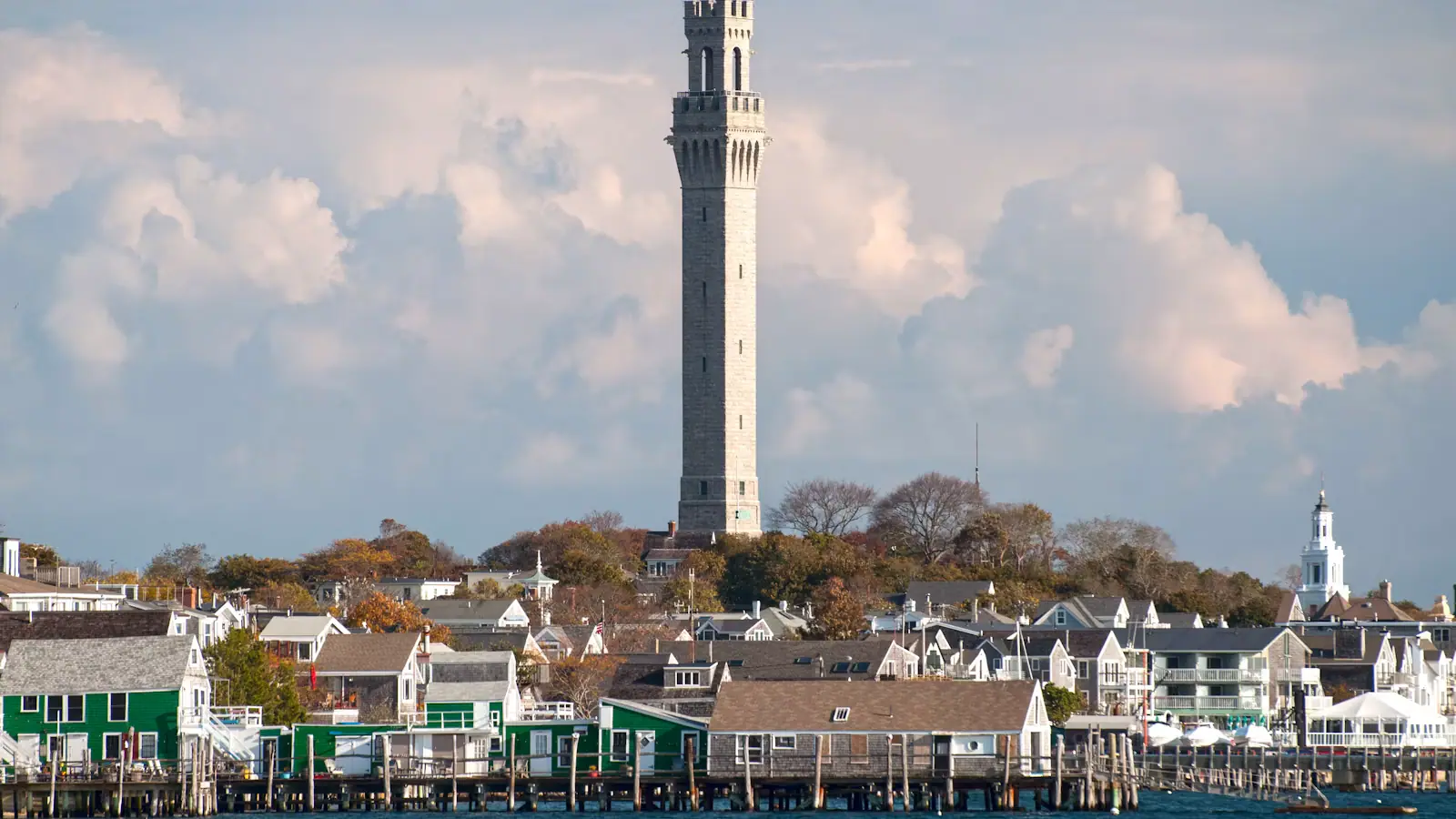
    Pilgrim Monument

    A 252-foot granite campanile modelled on a Tuscan town hall, climbed by ramps, with the best view of Cape Cod's geography from anywhere.

    1–2 hoursPaid admission covering both the tower climb and the Provincetown Museum. The grounds are free.3 mi away

Race Point: common questions

Can you see whales from Race Point Beach?

Sometimes, and more often than anywhere else on the Cape. Deep water runs close to the tip here and feeding whales push into the shallows, so humpbacks and fin whales are a plausible sight from the sand on a calm morning, particularly from late spring into early summer. Bring binoculars and look for the low bushy blow rather than a fin. It is not reliable on any given day. If seeing whales is the point of the trip, take a boat from MacMillan Pier out to Stellwagen Bank instead.

How far is the walk to Race Point Lighthouse?

About forty-five minutes each way for a fit adult, over soft sand, with no shade, no water and no facilities at the far end. It looks much closer than it is. The alternative is a National Park Service oversand vehicle permit, which requires four-wheel drive and specific recovery equipment and is not something to arrange on arrival. Go early or late rather than in the middle of a July afternoon, and carry more water than you think you need.

Why does the sun set over the water at Race Point?

Because the Cape hooks around. At Race Point you are on the outside of the fist facing roughly north, so in high summer the sun rises out of the water to your northeast and sets into it to your northwest. It is the only beach on the peninsula where that happens, and it is also why the prevailing southwest summer wind blows offshore here and leaves the water glassy on afternoons when the Atlantic-facing beaches further south are choppy.

Can you drive on the beach at Race Point?

Only with a National Park Service oversand vehicle permit, and only on the designated corridor. The permit requires four-wheel drive and set equipment — tyre gauge, shovel, jack and board, tow rope — with additional requirements for self-contained overnight vehicles. Numbers are limited and the popular categories sell out early in the season. Shorebird nesting closes stretches of the corridor from spring into midsummer. Ordinary visitors park in the paved lot and walk fifty yards.