Skip to content
Search
Menu

Bookings here go through Viator, who pay us a commission. You are charged the same either way, and the commission had no say in this list.

Things to Do

Cape Cod Lighthouses

Last updated

Cape Cod lighthouses: Highland, Nauset, Chatham, Nobska and the Provincetown three. Which towers you can climb, and the two moved inland back in 1996.

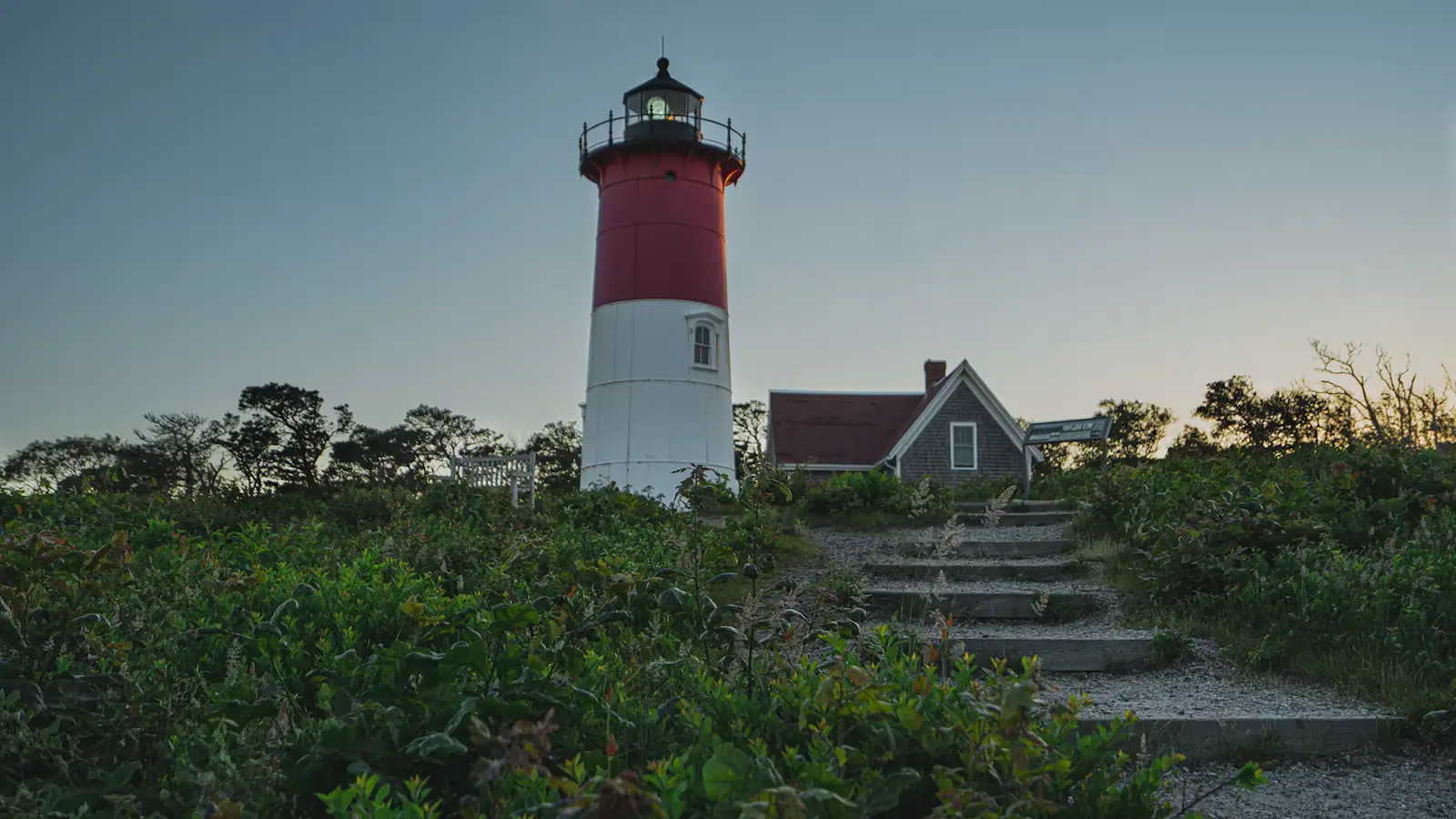
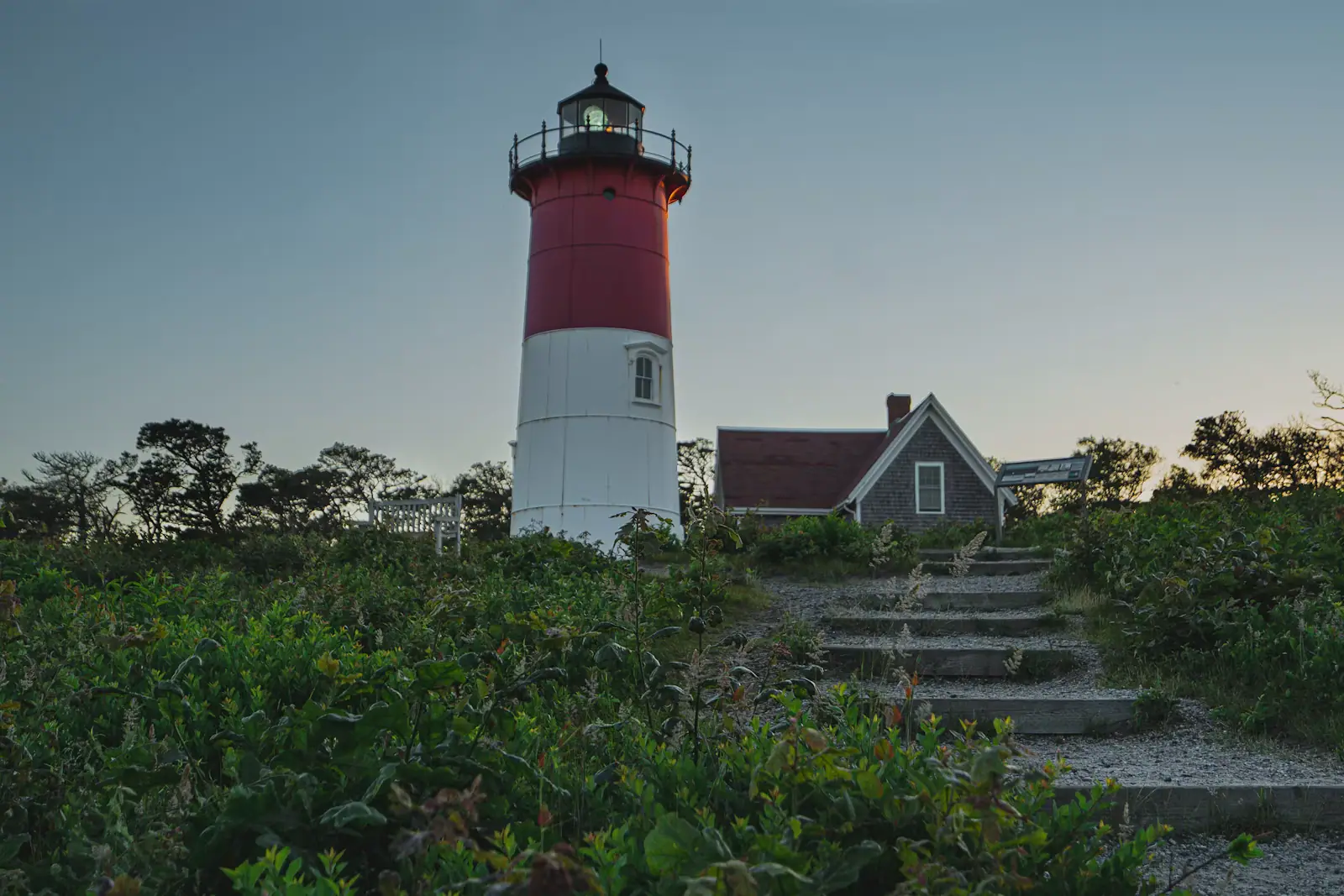
The red and white tower of Nauset Light standing above low trees in Eastham, MassachusettsUnsplash

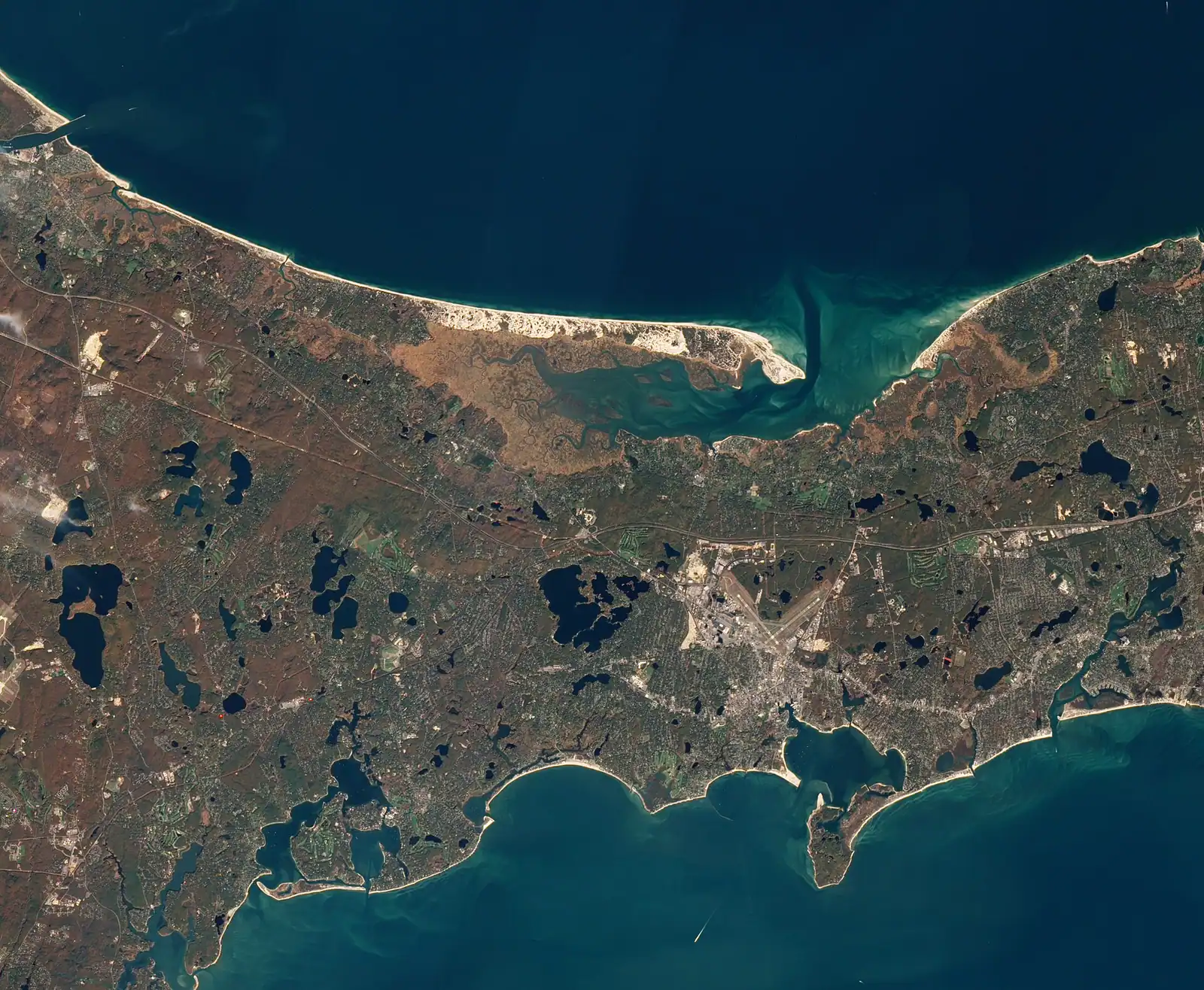
Cape Cod has more lighthouses than any comparable stretch of the American coast, for the unromantic reason that this peninsula sank an extraordinary number of ships. A sandy hook sticking sixty-five miles into the North Atlantic, with shoals running out from the elbow and a fog season that arrives with the warm air of early summer, is a hazard rather than a landmark, and the towers were an answer to a body count.

What makes them worth a page rather than a paragraph is that they move. This is the only coast in the country where the sensible way to describe a lighthouse includes where it used to stand. In 1923 one of Chatham's two towers was taken apart, shipped twelve miles up the shore and re-erected in Eastham, where it is now painted red and white and stands on packets of crisps. In July 1996 Highland Light in Truro, a 66-foot brick tower weighing something over four hundred tons, was jacked up and rolled 450 feet inland over eighteen days while the town watched. That November Nauset Light was moved 336 feet from a bluff it was about to fall off, and relit the following May. Three small wooden towers that once stood on the Eastham cliff now sit in a clearing in the woods, roughly a thousand feet back from the sea that chased them there.

The Outer Cape retreats on the order of three feet a year on average, and far more when a winter storm settles in. A lighthouse is a fixed structure on a shoreline that refuses to be fixed, and the history of these towers is really the history of that argument.

Practically, the Cape's lights fall into three groups. There are the ones you can climb, which in most seasons means Highland in Truro, Nauset in Eastham and Nobska at Woods Hole, each on its own limited schedule run by volunteers rather than by a park service. There are the ones you can walk up to and photograph but not enter, including Chatham, whose keeper's house is a working Coast Guard station, and the Three Sisters in their wood. And there are the ones that take real effort: Race Point, a two-mile trudge through soft sand or an over-sand permit, and Long Point and Wood End at the tip of the hook, reached by scrambling a mile of granite blocks across the harbour or by taking the shuttle boat.

Almost all of it is free. Grounds are open year-round at most of these sites, the climbs cost a few dollars where they run at all, and the best hour for photographs is the last one of the day at Nauset or the first one at Chatham. What no guide can tell you reliably is which tower is open on the afternoon you turn up, because the schedules are set by volunteer groups and change every season. Check on the day.
The towers that moved, and why

Four separate relocations tell most of this story.

The Three Sisters, 1911 onwards. Eastham's cliff originally carried three small brick towers so that mariners could distinguish this stretch from Highland's single light and Chatham's two. Erosion took the brick ones, wooden replacements followed, and by the early twentieth century they had been sold off and scattered, one of them ending up as part of a private cottage. The National Park Service reassembled them in the 1980s in a clearing off Cable Road, about a thousand feet from the sea, where three lighthouses now stand in a wood looking at nothing. It is the oddest sight on the Outer Cape.

Chatham to Eastham, 1923. When Chatham's twin towers were reduced to one, the spare 1877 cast-iron tower was dismantled and carried roughly twelve miles north to Eastham to take over from the Three Sisters. That tower is Nauset Light.

Highland Light, July 1996. The 1857 brick tower stood a hundred feet or so from a cliff that was retreating steadily. Over eighteen days a specialist crew jacked it onto rails and moved it 450 feet west, intact and without dismantling the lantern. The operation was watched by a crowd and is documented on boards at the site.

Nauset Light, November 1996. Four months later the red and white tower, by then very close to the edge of a seventy-foot bluff, was moved 336 feet inland. It was relit on 10 May 1997, and the keeper's house followed in October 1998.

None of this is finished. The cliff is still moving and the towers are still sitting on it.

Highland Light, Truro: the oldest and the highest

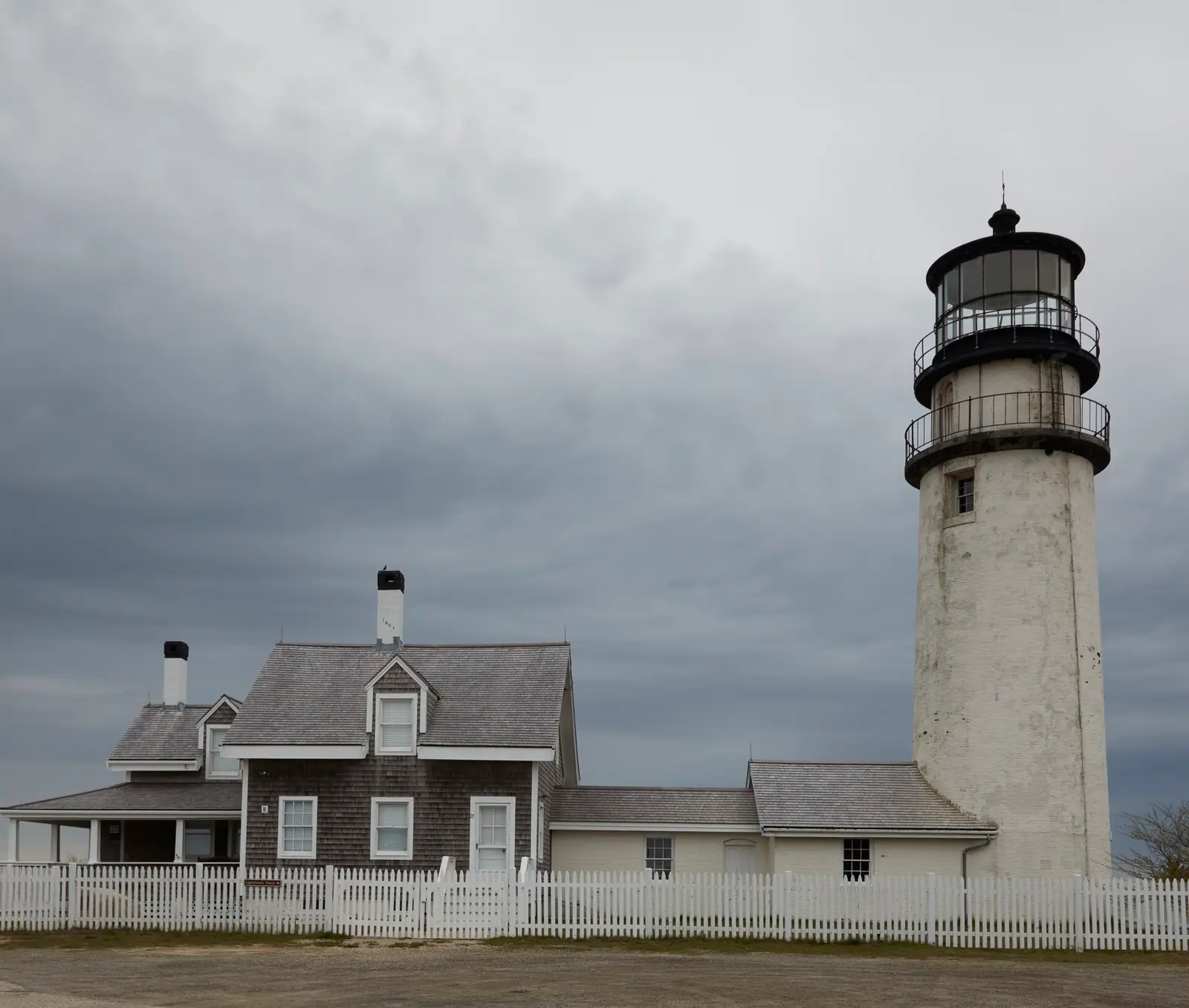
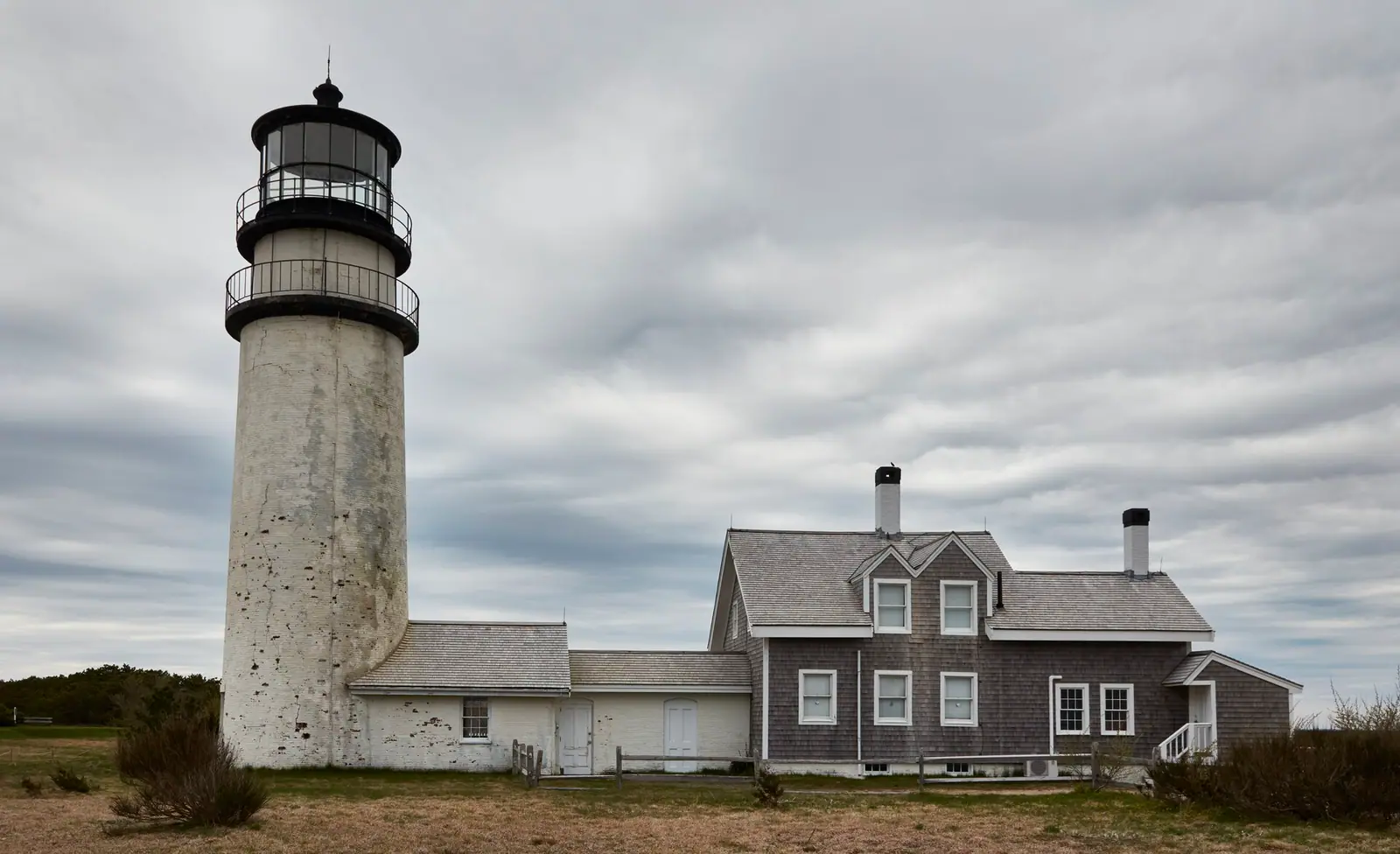
If you visit one, visit this one. Highland Light, still called Cape Cod Light by people who have lived here a while, sits on the highest clifftop on the Outer Cape and has been marking this shore since 1797. The present tower is the 1857 replacement: sixty-six feet of brick with its light some hundred and seventy feet above the water, which is why it carries further than its modest height suggests.

The setting is unusual. The tower stands in open moorland on the edge of the bluff with a golf course beside it, played since the 1890s and among the oldest in the country, and a clubhouse where you can get a sandwich. Thoreau walked this shore and stayed near here in the 1850s, and the description of the Highland keeper in his Cape Cod essays is still recognisable on the ground.

The 1996 move is the reason most people come. Standing where the tower used to be and looking at where it is now, a short walk inland, gives you the scale of the erosion problem in a way no interpretive panel manages. Markers on the ground show the old position.

The site is owned by the National Park Service, the light itself is still an active aid to navigation operated by the Coast Guard, and visitor services have been run by Eastern National since 2014. The tower opens for guided climbs in the warmer months, roughly May to late October, and the grounds and the cliff walk are accessible year-round and free. Come in the morning if you want the ocean lit; come in a gale in November if you want to understand the place.

Nauset Light and the Three Sisters, Eastham

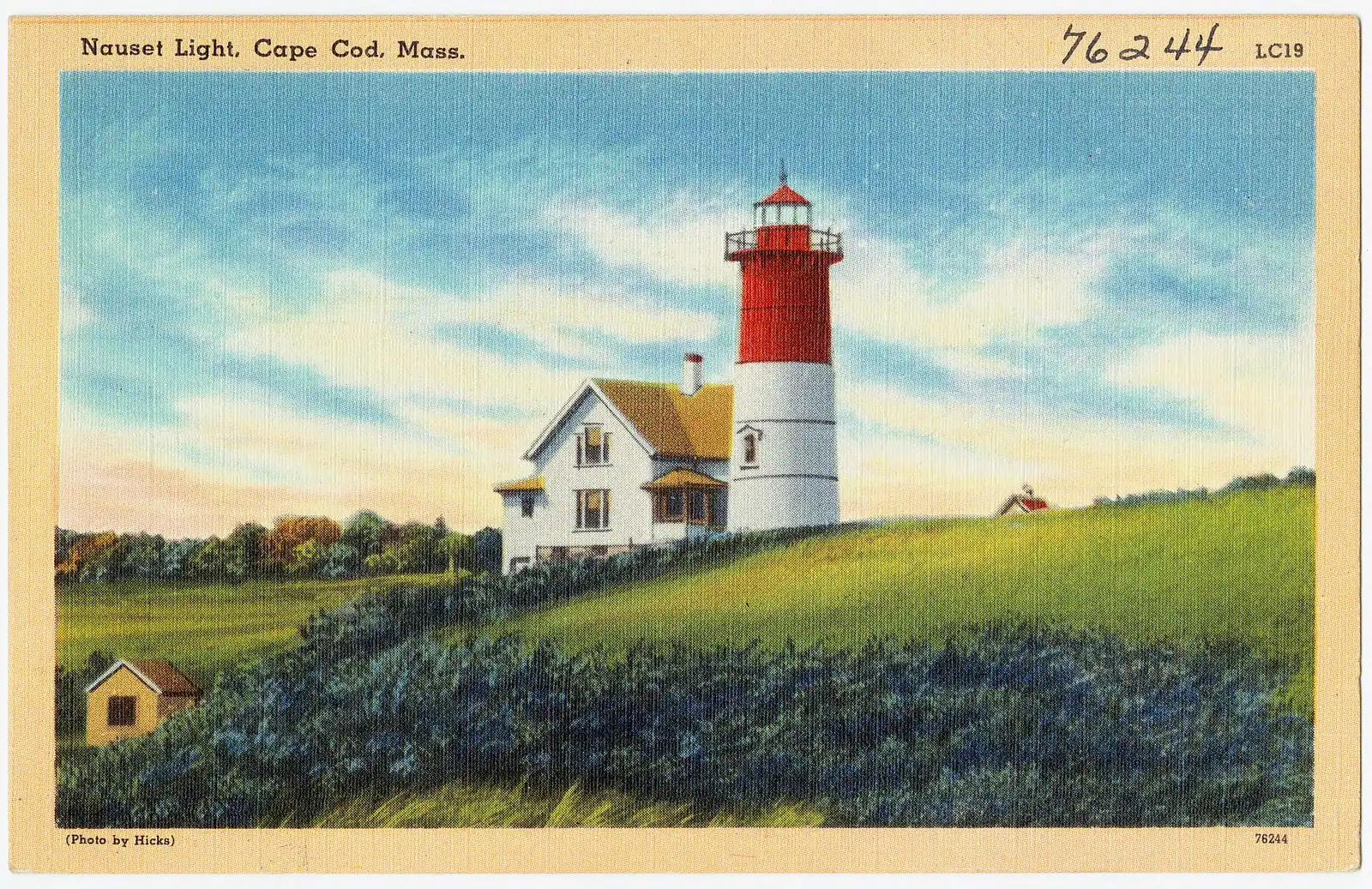
Nauset Light is the one you have seen without knowing it. Forty-eight feet of cast iron lined with brick, painted white below and red above since the 1940s, it is the mark on every bag of Cape Cod Potato Chips and it sits on the Massachusetts "Cape Cod & Islands" registration plate. It began life in 1877 as one of Chatham's twin towers and was brought north in 1923.

It is also the best-placed tower on the Cape for a photograph. The light stands above Nauset Light Beach with a short walk between the two, and the classic frame is taken from the beach car park at the end of the day with the tower catching the last sun while the ocean behind it has already gone grey. The preservation society runs tours on limited days through the warmer months, and there is no charge to stand at the fence.

Five minutes away, off Cable Road, are the Three Sisters: three small wooden lighthouses standing in a grassy clearing surrounded by scrub oak and pine, a thousand feet from any sea. They were Eastham's original triple light, built to be distinguishable from Highland's one and Chatham's two, chased off the cliff in stages, sold, scattered and eventually reassembled here by the National Park Service. There is no admission and usually nobody else there. Ranger talks run in season.

Pair them. Twenty minutes for both, then walk down the stairs to the beach, and you have the whole argument of this coast in one stop: a light that was moved, three lights that ran away, and the ocean that made them do it.

Chatham Light and the break in the barrier beach

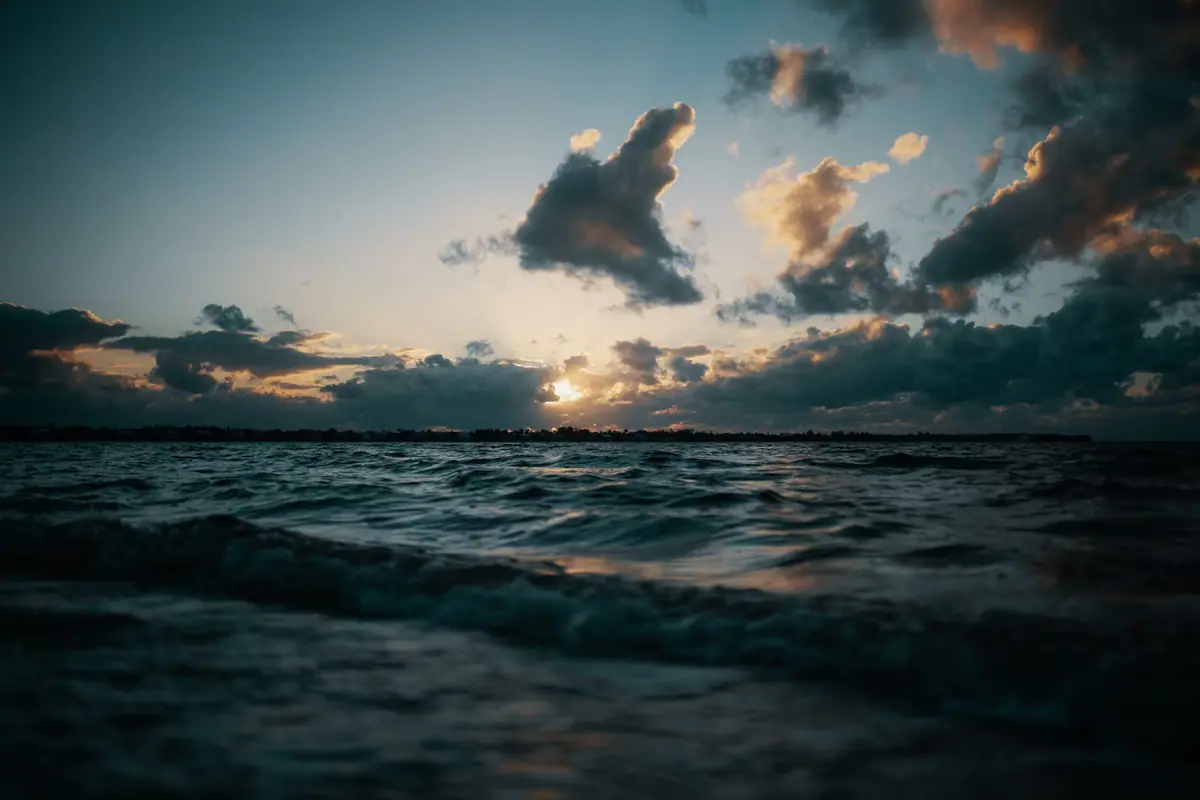
Late light and low cloud over moving water near a narrow channelUnsplash
Late light and low cloud over moving water near a narrow channel

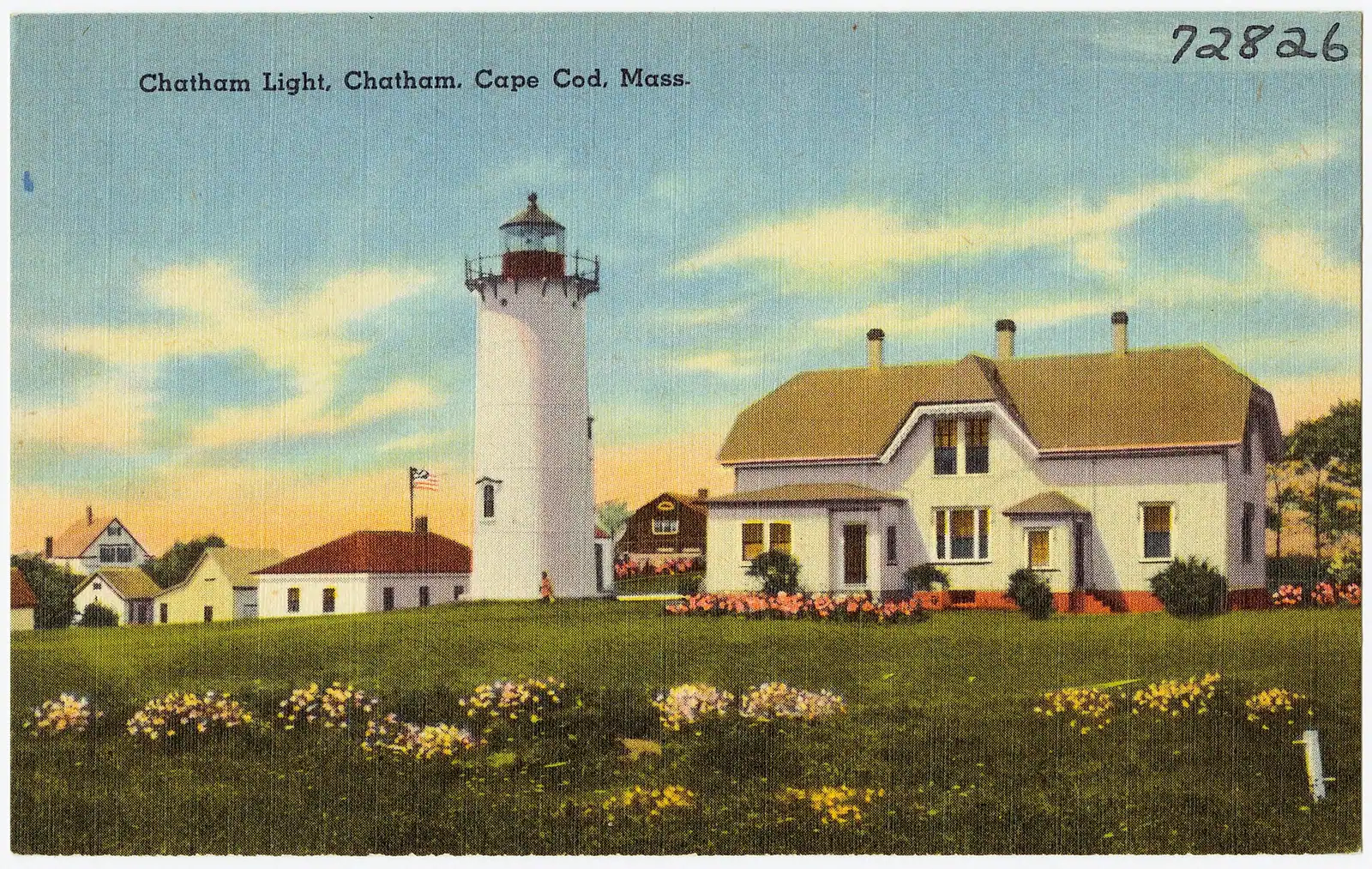
Chatham Light sits at the elbow of the Cape, where the shore turns from south-facing to east-facing and the shoals run offshore in shifting bars that have wrecked ships for four hundred years. The station dates from 1808, when it carried two wooden towers so that mariners could tell it from Highland's single light. Brick replacements came in 1841, the present 1877 cast-iron towers followed, and in 1923 one of them went north to Eastham. What remains is a forty-eight-foot tower with a beam visible for something like twenty-four nautical miles, automated since 1982, with an aerobeacon fitted in 1993.

The keeper's house is an active Coast Guard station, which is why the light itself opens only on occasional set days. It is also why the parking area opposite is such a good place to stand: it is a working overlook, with a view down onto Chatham's barrier beaches and the water moving between them.

That view is the reason to come. In January 1987 the Atlantic broke clean through North Beach directly in front of the lighthouse, turning a sheltered harbour into an exposed one overnight, moving the navigable channel and eventually taking houses with it. The barrier has broken again since. The overlook is the single best place on Cape Cod to see a coastline actively rearranging itself, and the interpretation boards explain what you are looking at.

There is one more Chatham story worth knowing. In February 1952 a Coast Guard crew took a thirty-six-foot lifeboat out of this station into a winter gale and brought back thirty-two men off a broken tanker. The boat survives and is preserved along this coast, and the 2016 film The Finest Hours dramatised the rescue.

Provincetown's three, and how to reach them

The tip of the hook carries three lights, and none of them is a drive-up.

Race Point Light stands out on the sand at the north-west corner of the Cape, a cast-iron tower dating from the 1870s on a station established in 1816. Reaching it means either two miles of soft sand from Race Point Beach, which takes most people an hour each way and is hard work, or an over-sand vehicle permit, or a dune tour that goes that way. The keeper's house has in recent years taken overnight guests through a preservation group, which is worth checking if the idea appeals. Open house days run in summer.

Wood End Light and Long Point Light are square brick towers at the harbour mouth, both from the 1870s, and they are reached by one of the better walks on the Cape. A stone breakwater leaves the west end of Commercial Street and carries you roughly a mile over marsh and tidal flat toward Wood End. It is granite blocks rather than a path, laid unevenly, and crossing it means stepping from block to block for thirty to forty-five minutes. Check the tide before you start: the near end floods, and people do get caught. Wood End is a further walk over sand from the end of the breakwater, and Long Point is another mile and a half beyond that at the very tip of the spit.

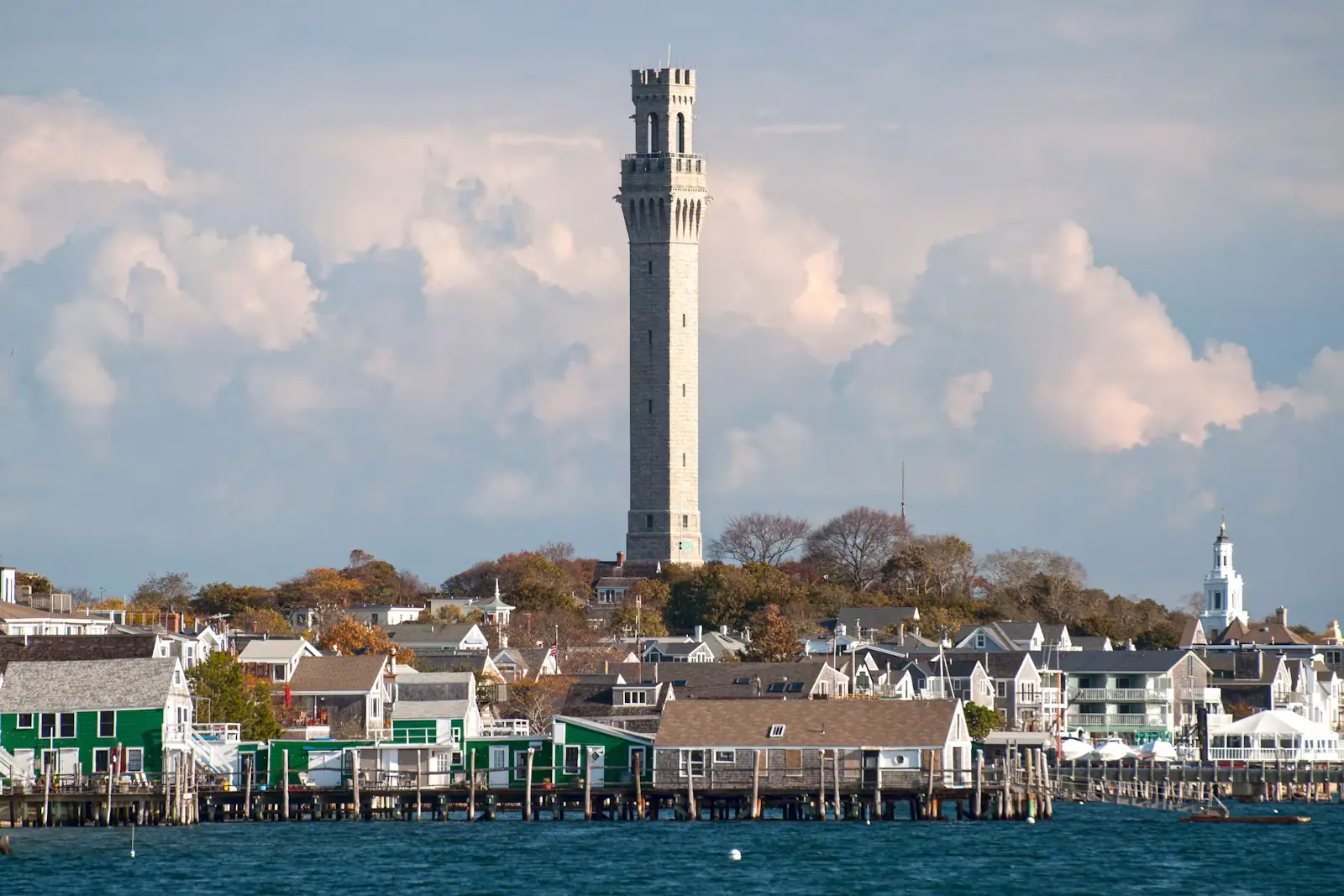
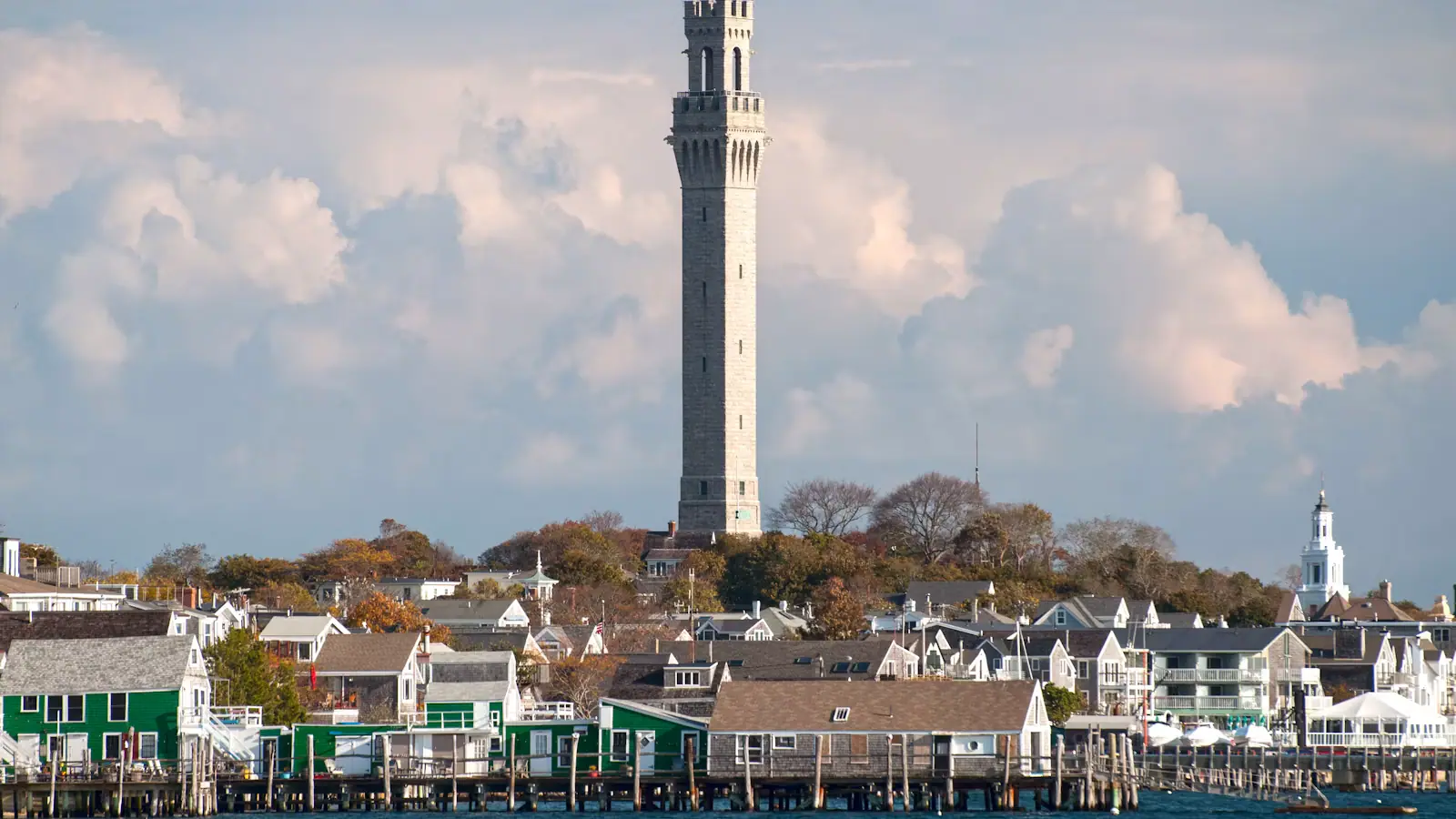
The soft option is the seasonal shuttle boat across Provincetown Harbor to Long Point, which lands you near the light and saves the breakwater. Walk one way and take the boat back if you can time it. The view from Long Point back at the town, with the Pilgrim Monument above the roofs, is the best angle on Provincetown there is.

The rest of the Cape's lights, and when to photograph them

Local tips

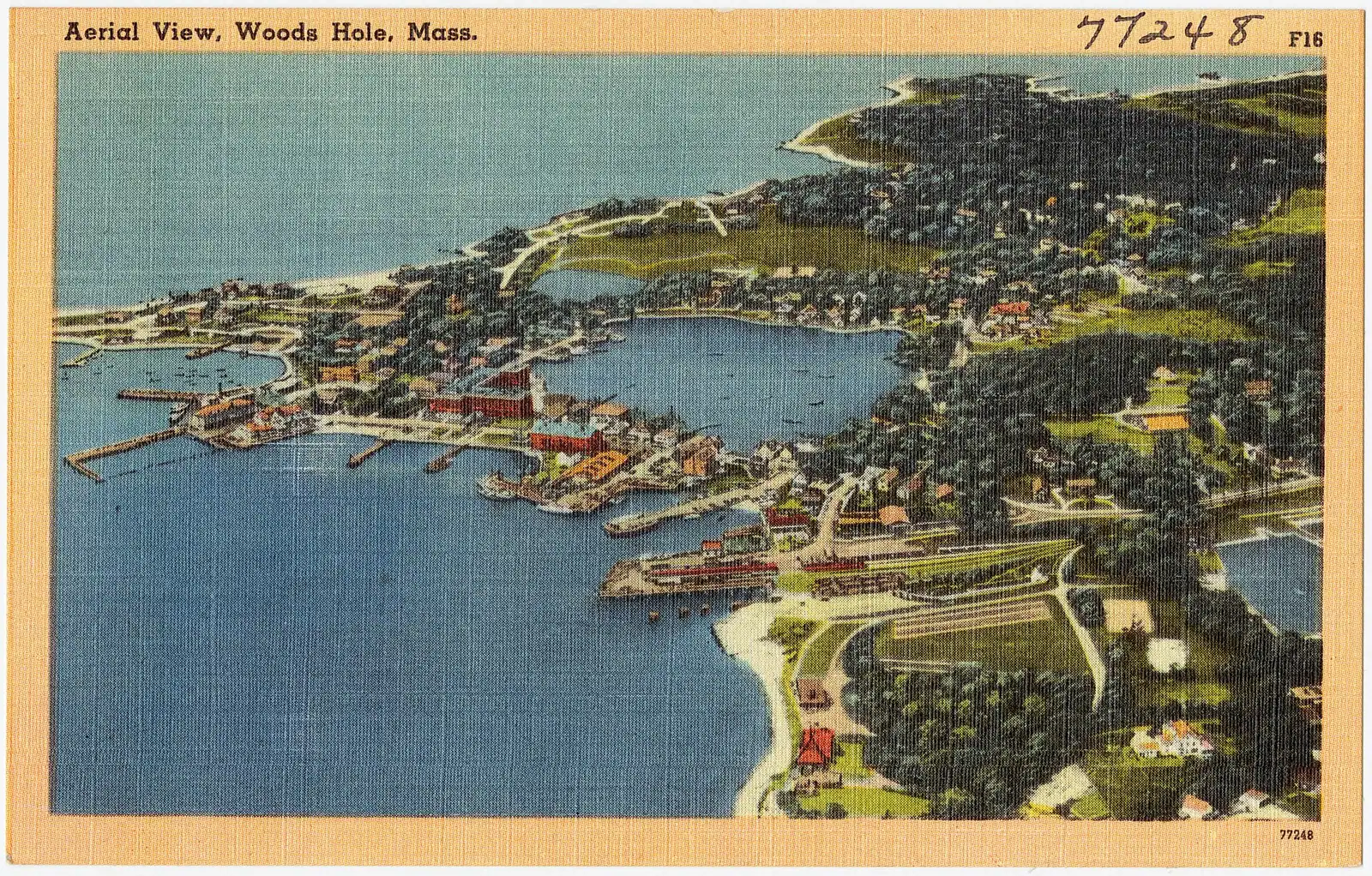
  • Nobska Light, Woods Hole. The Upper Cape's tower, an 1876 cast-iron light on the headland above the ferry channel, looking across Vineyard Sound to Martha's Vineyard. Restored in recent years by a local friends group and opened with a small museum in season; check current arrangements before travelling. Stand here for twenty minutes and a Steamship Authority ferry will pass below you.
  • Sandy Neck Light, Barnstable. Privately owned, at the far end of a six-mile barrier beach on the bay. Realistically a boat view, or the end of a long walk.
  • Stage Harbour Light, Chatham. Decommissioned in the 1930s, its lantern removed, now a private house reached along Hardings Beach. Photograph it from the sand and respect the fence.
  • Bass River Light, West Dennis. Absorbed into an inn, which means it is the one Cape light you can sleep under without a preservation society's permission.
  • Monomoy Point Light. Decommissioned, out on South Monomoy, and boat access only through permitted operators. A wildlife trip rather than a lighthouse trip.

On photographs. Nauset is an evening subject: the low western sun lights the tower while the Atlantic behind it has gone flat and grey. Highland works in the morning for the same reason in reverse. Chatham is best an hour after sunrise, when the light comes off the water and the overlook is empty. Nobska rewards patience rather than timing, because what you want in the frame is a ferry. And the Cape's fog, which arrives with warm air over cold water in late spring and early summer, produces the best lighthouse photographs of the year and ruins every other kind.

Which lighthouses you can actually go inside

How they compare

Three towers on the Cape open to climbers in most seasons, and all three are run by volunteers on schedules that change annually. Treat this as the shape of it, not a timetable.

LightTownInside?Typical seasonNotes
Highland LightTruroYes, guided climbRoughly May to late OctoberGrounds open all year; the tallest and oldest station on the Cape
Nauset LightEasthamYes, on limited daysRoughly May to late OctoberTours run by the preservation society; grounds accessible year-round
Nobska LightWoods Hole, FalmouthYes, in seasonWarmer monthsRestored by a friends group with a small museum; check current arrangements
Chatham LightChathamOccasionally, on set open daysSummerKeeper's house is an active Coast Guard station; the overlook across the road is always open
Three SistersEasthamExteriors onlyGrounds year-roundRanger-led talks in season; free, and always worth ten minutes
Race Point LightProvincetownOpen house days onlySummerTwo miles of soft sand each way, or an over-sand permit
Long Point and Wood EndProvincetownNoExteriors only, reached by the breakwater walk or the shuttle boat

Two practical points. Climbing towers of this era usually means a spiral iron stair with a ladder at the top and a minimum height requirement for children, so ask before you queue. And in almost every case the grounds are free and open even when the tower is shut, which is what most visitors actually want: the tower, the cliff and the ocean behind it.

On the ground

Where to go

Every place below has its own page — hours, parking, what it costs and what to expect when you get there.

  • The granite tower of the Pilgrim Monument rising above Provincetown's rooftops beside the harbour

    Neighbourhood

    Free

    Provincetown

    Three thousand people in winter and sixty thousand in August: a fishing port, an art colony since the 1890s, and unlike anywhere else.

    4–12 hoursFree to visit. Parking, ferries, the monument and tours are charged separately.

  • The red and white tower of Nauset Light standing above low trees in Eastham, Massachusetts

    Landmark

    Free

    Nauset Light

    The red-and-white tower on the potato chip bag — built in Chatham, moved to Eastham in 1923, and hauled back from the cliff edge in 1996.

    0.5–1.5 hoursFree to visit the grounds and the Three Sisters. Tower tours are volunteer-run, often by donation.

  • Whales surfacing together in open grey water off the Massachusetts coast

    Beach

    Race Point Beach

    The beach at the outside of the fist, facing north into deep water — the one place on the Cape where whales are visible from a towel.

    2–6 hoursNational Seashore fee: $25 per vehicle per day, or $15 per person on foot or by bicycle.

  • Small boats moored on calm water in a sheltered harbour at Chatham, Massachusetts

    Neighbourhood

    Free

    Chatham

    The town at the Cape's elbow, where a barrier beach has broken open three times since 1987 and rebuilt the shoreline each time.

    3–8 hoursFree to visit. Town beach lots require a Chatham parking sticker in season.

  • A lighthouse rising above a low building at the water's edge

    Landmark

    Free

    Highland Light

    The Cape's first lighthouse, established 1797 on Truro's highest bluff and hauled 450 feet inland over eighteen days in July 1996.

    1–2.5 hoursGrounds and car park free. A small charge applies to climb the tower when it is open.

  • The red and white tower of Nauset Light standing above low trees in Eastham, Massachusetts

    Beach

    Nauset Light Beach

    Ocean beach at the foot of a sand cliff, with the Cape's most photographed lighthouse above the stairs and a lot that fills before ten.

    2–5 hoursNational Seashore fee: $25 per vehicle per day, or $15 per person on foot or by bicycle.

  • Boats tied up in a harbour basin below a lighthouse

    Landmark

    Free

    Chatham Light

    An active Coast Guard station at the Cape's elbow, above a barrier beach that has broken open and resealed several times in living memory.

    0.5–1.5 hoursFree. The overlook, the view and the beach stairs cost nothing.

  • Rows of boats moored in a marina basin on flat water at first light

    Neighbourhood

    Free

    Woods Hole

    Eight hundred and thirty-four residents, several of the world's leading marine research institutions, and almost nowhere to leave a car.

    2–5 hoursFree to walk, and the Woods Hole Science Aquarium is free. Ferries and some exhibits are paid.

  • Salt marsh grass and a winding tidal channel under a wide overcast sky on Cape Cod

    Beach

    Free

    Sandy Neck Beach

    A six-mile barrier spit with warm bay water on one side, a great salt marsh on the other, and a fly season in July that locals plan around.

    2–6 hoursFree to enter. Town of Barnstable parking: daily rate at the gatehouse or a season sticker.

  • A sandy footpath lined with beach grass dropping down toward the shore on Cape Cod

    Neighbourhood

    Free

    Truro

    Two and a half thousand residents, no commercial centre, and the narrowest, emptiest stretch of the whole peninsula.

    2–7 hoursFree to visit. Town beaches need a Truro sticker in season; Head of the Meadow takes the federal fee.

Straight answers

Questions people actually ask

How many lighthouses are there on Cape Cod?

Around a dozen survive on the Cape itself, depending on whether you count decommissioned towers and ones absorbed into private buildings. The ones most visitors seek out are Highland in Truro, Nauset in Eastham, Chatham at the elbow, Nobska at Woods Hole, and Race Point, Wood End and Long Point at the Provincetown end. Add the Three Sisters in their clearing at Eastham and you have the set worth driving for.

Which Cape Cod lighthouses can you climb?

Highland Light in Truro and Nauset Light in Eastham open for guided climbs in the warmer months, roughly May to late October, on schedules set by the volunteer groups that run them. Nobska Light at Woods Hole opens in season after its restoration. Chatham Light opens only on occasional set days because its keeper's house is a working Coast Guard station. Days change every year, so check before you travel.

Why were Cape Cod lighthouses moved?

Because the Outer Cape's shoreline retreats on the order of three feet a year and far more in a bad winter, so towers built a safe distance from a cliff end up on the edge of it. Highland Light was jacked up and rolled 450 feet inland over eighteen days in July 1996. Nauset Light was moved 336 feet that November and relit the following May. The Three Sisters were chased back from the Eastham cliff decades earlier.

What are the Three Sisters of Nauset?

Three small wooden lighthouses that once stood together on the cliff at Eastham, built so mariners could tell this stretch from Highland's single light and Chatham's two. Erosion pushed them back, they were eventually sold off and scattered, and the National Park Service reassembled them in a clearing off Cable Road, roughly a thousand feet from the sea. They are free, usually empty, and three lighthouses standing in a wood is a genuinely strange sight.

Which lighthouse is on the Cape Cod Potato Chips bag?

Nauset Light in Eastham, the forty-eight-foot cast-iron tower painted white below and red above. It also appears on the Massachusetts "Cape Cod & Islands" registration plate. The tower is older than its Eastham address: it was built in 1877 as one of Chatham's twin lights and shipped roughly twelve miles north in 1923 to replace the Three Sisters, then moved again in 1996 when the bluff beneath it began to fail.

How do you get to Race Point Lighthouse?

On foot or with a permit. The walk from Race Point Beach runs roughly two miles each way through soft sand and takes most people about an hour in each direction, with no shade and no water along the way. The alternatives are an over-sand vehicle permit from the National Seashore or a guided dune tour that includes it. Open house days run in summer, and the keeper's house has in recent years taken overnight guests.

Can you walk to Long Point Lighthouse in Provincetown?

Yes, but it is a scramble rather than a stroll. A stone breakwater runs roughly a mile from the west end of Commercial Street across the flats, and crossing it means stepping from granite block to granite block for thirty to forty-five minutes. Wood End Light is a further walk over sand, and Long Point is about another mile and a half beyond. Check the tide, and consider the seasonal shuttle boat one way.

Is it free to visit Cape Cod lighthouses?

The grounds almost always are. Nauset, Highland, the Three Sisters and the Chatham overlook can all be reached and photographed at no cost, and most are accessible year-round even when the towers are shut. Climbing a tower costs a small fee where tours run at all, and reaching Nauset Light Beach or the Seashore beaches in summer means paying the park's beach entrance fee at the gate rather than a lighthouse charge.