Skip to content
Search
Menu

Bookings here go through Viator, who pay us a commission. You are charged the same either way, and the commission had no say in this list.

Landmark

Nauset Light

Last updated

The red-and-white tower on the potato chip bag — built in Chatham, moved to Eastham in 1923, and hauled back from the cliff edge in 1996.

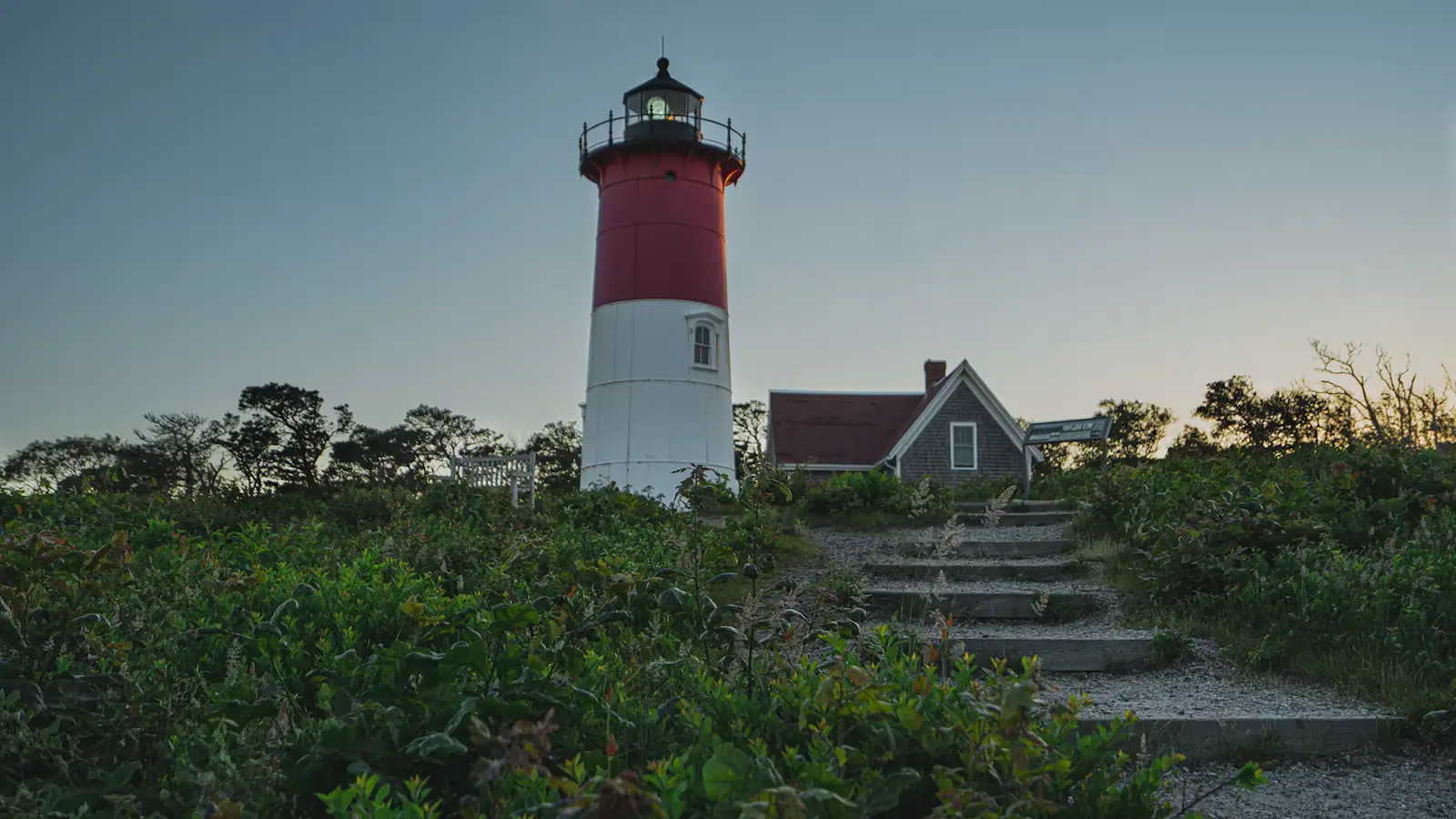
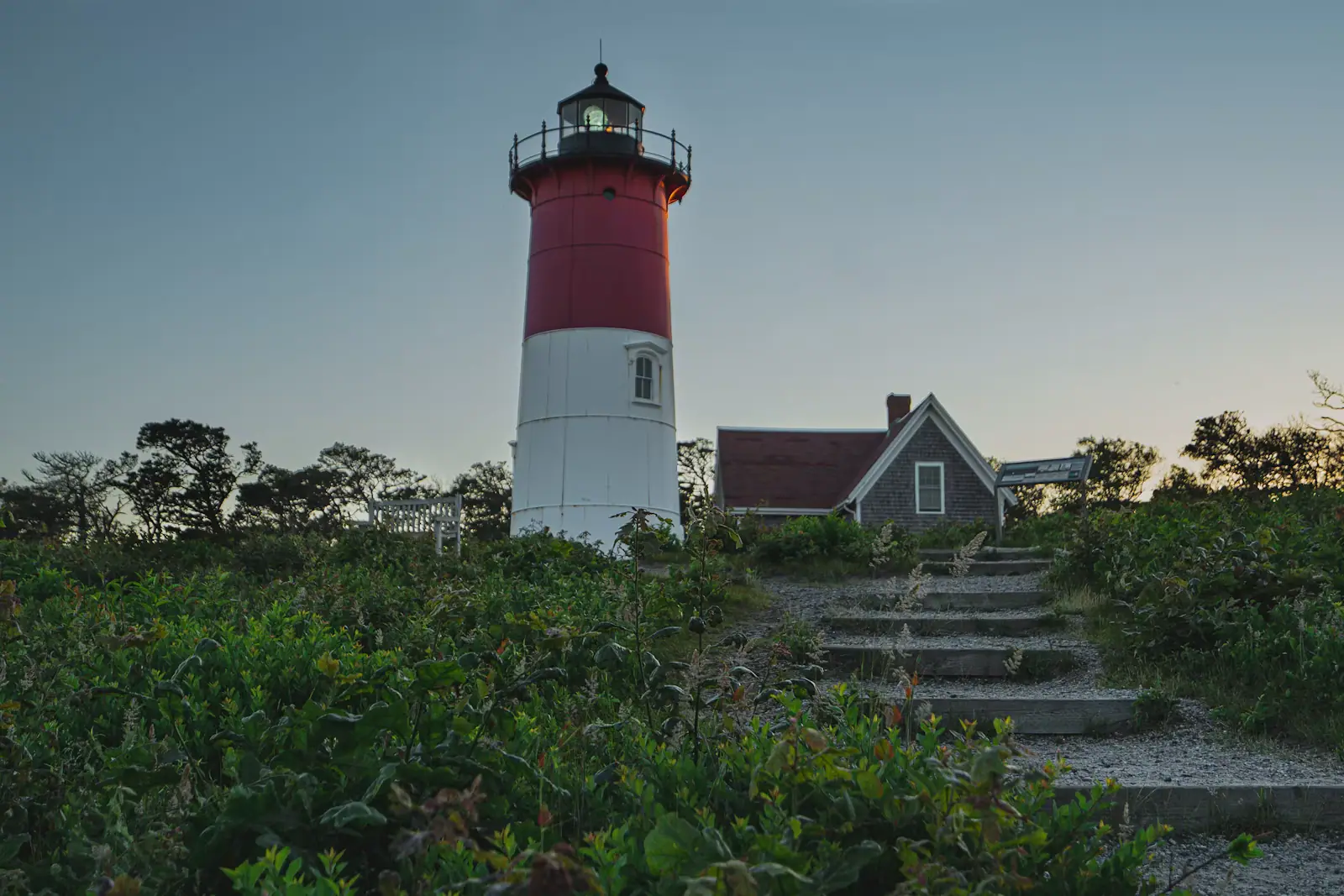
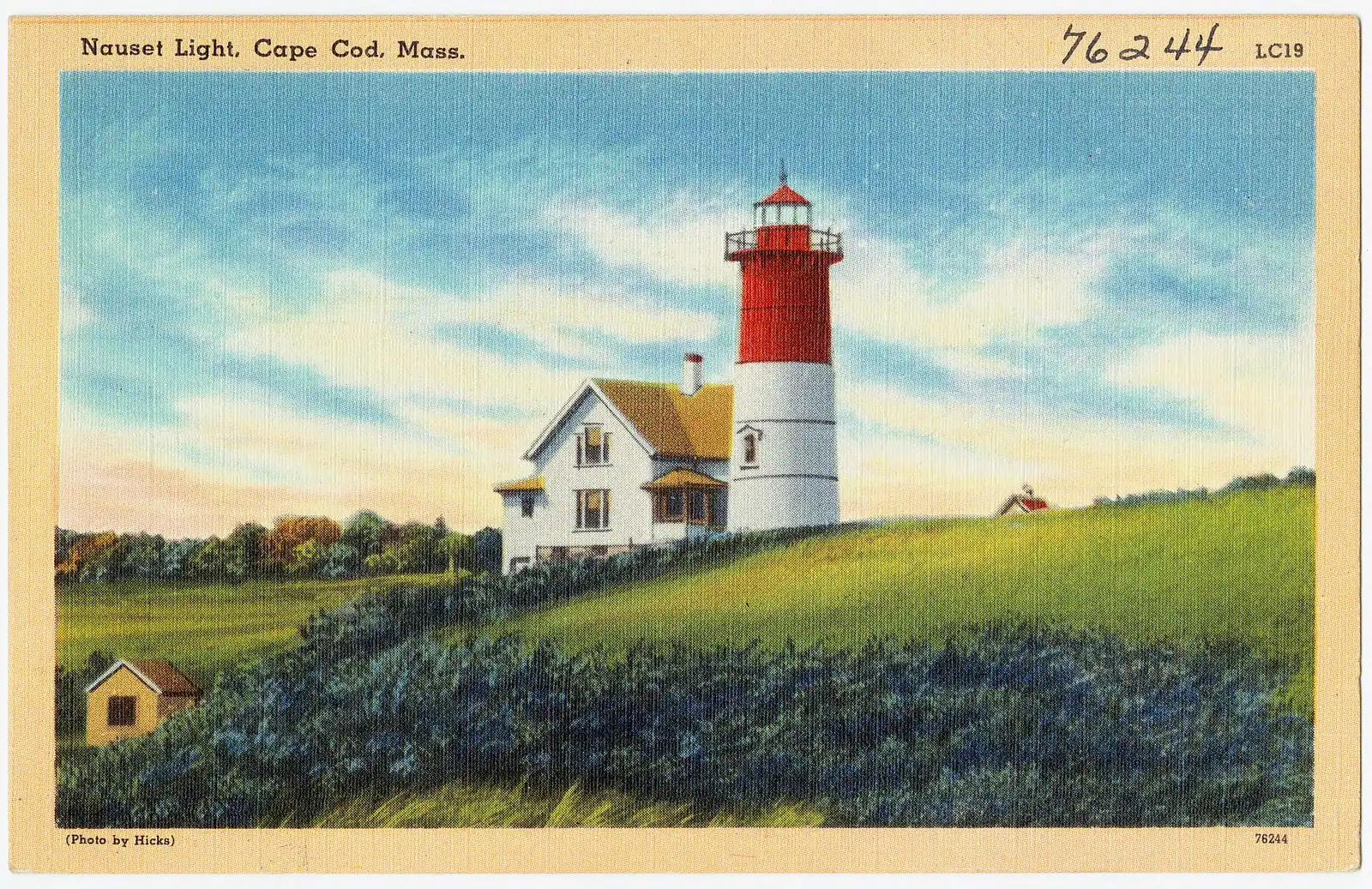
If you have only ever seen one Cape Cod lighthouse, it is this one, and you have probably seen it on a bag of crisps. The 48-foot cast-iron tower standing on the Eastham bluff with its upper half red and its lower half white is the logo of Cape Cod Potato Chips, and it has appeared on a Massachusetts specialty licence plate since 1996. It is also a structure that has been in three places.

It began as one of a pair. In 1877 two cast-iron towers were built at Chatham, twelve miles south, to replace an earlier twin station there. In 1923 one of the two was dismantled, carried up the coast to Eastham and re-erected here, taking over from the Three Sisters — three small wooden lighthouses that had stood on this bluff and been undermined one after another by the sea. Its surviving sibling still stands at Chatham, which means the two most photographed lighthouses on Cape Cod are the same lighthouse, separated in 1923.

The red came later. The tower was all white until the 1940s, when the upper half was painted to make it stand out by day against the sky.

Then the cliff caught up with it again. By the mid-nineties the edge was close enough that the tower was days from being lost, and in November 1996 the light and its oil house were jacked up and moved 336 feet inland. It was relit on 10 May 1997. The National Park Service owns it; the volunteers of the Nauset Light Preservation Society raised the money, did the work and still run it.

Getting there and parking

From US-6 in Eastham, follow signs for Nauset Light along Brackett Road or Nauset Road to Cable Road, which ends at Ocean View Drive with the tower directly ahead. The Nauset Light Beach car park is immediately south of it.

In summer the beach lot closes when full, usually by mid-morning, and there is no separate lighthouse parking. Parking on the residential roads behind is posted and enforced. Outside the season this is a non-problem and the lot is usually half empty.

The Three Sisters are reached by a short path off Cable Road a few minutes back from the bluff, signed from the road, with a small pull-in.

Cycling is the reliable summer answer. Cable Road is quiet and short, there are racks at the stairhead, and you avoid the lot entirely.

The Three Sisters in the woods

The strangest thing at Nauset is not the tower. It is three small white wooden lighthouses standing in a clearing in the pitch pines a few minutes' walk inland, in a line, with no sea in sight.

Three separate lights were built on this bluff in the 1830s so that mariners could tell Nauset apart from the single and double lights elsewhere on the coast. Erosion took the originals; a second set of three wooden towers replaced them in 1892, and those were eventually sold off, moved and used as private buildings, some of them as parts of a cottage. The National Park Service tracked them down over decades, bought them back one at a time and reassembled all three in a clearing off Cable Road.

It is free, it is quiet, and it takes fifteen minutes. There is a short path, a sign, three towers on mown grass under the trees, and usually nobody. The park runs guided walks to them in season.

The contrast with the beach car park two minutes away is the point. One is the most photographed spot on the Cape; the other is three retired lighthouses standing in a wood with nothing to look at, and it is the better half of the visit.

Seeing the tower, and climbing it

The grounds are open all year and free. You can walk to the fence from the Nauset Light Beach car park in a couple of minutes without paying a beach fee if you are not using the beach, though parking during the summer season is another matter entirely and the lot closes when full.

Climbing is a different question. Interior access is run by the Nauset Light Preservation Society on a volunteer schedule rather than by the park, and in recent seasons that has meant Sunday afternoons from May to late October, with additional midweek openings in July and August. Those days change, they are weather-dependent, and they are not something to build a trip around without checking the society's own schedule first.

The climb, when it runs, is a steep interior ladder-stair rather than a staircase with landings, and the lantern room is small. Expect a queue on an August Sunday and expect a minimum age or height rule to apply.

The gate to the grounds is open outside tour times, so an out-of-season visit still works. February at Nauset Light, with the wind off the Atlantic and nobody in the lot, is arguably better than August.
Photographing the most photographed thing on the Cape

Everyone takes the same picture, from the same three paces, at the same hour. It is worth doing something else.

  • Sunrise is the correct light. The tower faces the Atlantic, the sun comes up over the water behind you, and the red half takes colour for about twenty minutes. In summer that means being there before half past five.
  • Late afternoon in winter is the other window, when low sun from the south-west rakes the tower and the shadows on the white section do the work.
  • Go wide and low from the grass to put the beach grass in the foreground and lose the fence, which appears in most disappointing versions of this photograph.
  • The blue hour after sunset catches the light actually working, which the daytime photographs never show. The characteristic is an alternating red and white flash.
  • Do not climb the bluff for a better angle. The cliff is undercut, it fails without warning, and the fence is the reason the tower had to be moved in the first place.
  • Autumn puts the best sky behind it. Clear cold fronts after a September low give the deep blue that the red reads against.

The Three Sisters, under trees, are a completely different photographic problem and a more interesting one.

Why it keeps having to move

This bluff is glacial outwash: sand and gravel dropped by an ice sheet, standing at an angle it cannot hold, with nothing but beach grass and time keeping it together. The ocean takes it at an average measured in feet per year, and in single storms in far larger bites.

The record at this one location tells the story better than any statistic. The first set of lights, gone. The 1892 set, sold off and relocated before the sea got them. The 1877 tower moved here from Chatham in 1923 to a spot that seemed safe, and moved again 336 feet in 1996 because it no longer was. The scale of that 1996 move — jacking a cast-iron tower and its oil house onto rollers and hauling them across a car park — is easier to appreciate standing at the fence and looking at how much ground is left.

Highland Light in Truro went 450 feet west the same summer for the same reason, using the same contractors. Two of the Cape's lighthouses were on the move at once in 1996, and that is not a coincidence.

The practical consequence for a visitor is simple. Stay behind the fencing, do not walk on the cliff edge, and understand that the view you are photographing is temporary in a way most landmarks are not.

Near Nauset Light

Straight-line distances, so allow more on the road — the island is long and has one main parkway.

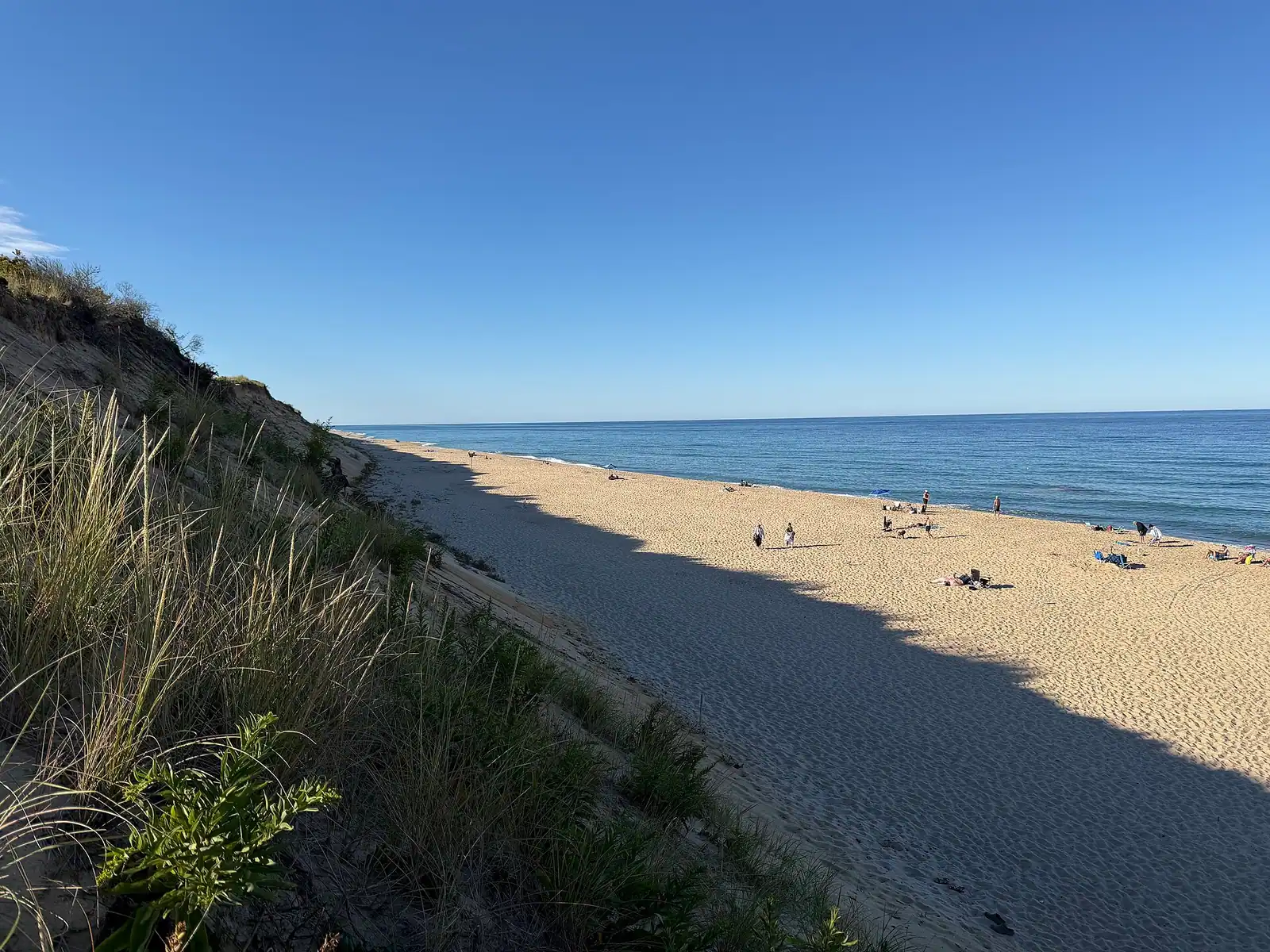
  • The red and white tower of Nauset Light standing above low trees in Eastham, Massachusetts

    Beach

    Nauset Light Beach

    Ocean beach at the foot of a sand cliff, with the Cape's most photographed lighthouse above the stairs and a lot that fills before ten.

    2–5 hoursNational Seashore fee: $25 per vehicle per day, or $15 per person on foot or by bicycle.730 ft away

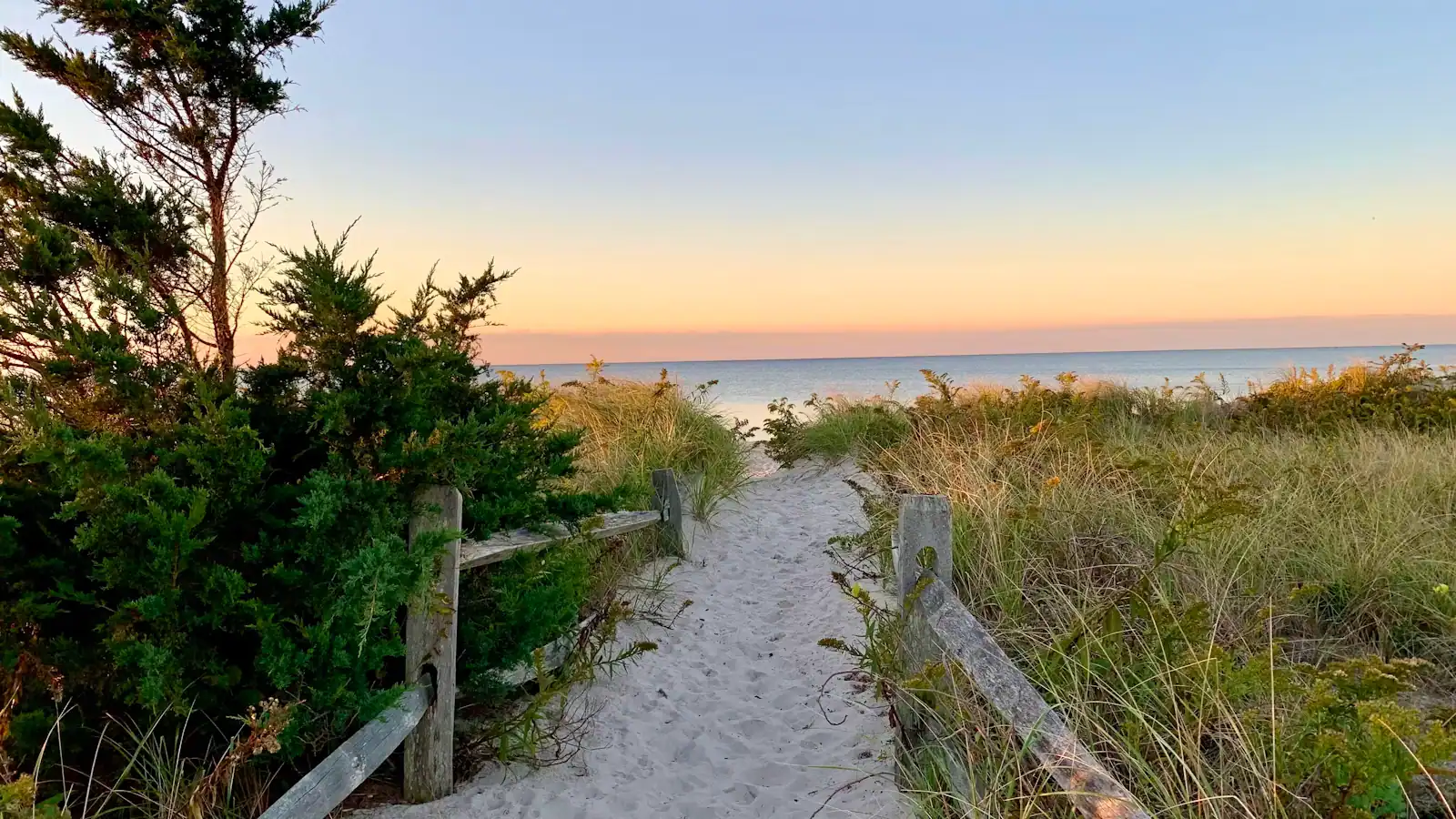
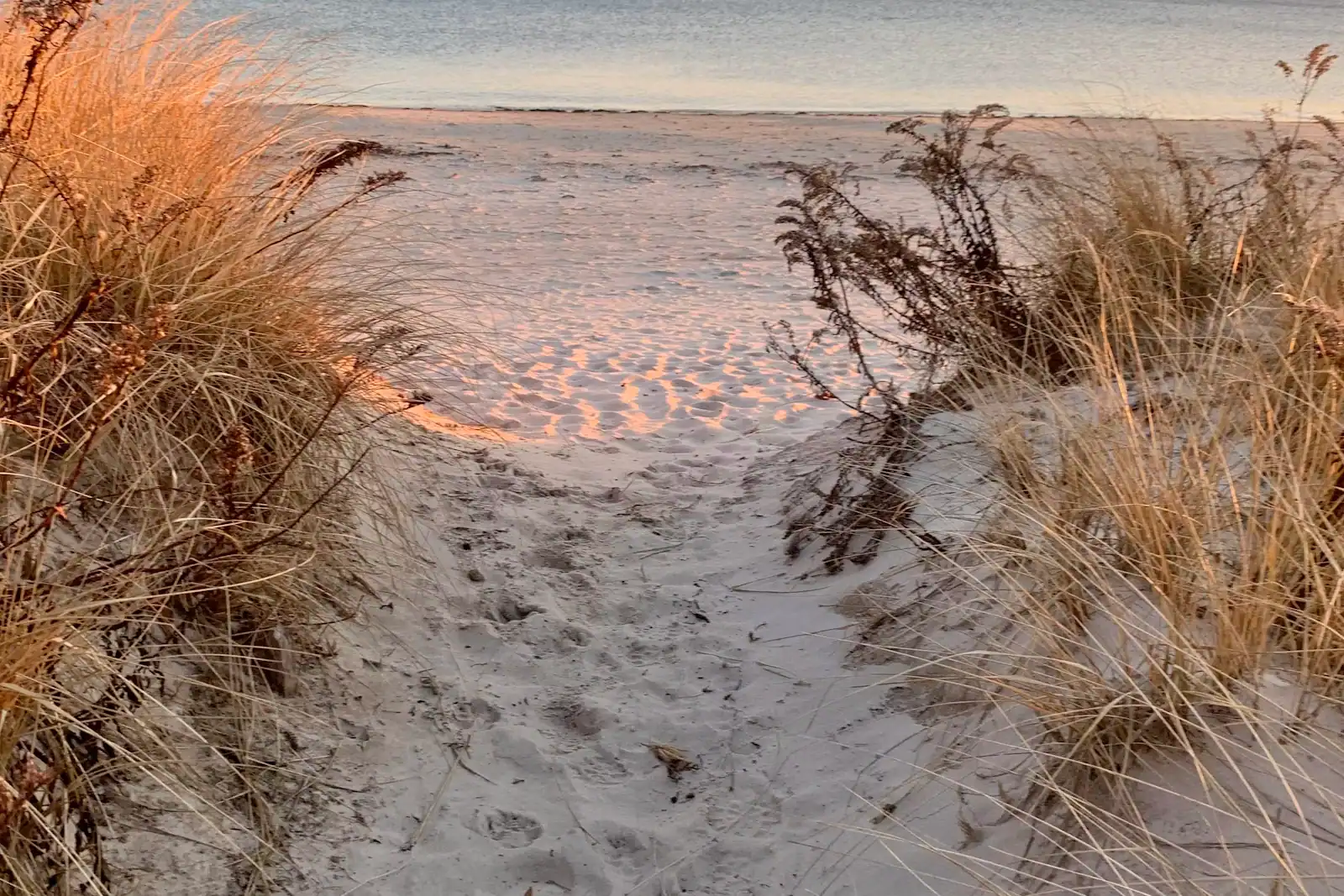
  • A sandy footpath lined with beach grass dropping down toward the shore on Cape Cod

    Beach

    Coast Guard Beach

    A barrier spit with salt marsh behind it, the best bodysurfing on the Outer Cape, and a summer parking rule that catches people out.

    2–5 hoursNational Seashore fee: $25 per vehicle per day, or $15 per person arriving on foot or by bicycle.1.5 mi away

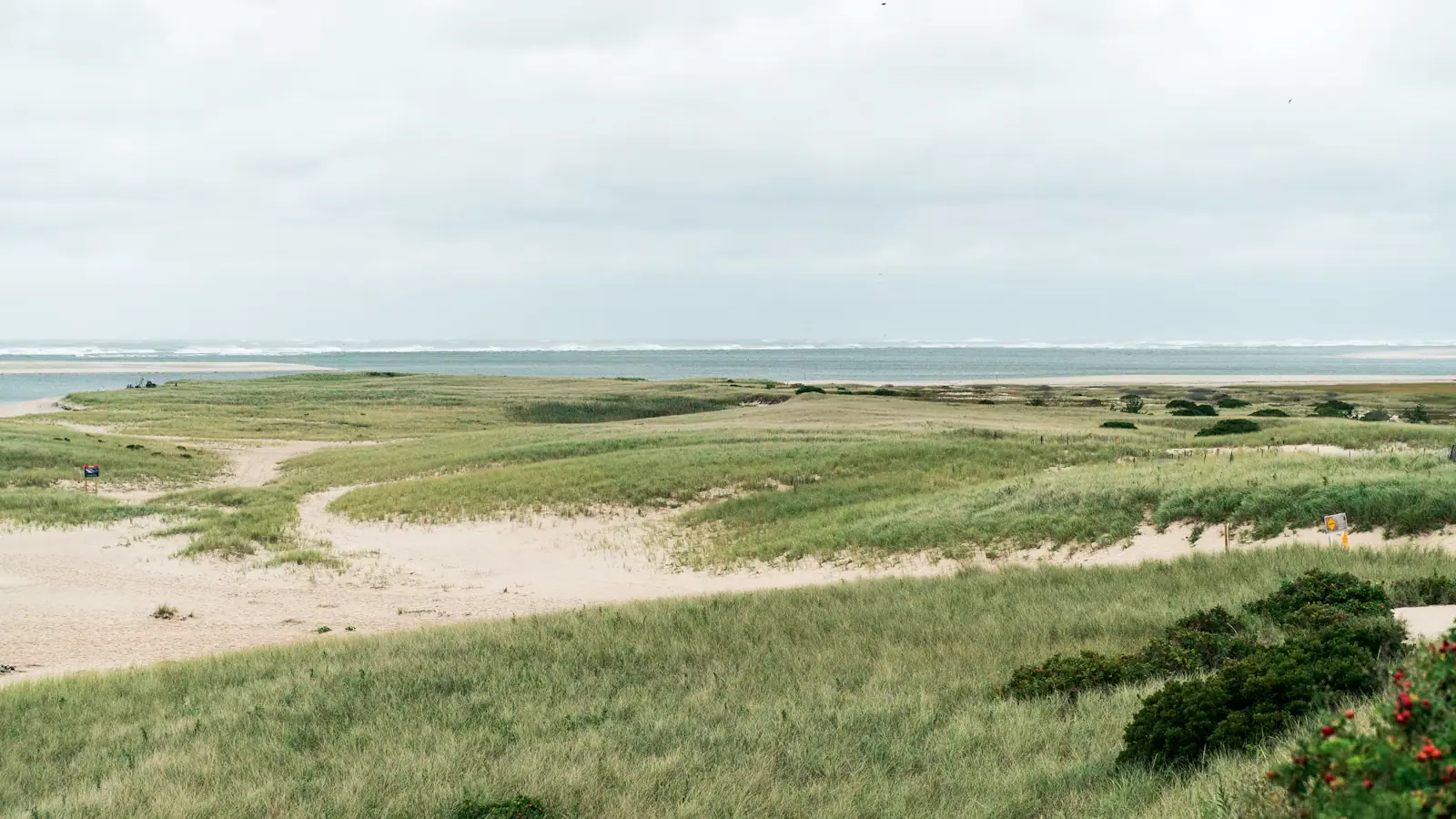
  • A sand path cut through beach grass opening onto the open Atlantic on Cape Cod's outer shore

    Park

    Cape Cod National Seashore

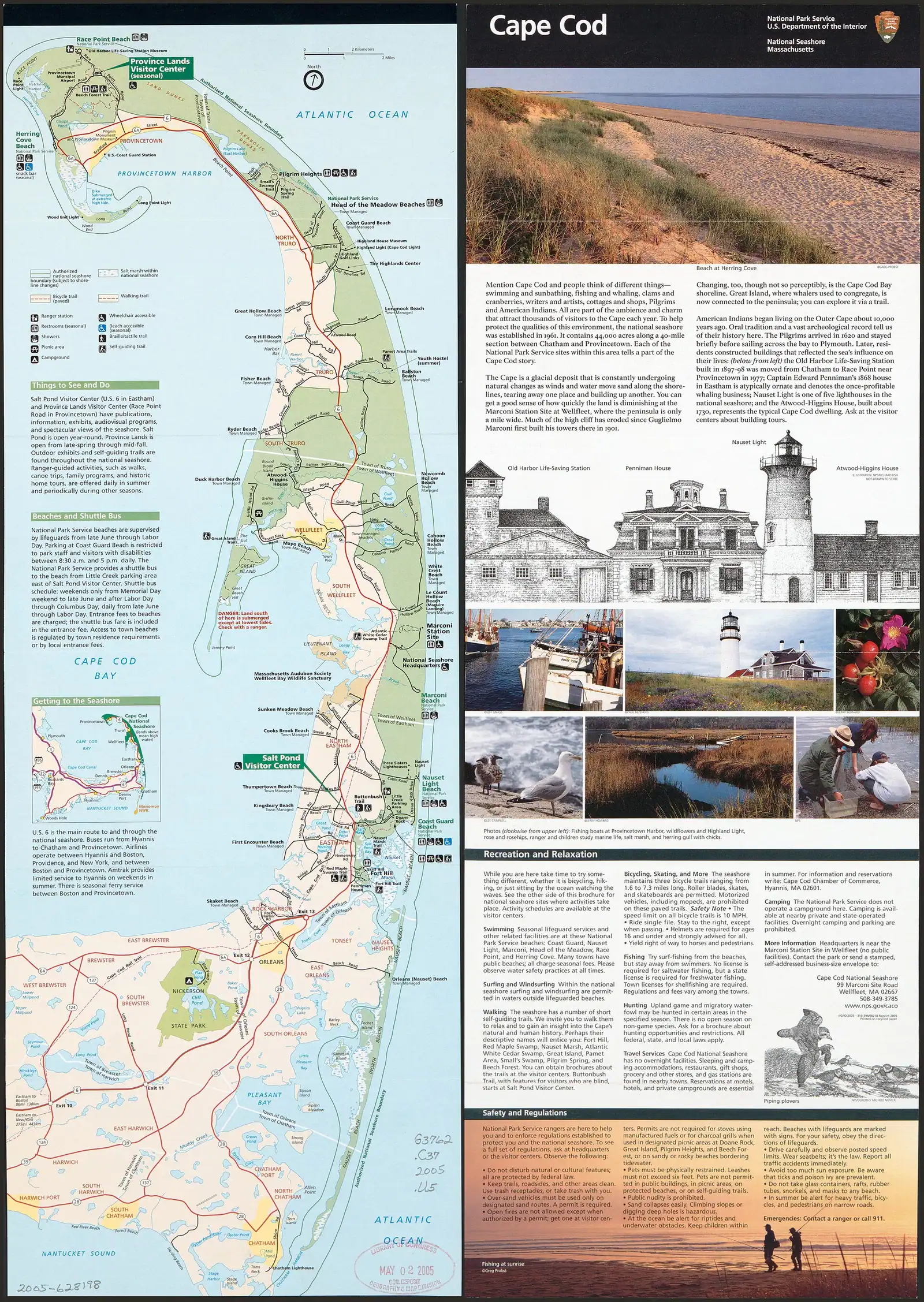
    Forty miles of protected Atlantic shore, six guarded ocean beaches, and one $25 vehicle fee that covers every one of them for the same day.

    3–8 hours$25 per private vehicle per day, valid at all six park beaches. $60 annual park pass.2 mi away

  • A weathered slat fence running along the edge of a grassy dune above a Cape Cod beach

    Beach

    Marconi Beach

    A high sand scarp, a long staircase, and the bluff the first transatlantic wireless message left the United States from in January 1903.

    2.5–5.5 hoursNational Seashore fee: $25 per vehicle per day. The Marconi Station overlook is free.2.4 mi away

Nauset Light: common questions

Can you go inside Nauset Light?

Sometimes. The interior is opened by volunteers of the Nauset Light Preservation Society rather than by the National Park Service, and in recent seasons that has meant Sunday afternoons from May to late October with extra midweek openings in high summer. The schedule is weather-dependent and changes year to year, so check the society's own listing before you build a day around it. The climb is a steep ladder-stair, not a staircase, and a minimum height rule usually applies.

Why was Nauset Light moved?

Because the cliff it stood on was disappearing. The Eastham bluff is glacial sand and gravel and it retreats a few feet a year on average, far more in a bad storm. By the mid-1990s the edge had come close enough that the tower was in immediate danger, and in November 1996 the light and its oil house were jacked up and hauled 336 feet inland. It was relit on 10 May 1997. Highland Light in Truro was moved 450 feet the same summer for the same reason.

What are the Three Sisters of Nauset?

Three small wooden lighthouses that once stood in a row on this bluff so mariners could distinguish Nauset from single and double lights elsewhere on the coast. Erosion claimed the first set; a replacement trio built in 1892 was eventually sold off and scattered, with some ending up as parts of private buildings. The National Park Service bought them back one at a time and reassembled all three in a clearing in the woods off Cable Road, where they stand today, free to visit and almost always empty.

Is Nauset Light the lighthouse on the Cape Cod Potato Chips bag?

Yes. The red-and-white tower on every bag is Nauset Light in Eastham, and it also appears on a Massachusetts specialty licence plate introduced in 1996. The red is not original: the tower was painted entirely white until the 1940s, when the upper half was coloured so it would stand out as a daymark. Its identical twin, built at Chatham in 1877 before this one was moved north in 1923, still stands at Chatham Light.