Skip to content
Search
Menu

Bookings here go through Viator, who pay us a commission. You are charged the same either way, and the commission had no say in this list.

Beach

Marconi Beach

Last updated

A high sand scarp, a long staircase, and the bluff the first transatlantic wireless message left the United States from in January 1903.

Photo: ReddeleonCC0

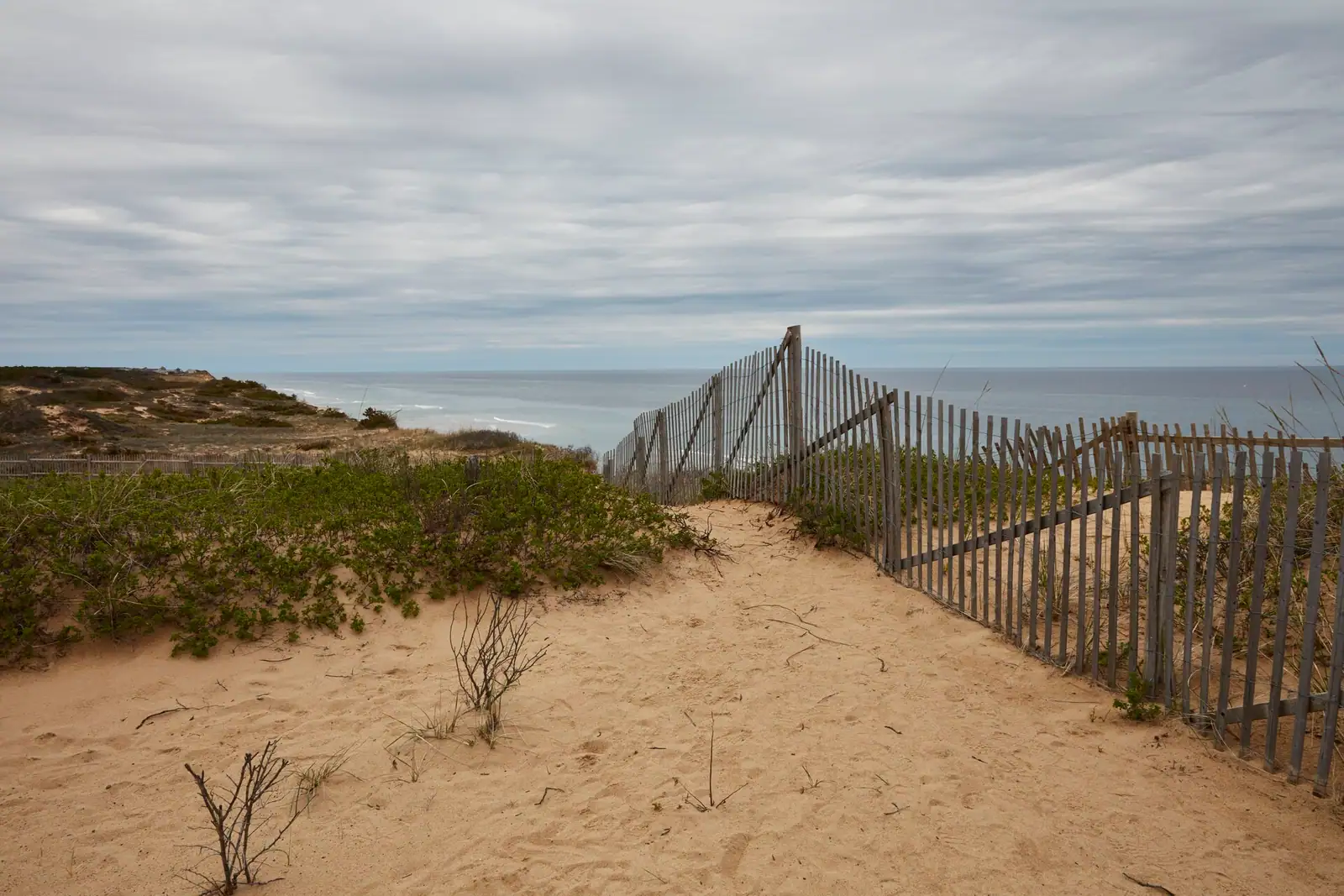
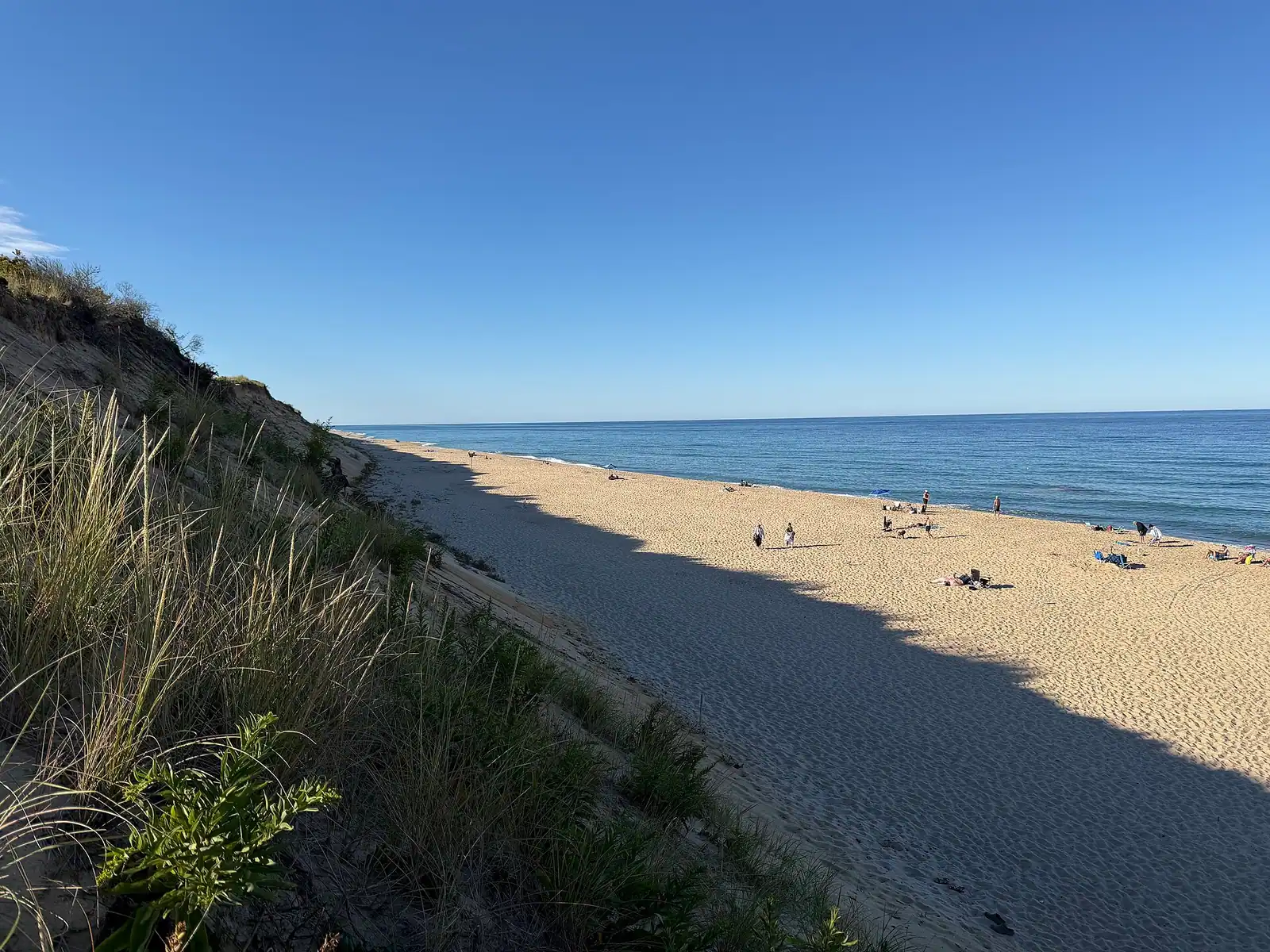
Marconi is the beach where the Outer Cape stops being a shoreline and becomes a wall. The scarp here runs somewhere in the region of seventy feet above the sand, the highest of the National Seashore's six beaches, and from the overlook at the top you are looking down at people who appear to be about the size of terns. The staircase is long. There is no way around it, and it is the price of admission.

The name is not decorative. On this bluff, in 1901 and 1902, Guglielmo Marconi built the first transatlantic wireless station in the United States, with a call sign of CC for Cape Cod. On 18 January 1903 the station carried a ceremonial message from President Theodore Roosevelt to King Edward VII and received the King's reply — the first radio telegraph sent from American soil to England. The station operated until 1917.

Then the cliff did what this cliff does. Roughly three quarters of the ground Marconi's station stood on has gone into the ocean since, and the fenced overlook behind the beach lot now sits where the transmitter field once continued east. There is a scale model, a few concrete anchor blocks, and a viewing platform that is itself being moved back over time. It is a better lesson in coastal erosion than any interpretive panel, because the erosion is the exhibit.

Half a mile inland from the same car park, the Atlantic White Cedar Swamp Trail drops off the dry outwash plain into a dark, wet cedar swamp on boardwalk. It is the strangest quarter of an hour on the Outer Cape and it is free. Most people at the beach never learn it is there.

Getting there and parking

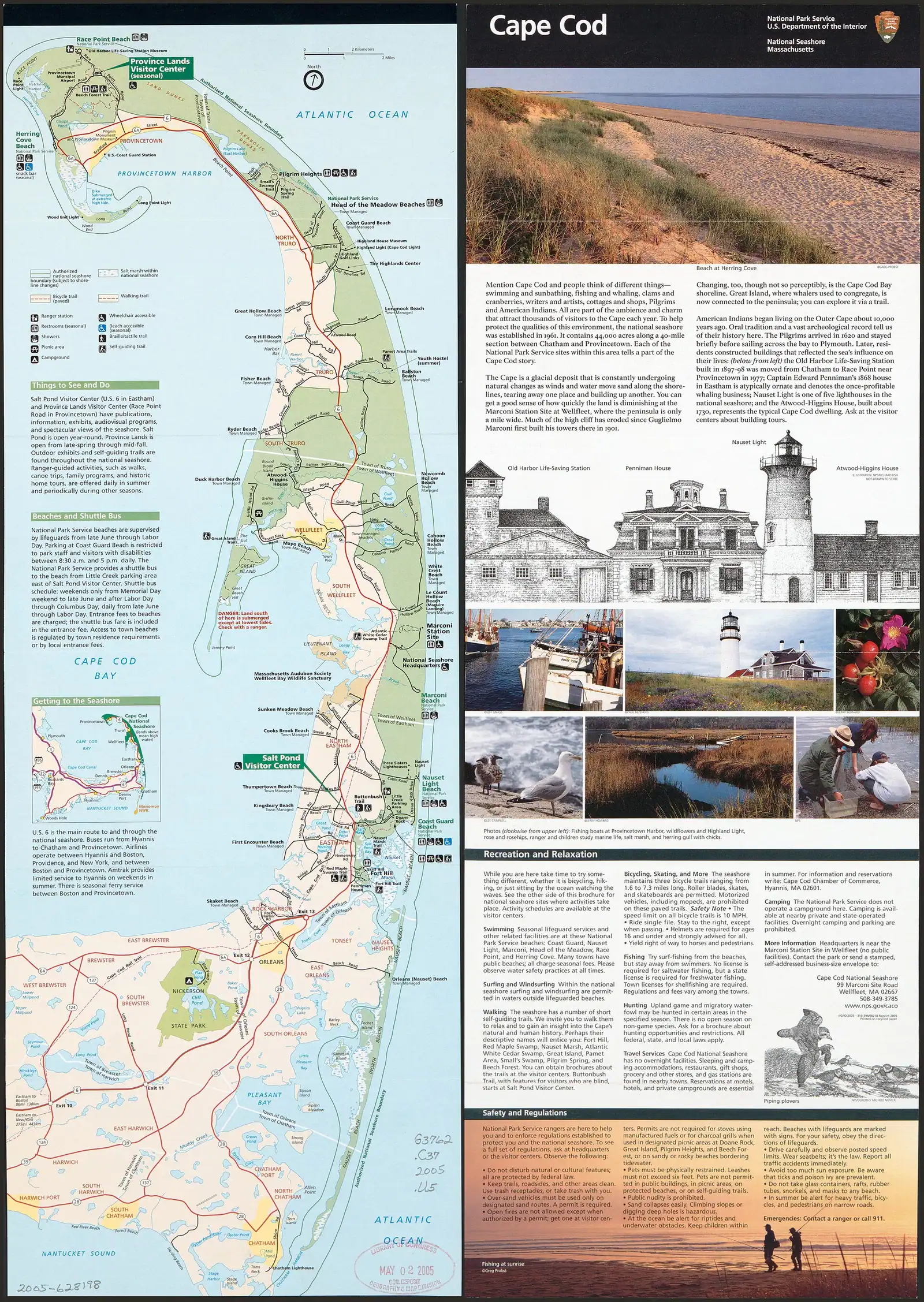
Marconi Beach Road leaves US-6 in South Wellfleet and is well signed. The beach lot and fee booth are at the end; the Marconi Station overlook and the Atlantic White Cedar Swamp trailhead are on a separate spur off the same road, reached before the booth.

Allow about fifteen minutes from Salt Pond Visitor Center in Eastham and about twenty-five from Wellfleet harbour. The Cape Cod Rail Trail's Wellfleet terminus at LeCount Hollow Road is a couple of miles away, which makes a bike-and-beach day possible, though the last stretch is on road rather than trail.

There is no bus service to the beach itself. The seasonal Provincetown shuttle runs further north.

Park headquarters is on Marconi Site Road off the same access, which is where you go if you need a ranger rather than a lifeguard.

The stairs, the cliff and the high-tide problem

The descent is a long timber staircase with landings, rebuilt periodically as the scarp retreats, and it is a serious carry with beach kit. Going down is fine. Coming up at three in the afternoon in August, with a cooler and a child who has had enough, is the part people remember.

The bigger practical issue is the tide. At Marconi the usable strip between the water and the base of the cliff narrows sharply on a high spring tide, and in places it effectively disappears. That matters if you have walked half a mile along the sand, because the way back can close behind you. Check the tide table before you commit to a long walk in either direction, and keep an eye on the cliff base rather than the horizon.

Do not sit under an overhang, and do not climb the face. The material here is loose glacial sand and gravel with no cohesion, undercut by the sea, and sections come off without noise or warning. The fencing at the top is not about the view.

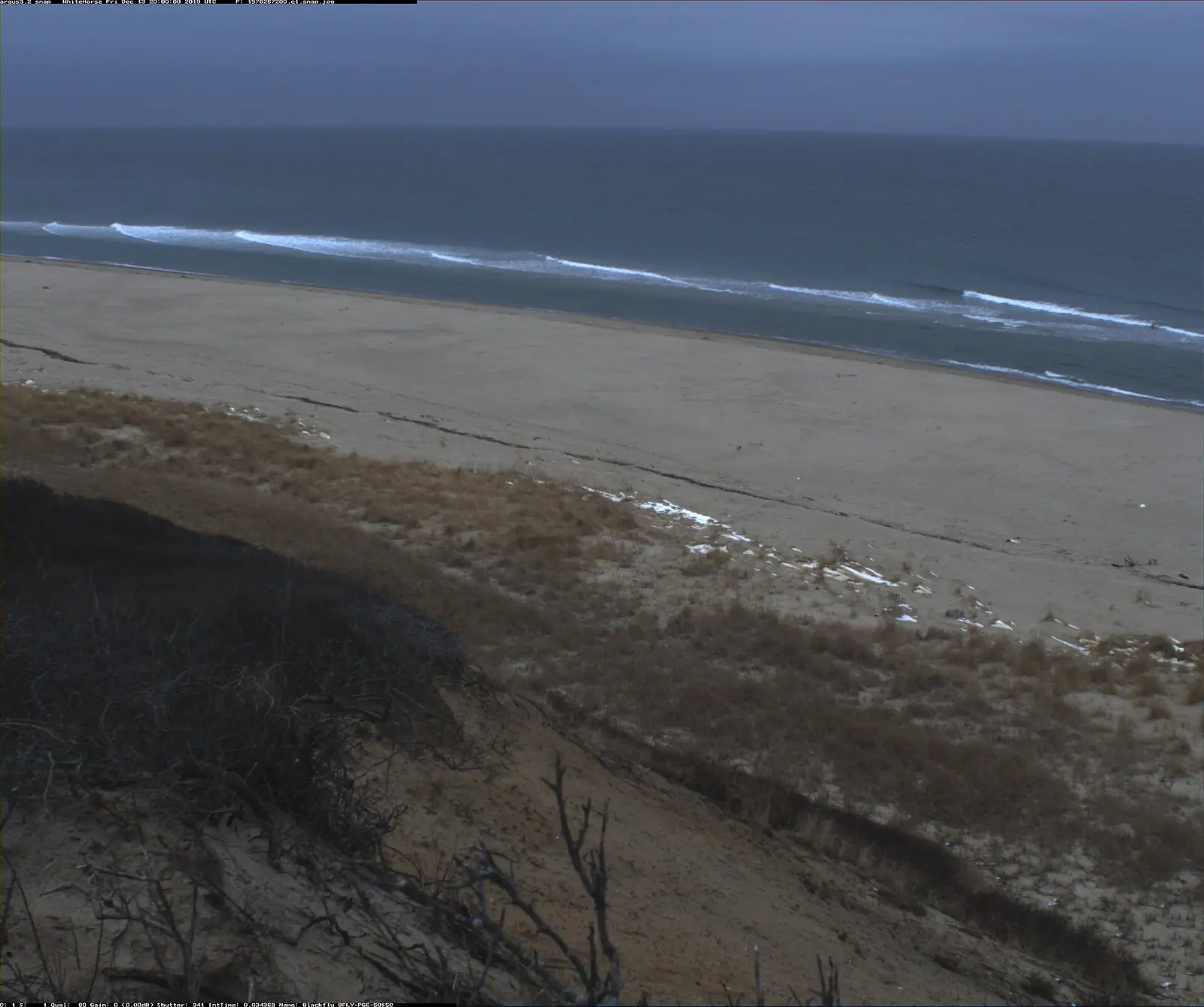
The beach at the foot of the stairs is wide, clean, unbuilt in both directions and almost supernaturally quiet for a place with a full car park, because the cliff absorbs the noise.
What actually remains of Marconi's station

Manage expectations and the site is superb. There is no building. There are no towers. What you get is a fenced overlook on the bluff edge, a covered display with a scale model of the four wooden towers and the transmitter house, some fragments of concrete anchor block in the sand, and a very good short interpretive walk.

The point is the emptiness. Marconi chose this bluff because it was the closest high ground in the United States to Europe and because nothing stood between it and the Atlantic. The same two facts are why the site is now mostly underwater. The Park Service has moved the viewing platform back more than once, and the fence line you stand behind is not where the fence line was.

Go at the end of the day. Late light rakes along the cliff face south toward Nauset and north toward Truro, and on a clear evening from the overlook you can see across the peninsula to Cape Cod Bay — Wellfleet is narrow enough here that both coasts are visible from one spot, which is a genuinely odd thing to be able to say about a place with forty miles of ocean beach.

The overlook is outside the beach fee booth, so it costs nothing outside the parking charge.

The Atlantic White Cedar Swamp Trail

From the Marconi Station parking area a sand path runs about a mile and a quarter through pitch pine and bear oak, then drops onto boardwalk and into something completely different: a dense stand of Atlantic white cedar growing in a kettle hole below the level of the surrounding plain.

  • It is dark, cool and still in there even on a hot afternoon, because the canopy closes overhead and the ground is wet peat. The temperature change at the boardwalk steps is immediate.
  • Allow about forty-five minutes at a normal pace with stops. The loop returns along a stretch of the old station access road.
  • Mosquitoes are serious in the swamp section from late spring through summer. Repellent, not optimism.
  • Check for ticks afterwards. Tick-borne illness is a real local health issue on the Cape rather than a theoretical one, and this trail runs through exactly the scrub they live in.
  • Trainers or boots, not flip-flops. The sand approach is soft and the boardwalk can be slick after rain.

Atlantic white cedar swamps were widespread on the Cape before three centuries of cutting; this one survived because it sits in a hole nobody could get a cart into.

Parking, facilities and how it compares

The lot is larger than Nauset Light's and fills later, generally around mid-morning at the height of the season rather than before ten. It is still a lot that closes when full, and the National Seashore vehicle fee buys you entry, not a space.

Facilities are a seasonal bathhouse with restrooms and cold outdoor showers at the top of the cliff, and nothing at all at the bottom. No food, no rentals, no shade. There is no drinking water on the sand.

Against the other five park beaches: Marconi has the highest cliff and the most dramatic arrival, Coast Guard has the better surf shape, Head of the Meadow is quieter with an easier walk, and Herring Cove and Race Point are both far more accessible for anyone who cannot do stairs. If you want one Atlantic beach that explains why this coast is protected, Marconi is the one to pick.

Wellfleet's own town beaches — on both the ocean and the harbour side — run on a separate sticker system and do not accept the park pass. The village centre, with the galleries and the Wednesday flea market at the drive-in, is about ten minutes north.

Near Marconi

Straight-line distances, so allow more on the road — the island is long and has one main parkway.

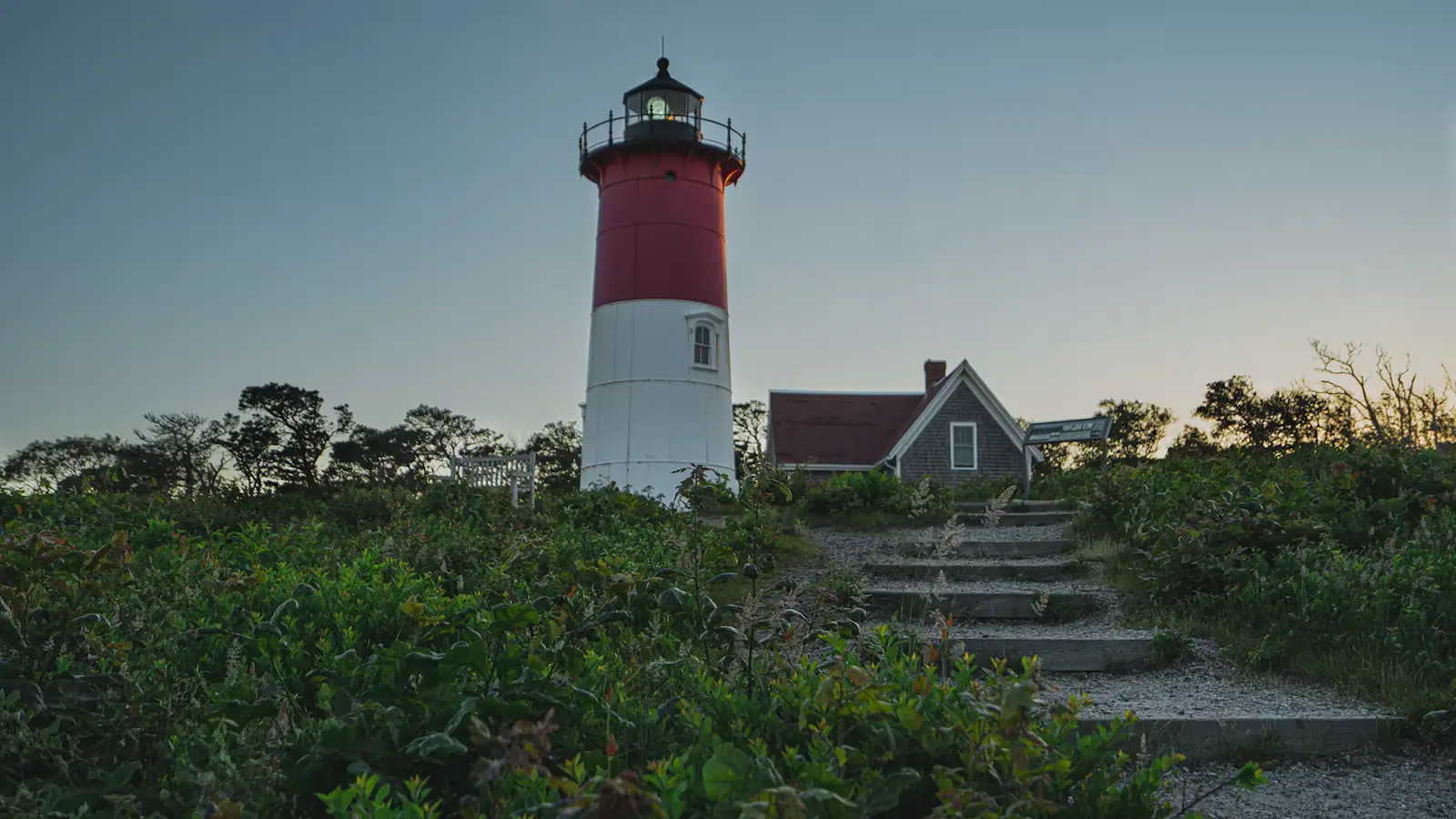
  • The red and white tower of Nauset Light standing above low trees in Eastham, Massachusetts

    Beach

    Nauset Light Beach

    Ocean beach at the foot of a sand cliff, with the Cape's most photographed lighthouse above the stairs and a lot that fills before ten.

    2–5 hoursNational Seashore fee: $25 per vehicle per day, or $15 per person on foot or by bicycle.2.3 mi away

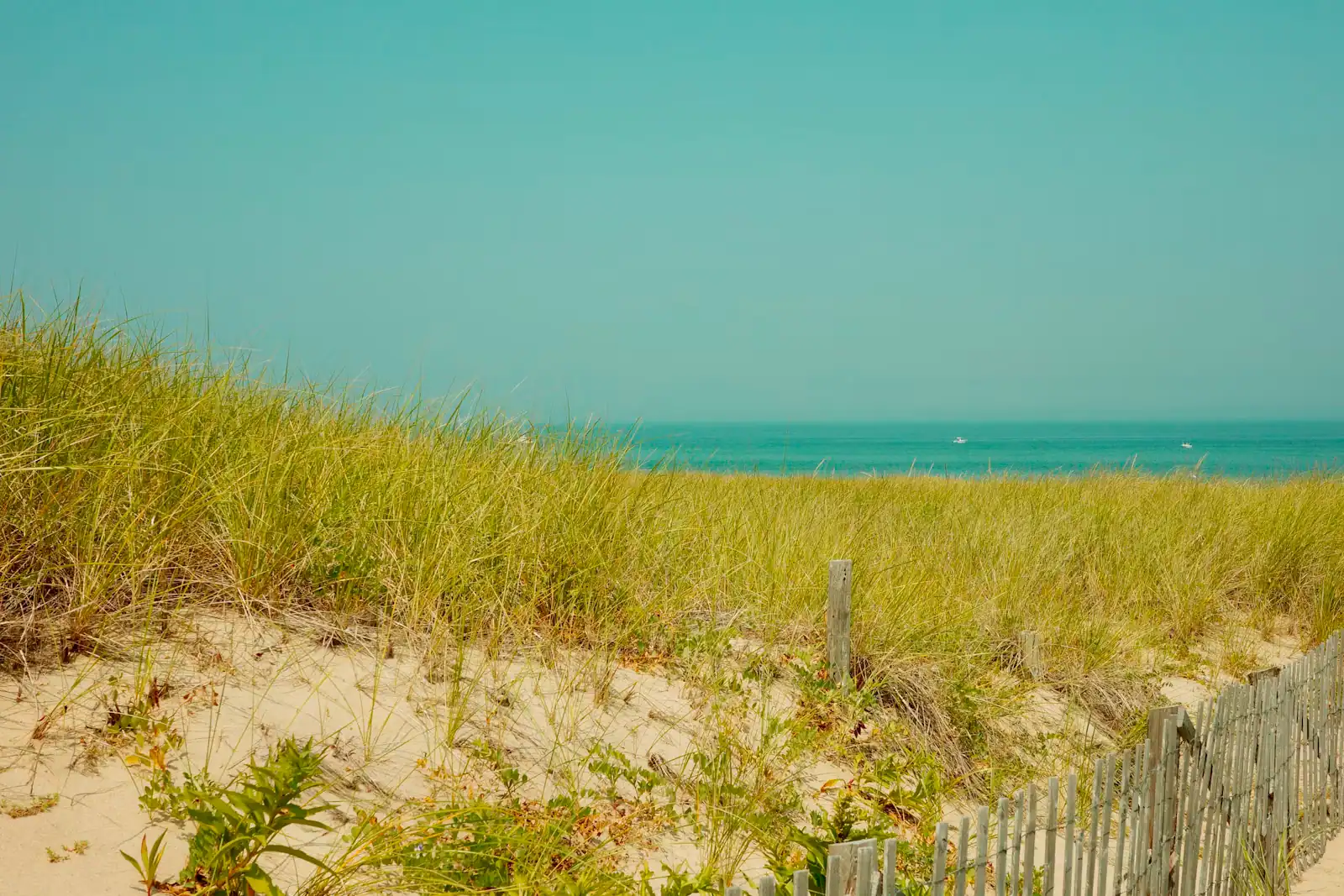
  • A sand path cut through beach grass opening onto the open Atlantic on Cape Cod's outer shore

    Neighbourhood

    Free

    Wellfleet

    Around seventy per cent of this Outer Cape town is protected land, which is why the ocean beaches feel like nobody told anyone about them.

    3–8 hoursFree to visit. Town beaches need a Wellfleet sticker in season; Marconi Beach takes the federal fee.4.9 mi away

  • A long empty beach of pale sand backed by low dune vegetation with no buildings in sight

    Beach

    Head of the Meadow Beach

    The least crowded of the six park beaches, with a Truro town lot next door on a different payment system and an 1872 wreck in the sand.

    2–5 hoursNational Seashore lot: $25 per vehicle per day. The adjacent Truro town lot charges separately.12 mi away

  • A sand path cut through beach grass opening onto the open Atlantic on Cape Cod's outer shore

    Park

    Cape Cod National Seashore

    Forty miles of protected Atlantic shore, six guarded ocean beaches, and one $25 vehicle fee that covers every one of them for the same day.

    3–8 hours$25 per private vehicle per day, valid at all six park beaches. $60 annual park pass.4.1 mi away

Marconi: common questions

What is at the Marconi Station site?

A fenced bluff-edge overlook, a covered display with a scale model of the original towers and transmitter house, some concrete anchor fragments in the sand, and interpretive panels. There is no building and there are no towers. Marconi built the first American transatlantic wireless station here in 1901 and 1902, and on 18 January 1903 it carried a ceremonial message from President Roosevelt to King Edward VII. Roughly three quarters of the original site has since eroded into the Atlantic.

How high is the cliff at Marconi Beach?

The scarp above the beach runs to roughly seventy feet, the highest of the six National Seashore beaches, which is why the staircase is the longest of the six as well. The material is glacial sand and gravel with no rock in it, which is also why it keeps failing. Stay behind the fencing at the top and do not sit under an overhang at the bottom. On a high spring tide the strip of dry sand at the cliff base narrows sharply, so check the tide before walking far.

Is the Atlantic White Cedar Swamp Trail worth doing?

Yes, and it takes about forty-five minutes. The path leaves the Marconi Station parking area, runs through pitch pine and scrub oak, then drops on boardwalk into a stand of Atlantic white cedar growing in a kettle hole below the level of the surrounding plain. The temperature and light change the moment you go down the steps. Bring repellent for the swamp section in summer, wear proper shoes, and check yourself for ticks afterwards.

Does Marconi Beach parking fill up?

Yes, though later than Nauset Light. The lot is larger and generally holds until mid-morning at the height of summer before closing when full. Paying the National Seashore vehicle fee does not reserve a space, and the entrance is closed rather than queued once the lot is full. If you are turned away, Head of the Meadow in Truro is about twenty minutes north and usually the last of the six to fill, and the same day pass is valid there.