Skip to content
Search
Menu

Bookings here go through Viator, who pay us a commission. You are charged the same either way, and the commission had no say in this list.

Beach

Coast Guard Beach

Last updated

A barrier spit with salt marsh behind it, the best bodysurfing on the Outer Cape, and a summer parking rule that catches people out.

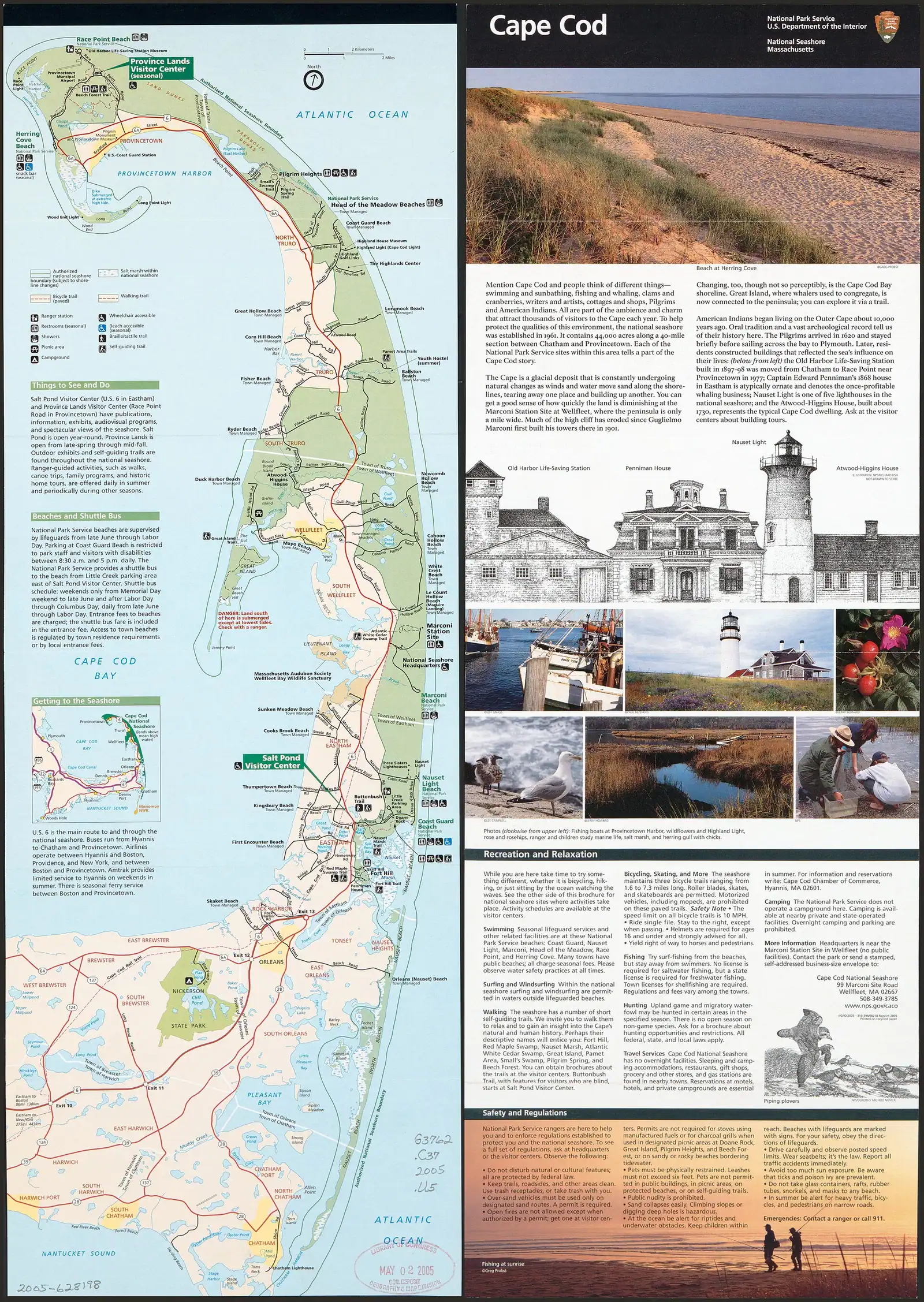
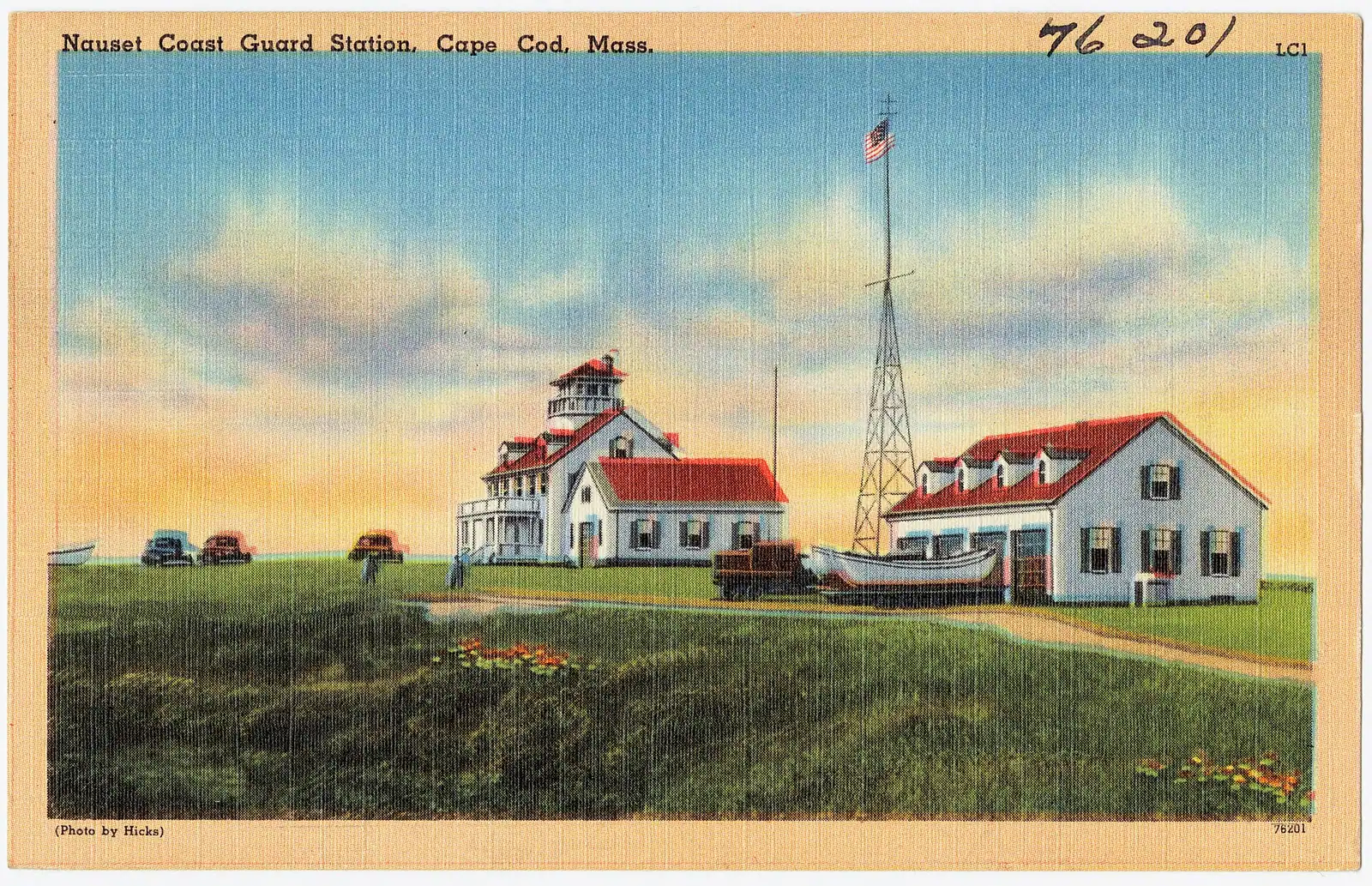
Coast Guard is the beach in the photograph: a long pale bar of sand running south from a red-roofed white building on a bluff, with Nauset Marsh lying green and flat behind it and no development in either direction. It is also the beach where the National Seashore first set up shop. The building on the bluff went up in 1937 as a replacement for an 1870s lifesaving station that erosion had made untenable, served as a Coast Guard station until 1958, and in 1961 became the new park's first headquarters.

Geographically this is a barrier spit rather than a mainland shore, which is why it behaves differently from the cliff beaches a few miles north. There is ocean on one side and Nauset Marsh on the other, the strip between them is narrow, and the whole structure migrates. The Blizzard of February 1978 pushed water about fourteen and a half feet above mean low water across it, wiped out the houses on the spit and took Henry Beston's Outermost House — the one-room cottage he built in 1925 and wrote about in 1928 — out to sea. The park's response was deliberate: rather than rebuild a lot on the sand, it put the parking inland and let the beach move.

That decision is why your morning here needs planning. Through the summer there is effectively no day parking at the beach itself. You leave the car at an inland lot on Doane Road and ride a shuttle in, or you cycle the Nauset Trail from Salt Pond Visitor Center and lock up at the racks.

What you get is the best-shaped surf on this coast. The bar offshore builds a clean, heavy shore break that bodysurfers and bodyboarders drive a long way for, and which will put a small child flat on the sand without warning. The water is cold. In July it frequently sits in the low sixties.

Getting there and parking

From US-6 in Eastham, turn at the Salt Pond Visitor Center lights onto Nauset Road, then right onto Doane Road and follow it east. In the summer season you stop at the inland Doane Road lot and take the shuttle for the last stretch; outside it you can drive to the beach turnaround.

By bicycle, the Nauset Trail leaves from behind Salt Pond Visitor Center and runs about a mile and a half of paved path to the beach ramp. It is close to flat, it crosses the marsh edge on a causeway, and it is the fastest way in on any August day.

The Cape Cod Rail Trail's Eastham section passes within a couple of miles, so the beach can be reached on paved trail the whole way from Brewster or Orleans if you are prepared for the distance.

Allow roughly forty to fifty minutes from the Sagamore Bridge outside the summer, and a great deal more on a July Friday afternoon.

The shuttle, and how not to waste an hour

This is the single most common mistake made on the Outer Cape. Drivers follow signs to Coast Guard Beach in July, reach the end of Doane Road, and find the beach turnaround closed to general parking.

Through the high summer season you park at the inland lot off Doane Road and take the shuttle bus down to the sand. It runs on a loop, it is included once you have paid the National Seashore vehicle fee, and it has a last run in the early evening that is worth knowing before you settle in for the sunset. Dates, hours and frequency are set each season, so confirm at Salt Pond Visitor Center rather than trusting a figure you read in March.

The alternative is the one locals use. The Nauset Trail runs about a mile and a half of paved path from Salt Pond Visitor Center straight to the beach, mostly flat, through pitch pine and past the edge of the marsh. On a bike you arrive at the racks at the top of the ramp, you never queue, and you pay the cyclist rate rather than the vehicle rate.

Outside the shuttle season the beach turnaround itself opens for parking, and there is room for perhaps a few dozen cars. In October that is plenty. In August it would be gone by half past seven, which is precisely why it is closed.
Why surfers and bodyboarders come here

The offshore bar here is the reason. Waves stand up on it, break, reform in the trough and break again on the steep face of the beach, which produces a short, powerful shore break rather than a long gentle roll.

For a competent adult bodysurfer that is close to ideal, and on a clean summer swell you will see thirty people working the same break without a board between them. For a seven-year-old in an inflatable ring it is the opposite of ideal. The drop at the waterline is abrupt, the backwash is strong, and the sand shifts underfoot in a way that Cape Cod Bay beaches never do.

Board surfers use the beach too, mostly on the shoulders of the day and mostly outside the guarded swimming area, which the lifeguards mark and enforce. Autumn brings the better waves — hurricane swell arriving from a storm several hundred miles offshore under a blue sky is a normal September event here — and also brings the greatest number of grey seals close to the bar.

Rip currents set up in the gaps between sandbars and pull hardest on a falling tide. Caught in one, the instinct to fight straight back towards your towel is exactly the thing that exhausts people; go sideways along the shore instead until the grip lets go, then angle in. Outside the lifeguard season nobody is watching you do it.

The back side, which most visitors never look at

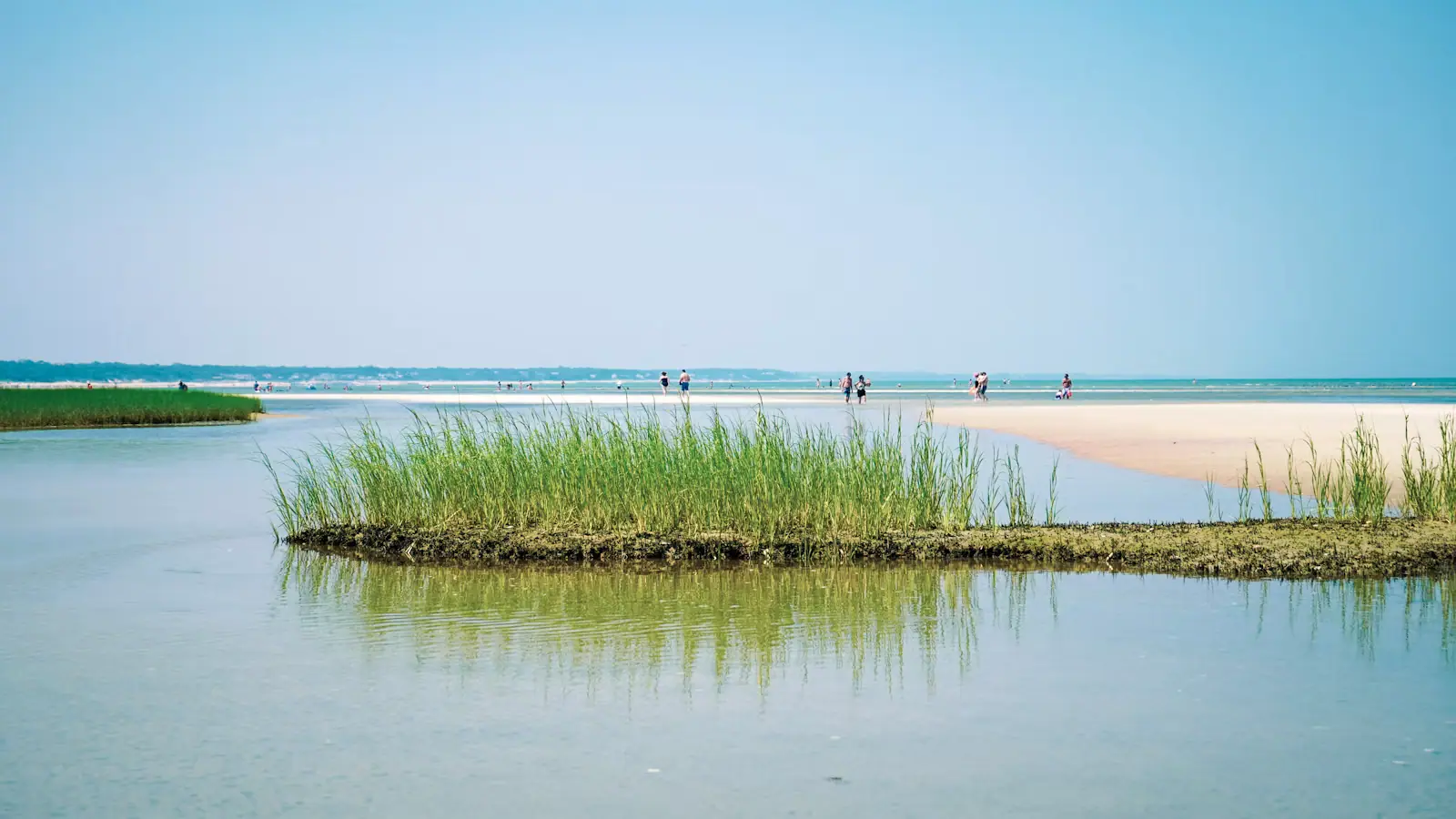
Turn around. Behind the dune line is Nauset Marsh, a shallow tidal system of creeks, flats and islands that drains and refills twice a day and is one of the better places on the Cape to put a kayak in.

  • The water on the marsh side is warmer and flatter than the ocean side, and shallow enough to stand in across large areas at low tide. Families with young children often swim there rather than in the surf.
  • Herons, egrets, terns and, in autumn, large numbers of migrating shorebirds work the flats. The Fort Hill overlook a few minutes away gives the view over the whole system.
  • The spit runs north toward Nauset Inlet and can be walked for a long way when nesting closures are not in force. Piping plovers and least terns nest on open sand here and sections are roped from spring into midsummer.
  • Do not cross the marsh channels on foot at a falling tide. They drain fast and the current in the inlet is strong enough to carry a confident swimmer.

Two miles south of the station building, under the water now, is where the Outermost House stood. There is nothing to see. It is still worth knowing where you are standing.

Facilities, dogs and the cold-water problem

There is a bathhouse with restrooms, changing rooms and cold outdoor showers at the beach, open through the staffed season and closed outside it. There is no food concession, no rental stand and no shade of any kind on the sand.

Bring more than you think. A windbreak, because the onshore breeze here rarely drops and blowing sand at this beach is a constant. Fresh water. Something to sit on that will not take off. And, genuinely, a wetsuit top or rash vest if you plan to be in the water for more than a quarter of an hour — the Atlantic on this side of the Cape often sits in the low sixties Fahrenheit through July, which is cold enough to shorten your breath and drain strength faster than people expect.

Dogs are not permitted on the guarded ocean beaches during the lifeguard season. Outside it they are allowed on lead, and a winter walk out along the spit with a dog is one of the better things you can do on the Cape in February.

Purple flags with a white shark silhouette fly here all season. They are a standing advisory about a coastline where white sharks are now normal, not a report of a sighting this morning. The signal that matters is a lifeguard clearing the water, and you get out immediately when that happens.

Near Coast Guard

Straight-line distances, so allow more on the road — the island is long and has one main parkway.

  • The red and white tower of Nauset Light standing above low trees in Eastham, Massachusetts

    Beach

    Nauset Light Beach

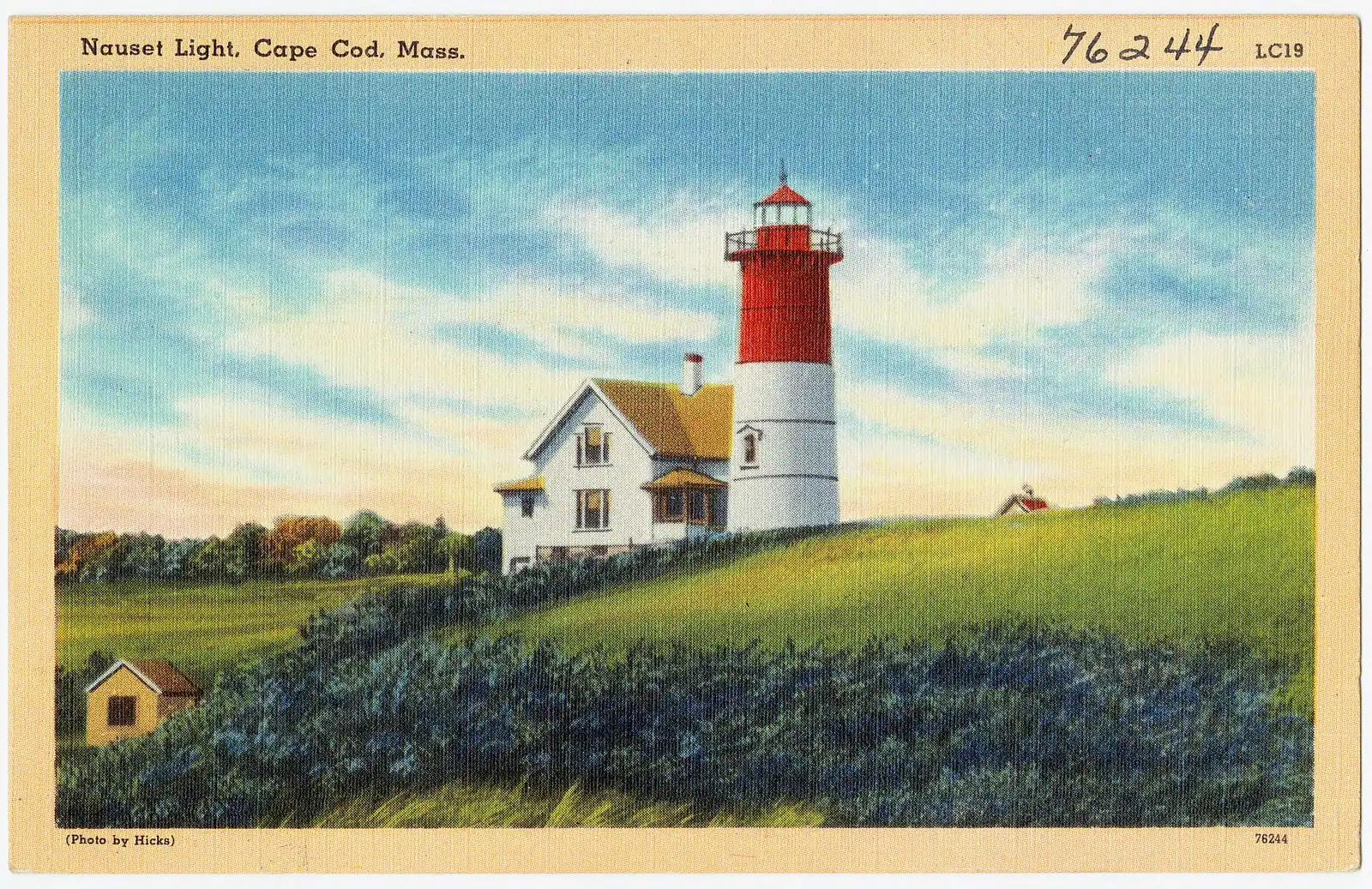
    Ocean beach at the foot of a sand cliff, with the Cape's most photographed lighthouse above the stairs and a lot that fills before ten.

    2–5 hoursNational Seashore fee: $25 per vehicle per day, or $15 per person on foot or by bicycle.1.6 mi away

  • The red and white tower of Nauset Light standing above low trees in Eastham, Massachusetts

    Landmark

    Free

    Nauset Light

    The red-and-white tower on the potato chip bag — built in Chatham, moved to Eastham in 1923, and hauled back from the cliff edge in 1996.

    0.5–1.5 hoursFree to visit the grounds and the Three Sisters. Tower tours are volunteer-run, often by donation.1.5 mi away

  • A sand path cut through beach grass opening onto the open Atlantic on Cape Cod's outer shore

    Park

    Cape Cod National Seashore

    Forty miles of protected Atlantic shore, six guarded ocean beaches, and one $25 vehicle fee that covers every one of them for the same day.

    3–8 hours$25 per private vehicle per day, valid at all six park beaches. $60 annual park pass.1.5 mi away

  • People walking out across wet sand flats at low tide on the bay side of Cape Cod

    Beach

    Free

    First Encounter Beach

    Bay-side Eastham, where the tide goes out for most of a mile and the name marks a skirmish fought on this sand in December 1620.

    1.5–4 hoursFree to enter. Town parking is charged in season by daily rate or Eastham beach sticker.3.5 mi away

Coast Guard: common questions

Can you park at Coast Guard Beach?

Not at the beach itself in high summer. Through the main season the beach turnaround is closed to day parking and you leave the car at an inland lot on Doane Road, then ride a shuttle down. The shuttle is covered by the National Seashore vehicle fee you have already paid. Outside the summer season the turnaround opens and holds a few dozen cars. Cyclists avoid the problem entirely by riding the Nauset Trail in from Salt Pond Visitor Center.

Is Coast Guard Beach good for swimming with children?

The ocean side is not the easy option. Coast Guard has a steep shore break over an offshore bar, strong backwash and water that often sits in the low sixties Fahrenheit in July, which is a lot for a small child. Families with young children usually swim on the marsh side behind the dune, where the water is shallower, flatter and noticeably warmer, or drive over to the bay at First Encounter instead. If you do swim on the ocean side, stay inside the guarded area.

What happened to the Outermost House at Coast Guard Beach?

Henry Beston built a one-room cottage on the spit south of the Coast Guard station in 1925 and spent a year there, publishing The Outermost House in 1928. He gave the property to the Massachusetts Audubon Society in 1959. The Blizzard of February 1978, which drove water about fourteen and a half feet above mean low water across the spit, carried the cottage out to sea along with several houses. Nothing remains to visit; the site is under water and moving sand.

Are there sharks at Coast Guard Beach?

White sharks are a normal part of this coastline now, drawn inshore by a recovered grey seal population. Purple flags with a shark silhouette fly at Outer Cape beaches all season as a standing advisory rather than a same-day sighting alarm. When lifeguards clear the water, they do it because something has been seen, and you get out at once. Swim near a lifeguard stand, stay in shallow water, avoid swimming near seals or schools of fish, and check the Sharktivity app for current sightings.