Whale watching on Cape Cod is unusually reliable, and the reason is geological rather than lucky. The last glaciation left a submerged sandy plateau off the tip of the peninsula, rising steeply out of deeper water on either side. Currents hitting that wall of sand are pushed upward, carrying nutrients into the sunlit layer, and the result is a bloom that feeds sand lance, and sand lance feed whales. That plateau is Stellwagen Bank.
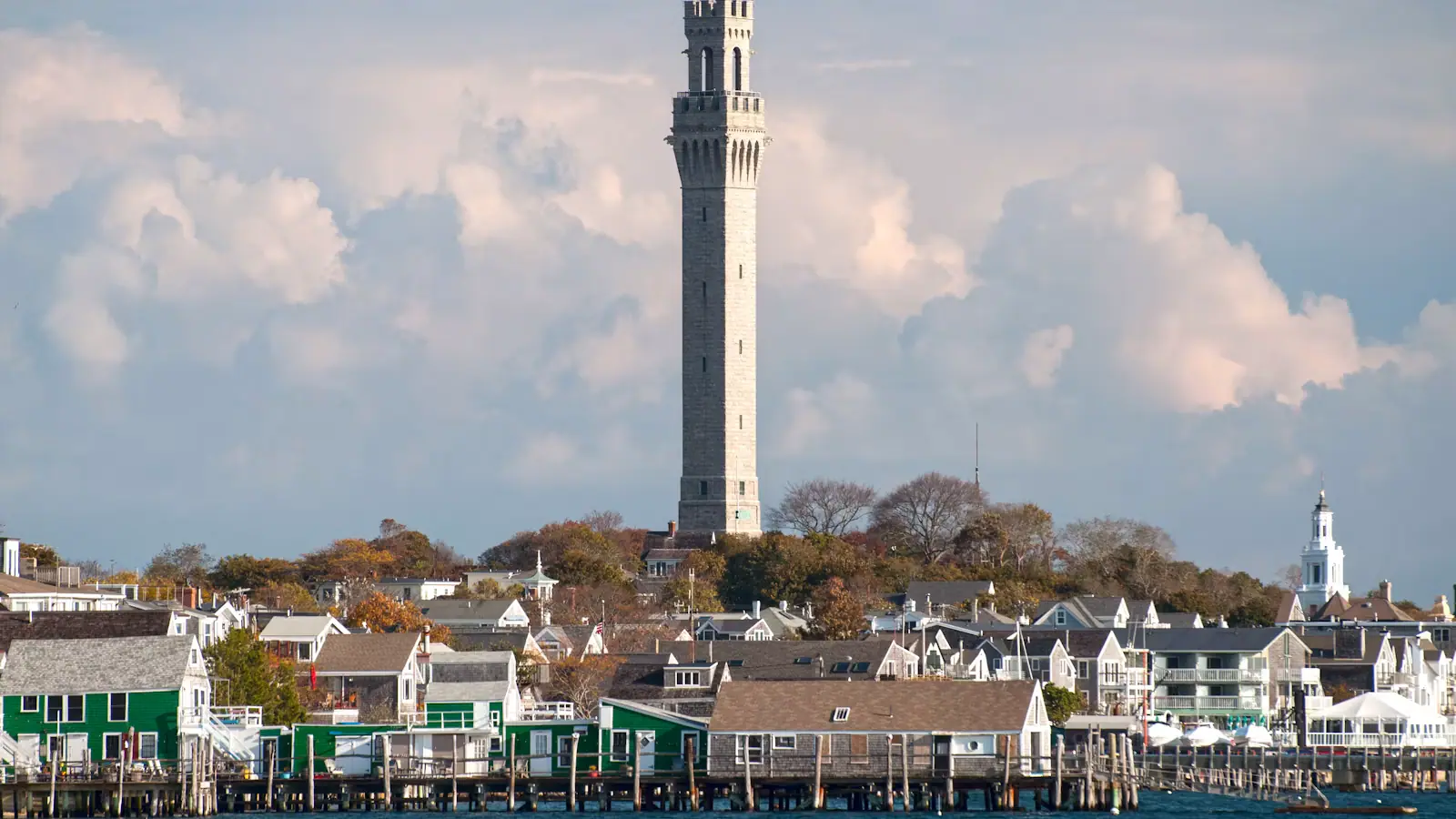
It was designated a national marine sanctuary in November 1992, covers roughly 842 square miles of federal water, and runs from a few miles south of Cape Ann to a few miles north of Cape Cod. It is the only national marine sanctuary in New England. The southern corner of it sits a short run off Race Point, which is why Provincetown is where the boats are.
Which pier to sail from
| Port | Run to the grounds | Typical trip | Season | Worth knowing |
|---|---|---|---|---|
| Provincetown, MacMillan Pier | Shortest on the Cape | 3 to 4 hours | Roughly April to late October | More time on the whales, less on the transit. Walk-on from the town centre |
| Barnstable Harbor, Mid Cape | Longer, out of Cape Cod Bay | 3.5 to 4.5 hours | Roughly April or May to October | Far more convenient if you are based Mid Cape; a longer steam each way |
| Boston and Plymouth | From the north shore of the bay | 3 to 4 hours | Roughly April to October | Relevant only if you are combining the Cape with a city stay |
If you are staying on the Outer or Lower Cape, sail from Provincetown. If you are based at Hyannis, Yarmouth or Dennis, Barnstable Harbor will save you two hours of driving and cost you perhaps forty minutes of extra steaming, which is usually the better trade.
The season, and what turns up when
Most operators run from around April through to late October, with a few starting earlier and finishing later.
April and May are the serious naturalist's window. The bank is cold and busy, and this is when North Atlantic right whales are around Cape Cod Bay in numbers. They are also the reason a spring trip can turn into a lot of respectful waiting at a distance, because the law that protects them is strict.
June brings the humpbacks properly and also brings fog. A June cancellation for visibility is common and nobody is being precious about it.
July and August are the most dependable months and the most crowded boats. Book the first sailing of the day.
September and October are the connoisseur's months. Warm water, thinner crowds, feeding behaviour that is often spectacular, and a real chance of a quiet boat.
What you will actually see
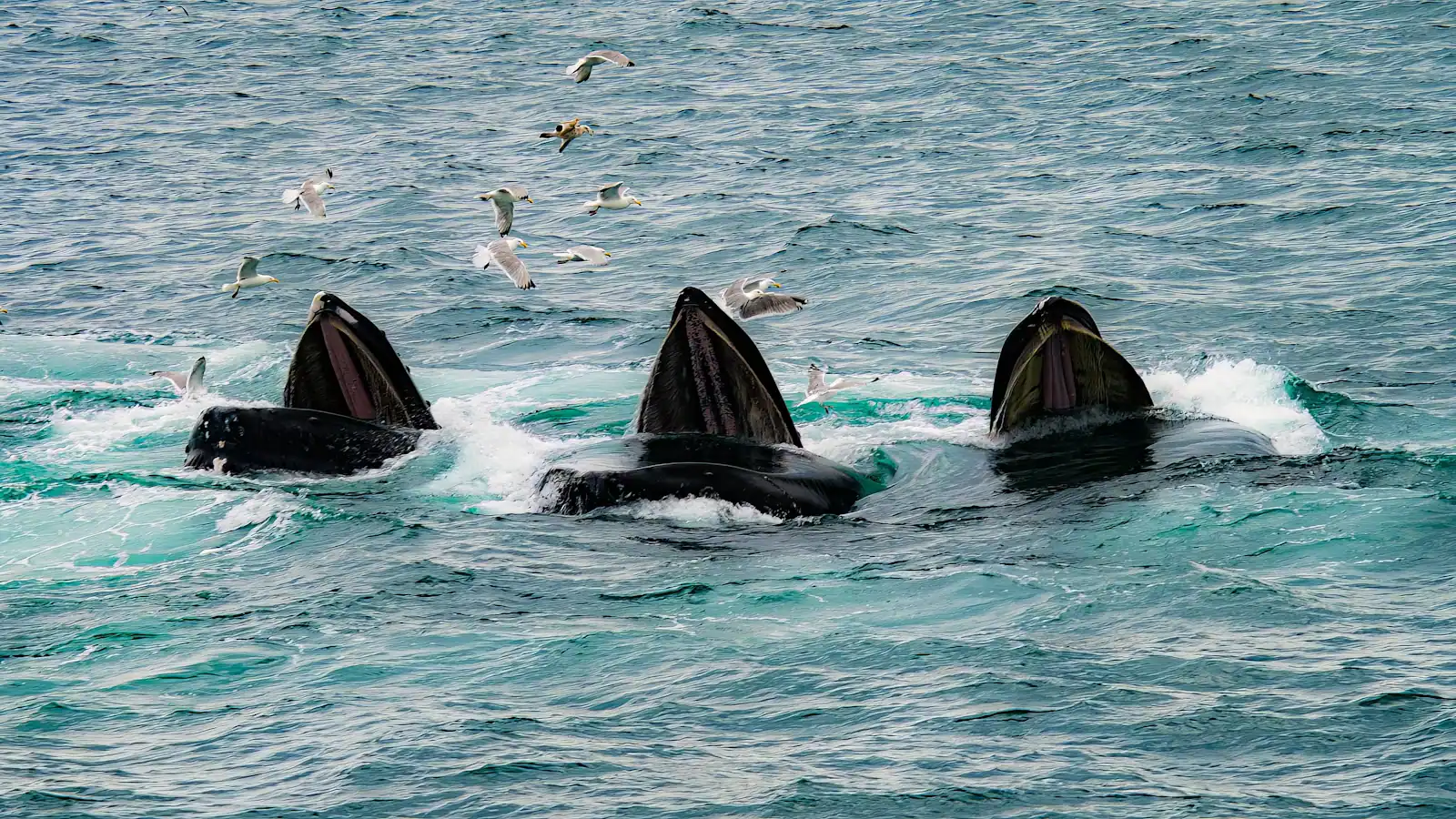
Humpbacks are the headline, and they are why the industry exists here. They lunge-feed at the surface, they blow bubble nets, they breach, and they are individually recognisable from the black and white pattern on the underside of the tail. Researchers in Provincetown have catalogued the population by fluke for decades, and the naturalist on your boat will often name the animal in front of you and tell you who its mother was.
Fin whales are the second most common, and the second-largest animal that has ever lived. Minkes are frequent and undersold. Atlantic white-sided dolphins turn up in fast, noisy groups. Basking sharks and ocean sunfish appear in late summer. Right whales are possible in spring and are a different experience entirely, because the boat must keep its distance.
What you will not see, on most trips, is a whale close enough to touch. Anyone promising that is either exaggerating or breaking a federal rule.
The rules your captain is working under
This matters and it is worth knowing before you get on the boat and wonder why you are not closer.
North Atlantic right whales are protected by a mandatory 500-yard approach distance under federal regulation. That is 1,500 feet, about five football fields. It applies to vessels, to aircraft, to drones, and to kayaks, paddleboards and personal watercraft. A vessel that finds itself inside 500 yards must leave immediately at a safe, slow speed. There is no discretion in it and no exception for a good photograph. NOAA Fisheries estimated roughly 384 of these animals alive at the start of 2024, which is the entire species.
For humpbacks and other whales, the Northeast has viewing guidelines rather than a blanket distance rule: approach slowly and from the side rather than head-on, do not cut across a whale's path, throttle right down in the vicinity, and let the animals decide how close the encounter gets. Commercial operators that commit to those practices can be recognised under the Whale SENSE programme run by NOAA Fisheries with conservation partners, and the logo is a reasonable shorthand when you are choosing between boats.
Underneath all of it sits the Marine Mammal Protection Act, which makes harassment of a marine mammal an offence. If you are out in your own boat or a kayak, those rules are yours, not just the captain's.
Not being sick, which is most of the battle
The run out is across open water and the bank can be lumpy when it is flat inshore.
- Take whatever you are taking before you board. An hour ahead is about right. Nothing works once you have started.
- Stand outside, in the middle of the boat, and look at the horizon. The cabin is the worst place on the vessel.
- Eat something plain beforehand. An empty stomach is not the safe option people think it is.
- Book the morning sailing. Summer wind on Massachusetts Bay tends to build through the afternoon from the southwest.
- Give a small child a short trip elsewhere first. Four hours offshore is a long time to discover you hate boats.
Booking, cost and the guarantee
Expect somewhere in the region of $65 to $85 per adult for a standard three to four hour trip, with child and senior rates below that, which puts whale watching right around the middle of everything bookable on Cape Cod.
Most operators offer some form of sighting guarantee, typically a voucher for another sailing rather than a refund if no whales are found. Read the actual wording before you rely on it, and check the cancellation policy for fog, because the boat will cancel for visibility and June on this coast produces a lot of it.
Book the first sailing of the day in July and August, dress two layers warmer than the beach suggests, and bring binoculars if you own them. Offshore it is commonly ten to fifteen degrees colder than it was in the car park, and the wind does not stop.
Last updated
Opening hours, ordinances and prices move with the season. We re-check this guide rather than rewrite it, and the date above is the last time someone did. How we research and correct.