The Cape's spring does not happen on a date. It happens in stages across about six weeks, and April is the opening one.
The herring run. Alewives push in from the sea and climb the freshwater streams to spawn, and the fish ladders built to help them are among the best free spectacles on the peninsula. The ladder at the Stony Brook grist mill in Brewster is the best known, with runs at Bourne and elsewhere on the Cape as well. Peak activity is usually somewhere in April depending on water temperature, which means the timing is genuinely different year to year. Look, do not touch; taking river herring is prohibited in Massachusetts.
The first whale boats. Operators begin sailing to Stellwagen Bank in April, ahead of the main season. Early trips are cold, often rougher than summer sailings, and carry the best chance of the year of encountering North Atlantic right whales, which brings the mandatory 500-yard federal standoff into play and changes the character of the trip.
The Seashore gates. Beach fee collection at Cape Cod National Seashore begins around late May rather than in April, typically weekends first. Through April the six ocean beaches are open, free to enter, entirely unguarded and frequently magnificent.
Almost nothing else. Restaurants and shops on the Outer Cape largely remain closed until Memorial Day weekend. Do not plan an April trip around dinner.
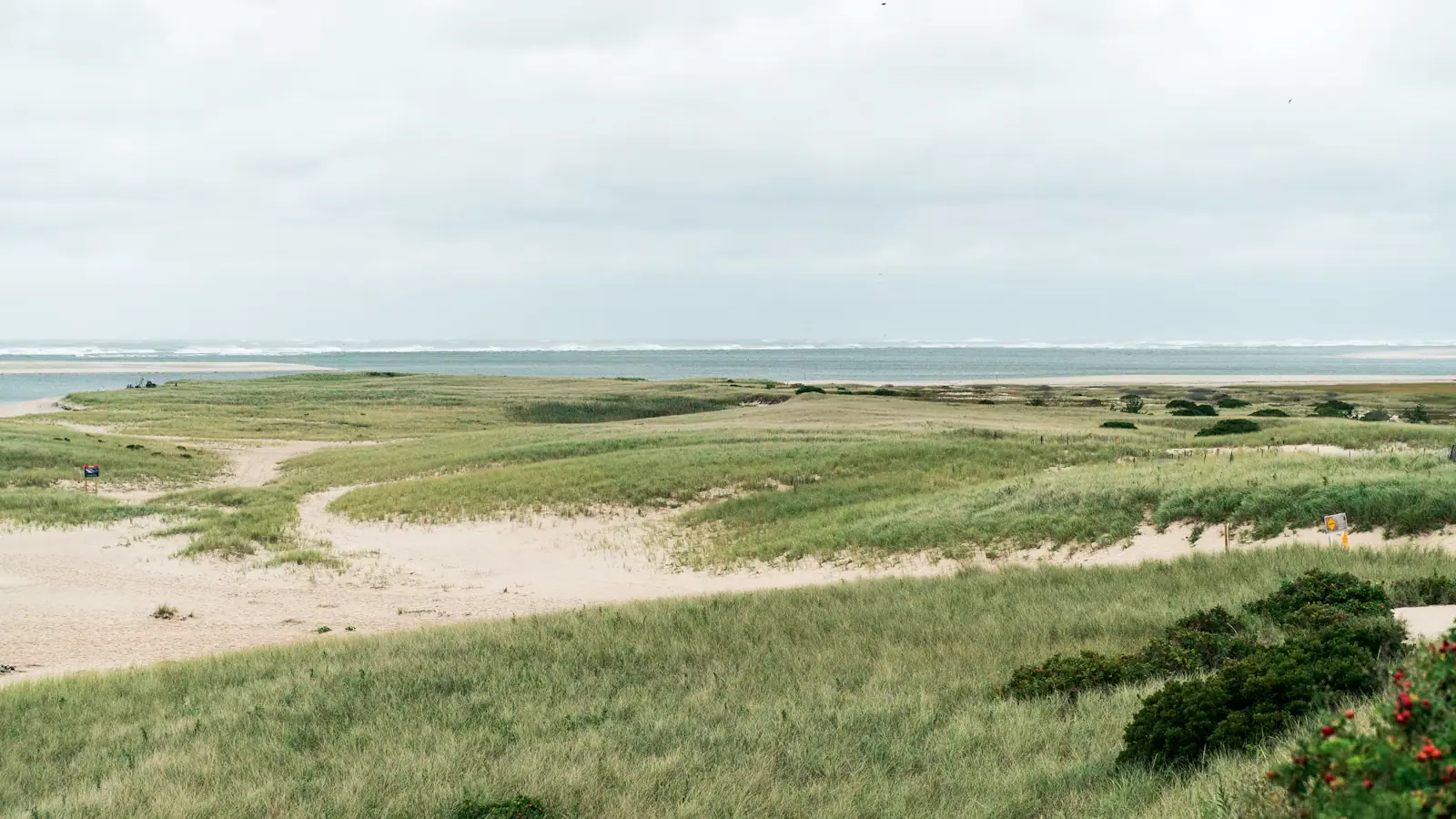
What April gives you instead is an empty coastline in good light, seals still hauled out in numbers along the outer shore, migrating shorebirds working the tidal flats on the bay side, and a National Seashore with its car parks to itself. The Cape Cod Rail Trail is at its quietest and most pleasant of the year.
It gives you raw weather too. April on this coast runs cold, wet and windy as often as not, and the sea is at or near its annual minimum. This is a walking and watching month, not a swimming one.
Run timing and operator schedules vary each spring. Check locally before making the drive for either.