Skip to content
Search
Menu

Bookings here go through Viator, who pay us a commission. You are charged the same either way, and the commission had no say in this list.

Museum

Heritage Museums and Gardens

Last updated

A hundred acres in Sandwich holding the Dexter rhododendron collection, a vintage car museum and a 1908 carousel you can ride.

Heritage occupies a hundred acres of wooded hillside south of Sandwich village, and it is the only place on Cape Cod where someone spent a lifetime cultivating the landscape rather than defending it from the sea. The land was Charles O. Dexter's estate, and between 1921 and 1943 he raised thousands of rhododendron seedlings here, crossing them for hardiness, scent and colours that nobody had produced in New England before. Heritage now holds 125 of the 145 known Dexter cultivars, growing on the ground where they were bred.

That is the single most important fact about visiting. The Dexter rhododendrons typically flower from Memorial Day weekend into mid-June, and for those two or three weeks this is a spectacular place. Outside them it is a good garden with several museums in it, which is a different proposition and one worth knowing before you buy a ticket.

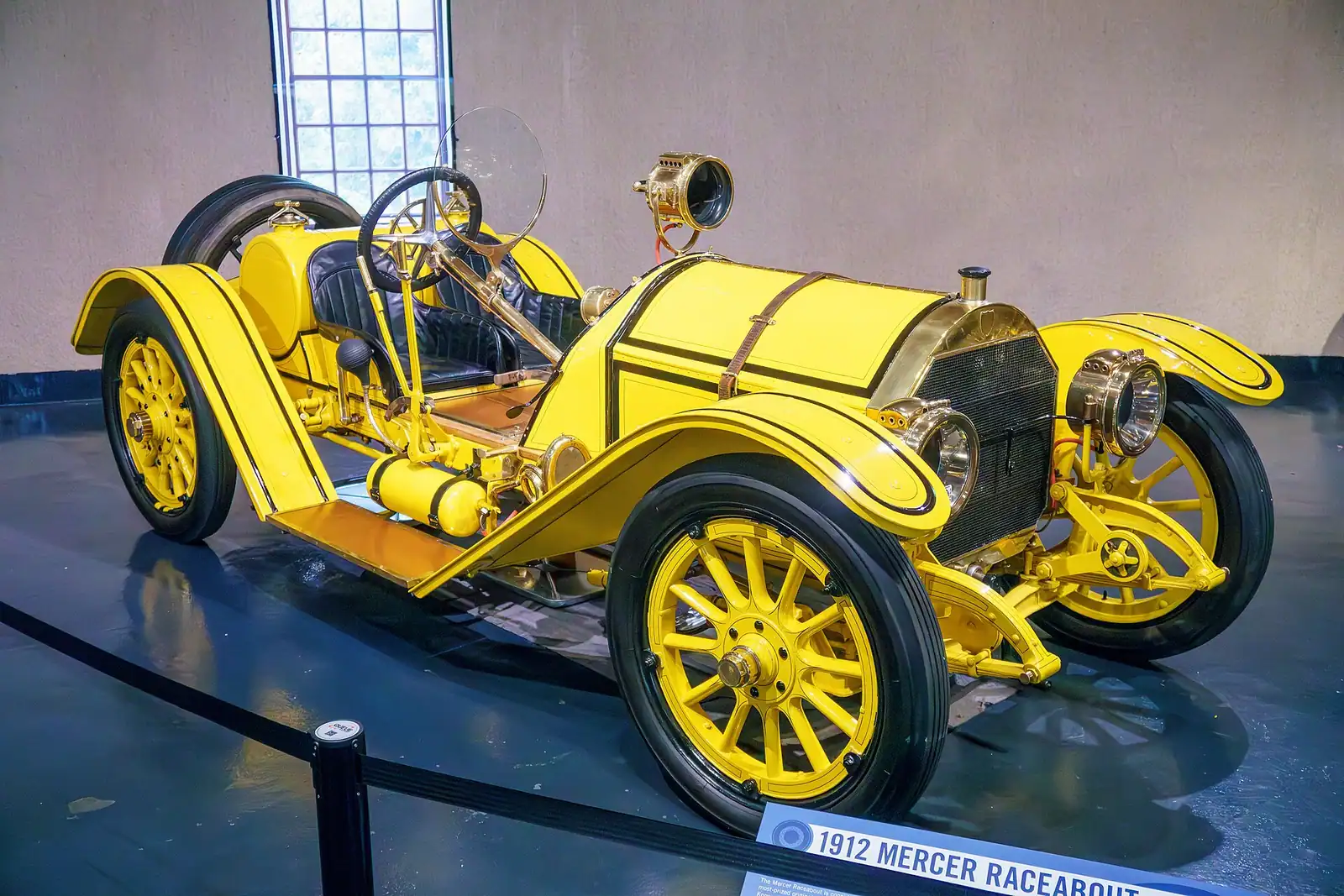
Josiah K. Lilly III founded the institution in 1969, originally as Heritage Plantation, and filled it with collections. The J. K. Lilly III Automobile Museum sits in a round Shaker-style barn and is the strongest of them: American cars presented as design objects rather than as a parade of chrome, including the 1909 White Steam Car Model M that President Taft bought when he converted the White House stables into a garage.

Then there is the carousel: a Charles Looff machine built in 1908, bought by Lilly in 1968 and opened to the public in 1972. You can ride it, it is included with admission, and it is the reason a good many Cape childhoods include this place.

Beyond the rhododendrons, the plantings run to a hydrangea collection that flowers through high summer, over a thousand daylily varieties, hostas, a windmill and a labyrinth. Hidden Hollow, added in 2010, is an outdoor nature classroom where children are expected to build things and get dirty.

The aerial adventure park in the treetops is separately operated and separately ticketed.
Getting there and parking

Heritage is signed from Sandwich village, south of the centre on Grove Street, about five minutes from Shawme Pond and the glass museum.

From the Sagamore Bridge, take Route 6 east to exit 55 or follow Route 6A along the bay into Sandwich and turn south through the village. Allow ten to fifteen minutes from the bridge in normal conditions.

From Boston the whole journey is around an hour and a half in clear traffic, which makes Heritage one of the few substantial Cape attractions realistically doable as a day trip from the mainland without spending the day driving.

Parking is free, on site and large, which is unusual for a Cape attraction and is a genuine reason to put it early in a busy day.

There is no practical public transport to the gates. The Cape Cod Regional Transit Authority's Sandwich service does not run to the site, and the walk from the village along Grove Street is on a road without a continuous pavement.

The three-week window, and the rest of the year

Heritage changes character completely across the season, and the ticket price does not.

Late May to mid-June. The Dexter rhododendrons. This is the reason the garden exists and it is the reason to come. Two to three weeks of large-flowered, scented rhododendrons in pinks, apricots and creams, planted under high canopy along a winding path, on the ground where Dexter bred them. Flowering timing moves with the spring, so check what the garden is reporting before you commit to a date.

July and August. The hydrangeas take over, and Cape Cod is a hydrangea place in a way that surprises first-time visitors. Heritage runs a hydrangea festival in July across the region. Daylilies through the same period.

September and October. Quieter, greener, good walking, and the car museum comes into its own because you are not competing for space in front of the exhibits.

Winter. Reduced opening or closure depending on the year, with a seasonal lights event in some years. Check before travelling.

If you have a fixed week on the Cape and it falls outside the rhododendron window, Heritage is still a comfortable half day and the best rainy-morning option on the Upper Cape after the glass museum. It is simply not the same place.

The cars, the carousel and the rest of the collections

The automobile museum is housed in a round barn modelled on a Shaker design, and the circular layout is deliberate: cars are displayed on a curve so you walk around each one rather than filing past a line.

The collection is American and chronological in feel, weighted towards the early decades when the form of the car was still being argued about. The 1909 White Steam Car Model M, ordered by President Taft for the first White House garage, is the piece most visitors come out talking about, largely because it is a steam car and most people have never seen one.

The carousel is a Charles Looff machine of 1908, originally built for an amusement park in Mississippi, bought by Lilly in 1968 and put into public operation here in 1972. Riding it is included in admission. Looff carvings are ornate in a way modern fairground rides are not, and it is worth looking at the horses standing still before you get on one.

Other galleries rotate through American folk art, military miniatures and travelling exhibitions, and the programme changes, so check what is showing rather than assuming.

Hidden Hollow is the children's area: a certified outdoor nature classroom in a natural bowl, with building, digging and climbing rather than plastic play equipment. It is genuinely good and it will use up an hour you had not allowed for.

Tickets, terrain and the adventure park

  • Allow three to four hours for the gardens and the museums together. Half a day is not an overstatement if you have children with you.
  • The site is hilly and the paths are long. A hundred acres on a wooded slope means real walking, and a shuttle runs around the grounds in season for anyone who needs it.
  • The aerial adventure park is separate. It is run by a different operator, ticketed separately, weather dependent and booked in advance. Do not assume garden admission includes it.
  • Admission is at the higher end for the Cape, with reduced rates for children and members' arrangements. Verify current pricing before you go rather than relying on a figure quoted elsewhere.
  • Parking is free and on site, and it is the easiest parking of any major Cape attraction because the site was built with a car park rather than having one grafted on.
  • There is a café and a shop, both seasonal in their hours.
  • Rain is survivable here because the museums are indoors, which makes it one of the better wet-day fallbacks on the Upper Cape.

Near Heritage Gardens

Straight-line distances, so allow more on the road — the island is long and has one main parkway.

  • Coloured glass bottles in red, yellow and green arranged on a black metal rack on Cape Cod

    Neighbourhood

    Free

    Sandwich

    Settled in 1637, the Cape's oldest town, and the first thing you reach after the Sagamore Bridge rather than the last.

    3–8 hoursFree to walk. The mill, the historic houses and the museums each charge separately.0.7 mi away

  • A paved pathway running between green grass under an overcast sky

    Water feature

    Free

    Cape Cod Canal

    A 7.4-mile federal waterway with a car-free paved service road down each bank: the flattest, most reliable cycling on Cape Cod.

    1–4 hoursFree. The service roads on both banks are open to walkers and cyclists at no charge.3.5 mi away

  • Salt marsh grass and a winding tidal channel under a wide overcast sky on Cape Cod

    Beach

    Free

    Sandy Neck Beach

    A six-mile barrier spit with warm bay water on one side, a great salt marsh on the other, and a fly season in July that locals plan around.

    2–6 hoursFree to enter. Town of Barnstable parking: daily rate at the gatehouse or a season sticker.6.3 mi away

  • A paved pathway running between green grass under an overcast sky

    Neighbourhood

    Free

    Falmouth

    The Cape's second-largest town, reached over the Bourne Bridge without ever joining the Route 6 queue.

    3–8 hoursFree to visit. Town beach lots require a Falmouth sticker or daily fee in season.14.8 mi away

Heritage Gardens: common questions

When do the rhododendrons bloom at Heritage Museums and Gardens?

Typically from Memorial Day weekend into mid-June, though the timing moves with the spring, so check what the garden is currently reporting before fixing a date. The collection matters because it is the Dexter collection: Charles O. Dexter raised thousands of rhododendron seedlings on this estate between 1921 and 1943, and Heritage now holds 125 of the 145 known Dexter cultivars growing on the ground where they were bred.

How long do you need at Heritage Museums and Gardens?

Three to four hours covers the gardens and the museums at a comfortable pace, and half a day is realistic with children because Hidden Hollow, the outdoor nature classroom, absorbs an hour on its own. The site is a hundred acres of wooded hillside with sustained gradients, so the walking is more substantial than the acreage suggests. A shuttle runs around the grounds in season for anyone who needs it.

Is the carousel at Heritage included in admission?

Yes. The 1908 Charles Looff carousel is included with garden admission and you can ride it. It was built for an amusement park in Mississippi, bought by Josiah K. Lilly III in 1968 and put into public operation here in 1972, and the carving is far more ornate than anything on a modern fairground ride. The separately operated treetop adventure park is not included and is ticketed by a different operator.

What cars are in the Heritage automobile museum?

An American collection housed in a round Shaker-style barn, displayed on a curve so you can walk around each car rather than file past a line. It is weighted towards the early decades when the shape of the automobile was still being argued about. The piece most visitors leave talking about is the 1909 White Steam Car Model M that President Taft ordered when he converted the White House stables into a garage.