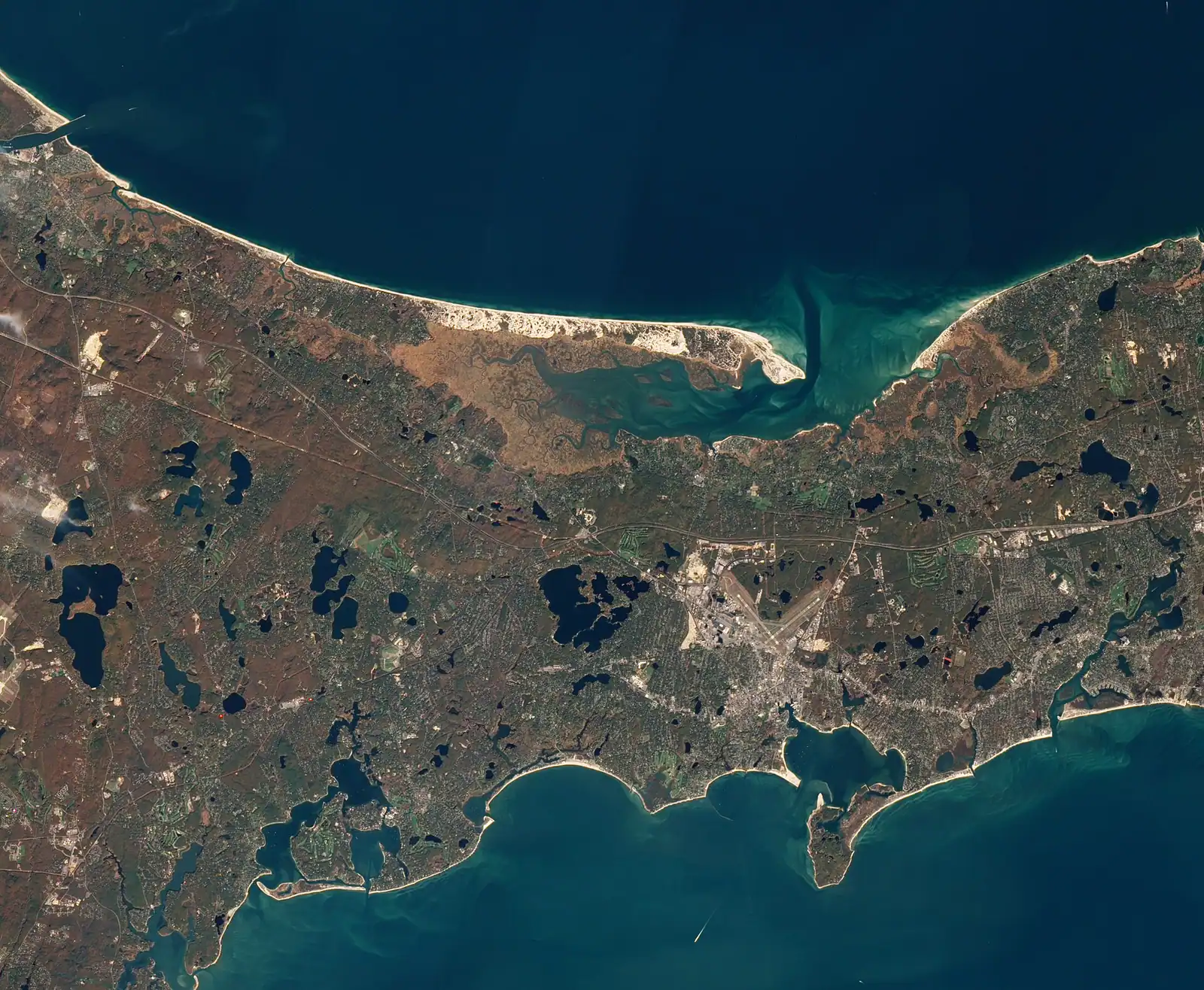
Sandwich is the town people drive past. Come over the Sagamore Bridge, get onto Route 6, and within four minutes you are heading east towards somewhere further out. Turn off instead and you find the oldest town on Cape Cod, settled in 1637 and incorporated in September 1639, arranged around a millpond in a way that has more in common with inland New England than with the rest of the peninsula.
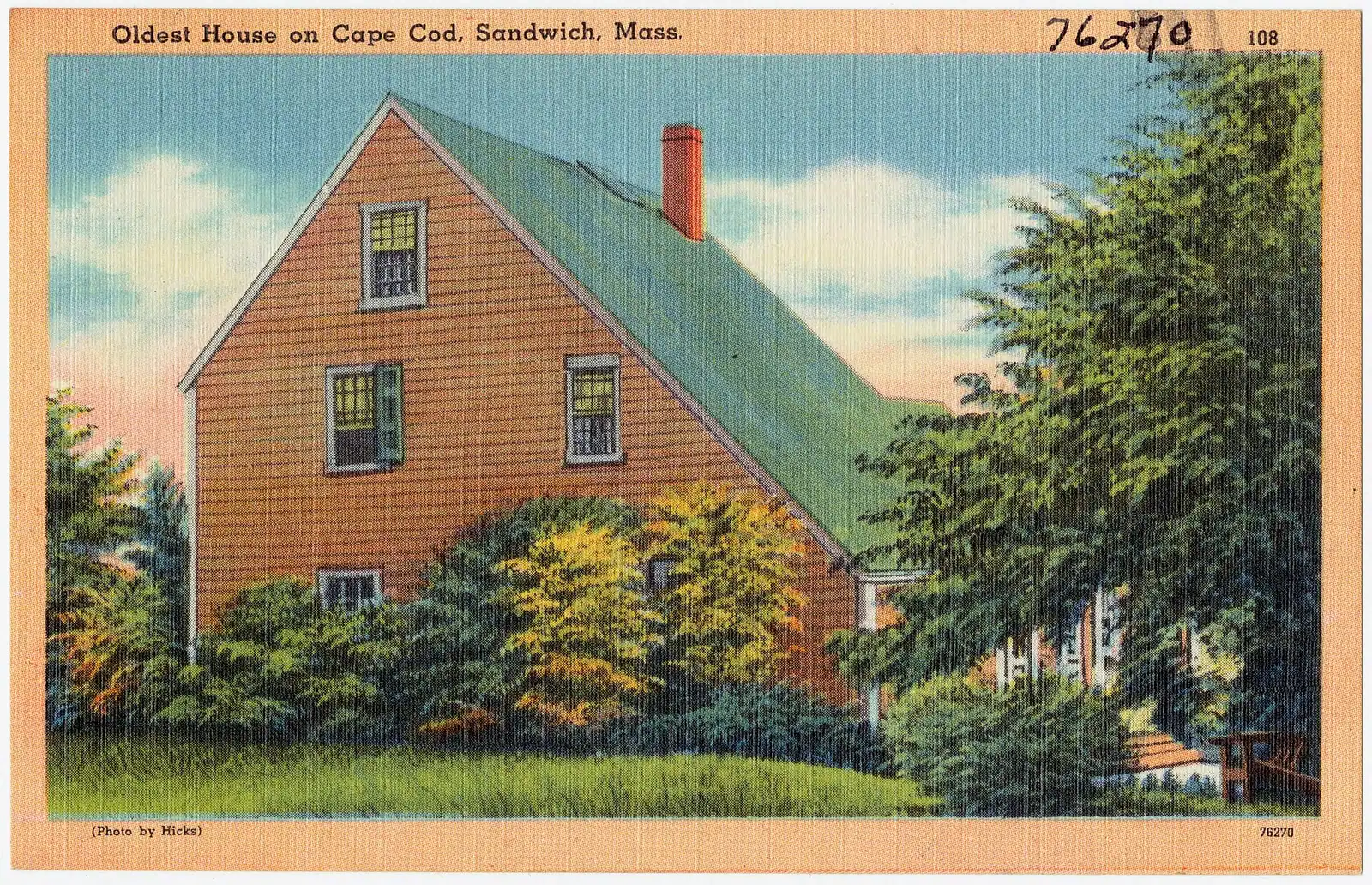
The centre is unusually intact. Shawme Pond sits at the heart of it, with the Dexter Grist Mill on the outflow, a working water-powered mill that still grinds corn for visitors, and the Hoxie House on the bank above, a seventeenth-century saltbox that is the oldest house on the Cape. A church steeple, a small green, a handful of streets. It takes twenty minutes to walk and it is the only town centre on Cape Cod that reads as colonial rather than Victorian or modern.
What made Sandwich famous was glass. Deming Jarves founded the Boston and Sandwich Glass Company here in 1825, exploiting the marsh hay for packing, the forest for fuel and the harbour for shipping, and for six decades the town produced pressed lead glass in colours that collectors still chase. The works closed in 1888 after a labour dispute and competition from Midwestern coal-fired factories. The Sandwich Glass Museum, run by the town's historical society, holds the collection and runs live glassblowing demonstrations through the day, which is the part children remember.
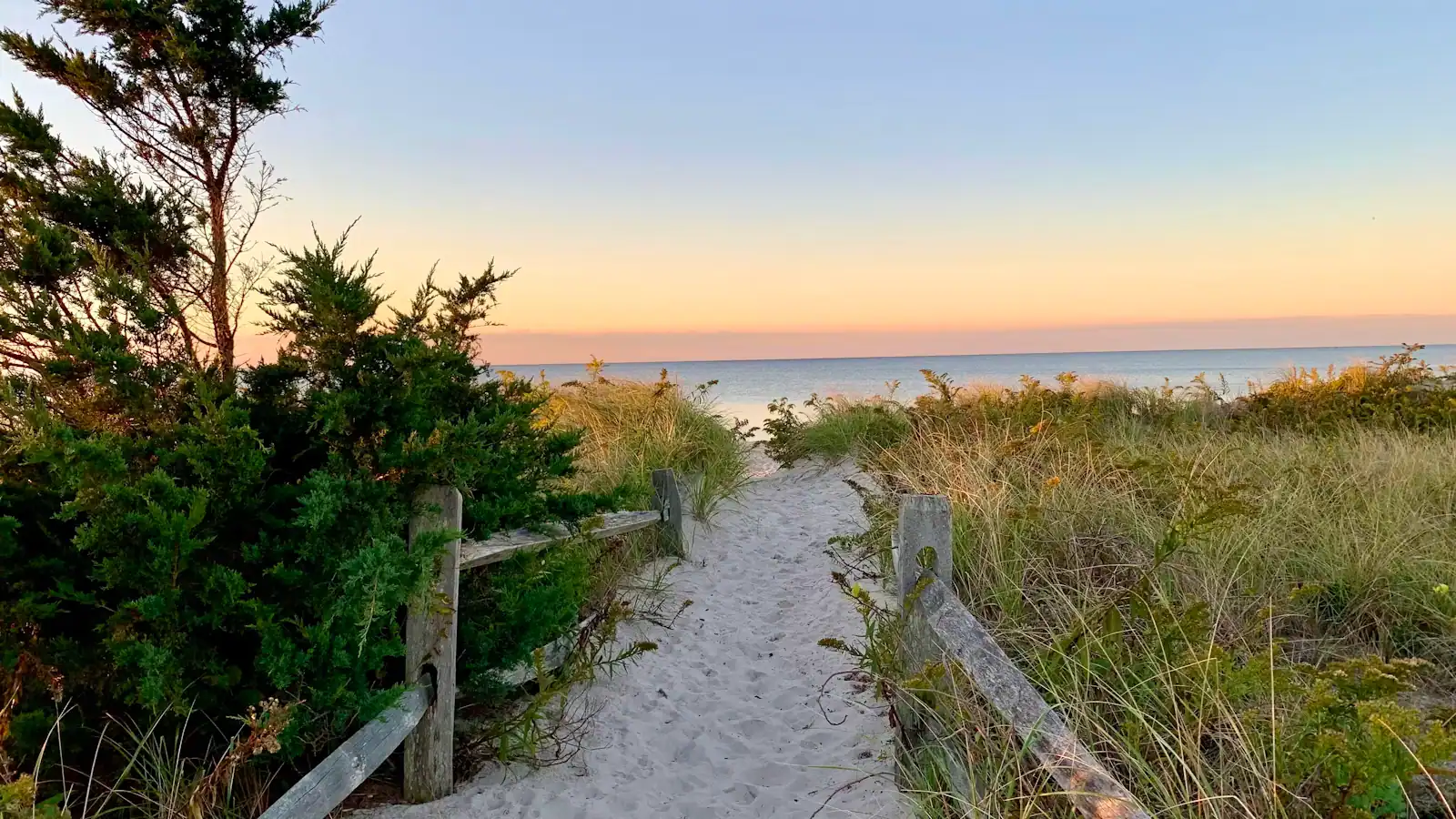
On the bay side, a wooden boardwalk of about 1,350 feet crosses the salt marsh and Mill Creek to reach Town Neck Beach. The current structure exists because the town rebuilt it by public subscription after Hurricane Bob wrecked the previous one in August 1991, selling individual planks to donors who carved names, dates and jokes into them. Reading the planks on the way across takes longer than the walk.
Add Heritage Museums and Gardens on a hundred acres south of the centre, and Sandwich carries more visitable indoor attraction per square mile than anywhere else on the Cape.